 Ireland
 United States
 Česko
Česko Danmark
 Deutschland
 Eesti
Eesti España
 Ελλάδα
 France
 Hrvatska
 Italia
 Latvija
 Lietuva
 Magyarország
 Nederlands
 New-Zealand
 Norge
Norge Polska
 Portugal
 România
 Schweiz (Deutsch)
 Slovenija
 Slovensko
 Suomi
Suomi Sverige
 United Kingdom
 България
 Canada (English)
If you have ever wondered why some travertine showers stay pristine for years while others develop stains, discoloration, and crumbling grout lines within months, the answer almost always comes down to one thing: the quality of the sealing product used. Waterproofing travertine is not a complicated task, but everything depends on choosing the right product. Use a weak or poorly formulated sealer, and you will find yourself repeating the process every few months, watching your beautiful natural stone shower slowly deteriorate under constant water exposure.
This is precisely why we recommend the Travertine Water Repellent from Ferber Painting. Unlike most sealers on the market, our formula is specifically engineered to penetrate deep into the porous structure of travertine, creating a long-lasting barrier against water, soap scum, and mineral buildup. But what truly sets us apart is something no other competitor offers: a full satisfaction guaranteed or your money back policy. If you are not completely happy with the results, we refund you, no complicated conditions attached. Combine that with fast worldwide shipping and a simple online checkout process, and it becomes clear why thousands of homeowners and professionals trust Ferber Painting for their natural stone sealing needs.
In this comprehensive guide, we will walk you through everything you need to know about waterproofing travertine in a shower, step by step, while explaining why the right product makes all the difference between a shower that lasts decades and one that needs constant repair. We will also cover the science behind why travertine behaves so differently from other tiling materials, the mistakes most homeowners make when attempting to seal their showers on their own, and the long term maintenance habits that separate a shower that ages gracefully from one that requires costly renovation within a few short years.
Why Travertine Showers Need Special Waterproofing Care
Travertine is a beautiful natural stone, prized for its warm tones, unique veining, and timeless elegance. However, it is also a sedimentary rock, which means it is naturally porous. Those small holes and channels you sometimes see on the surface of travertine tiles are not just cosmetic characteristics, they are pathways through which water, soap, oils, and minerals can penetrate deep into the stone.
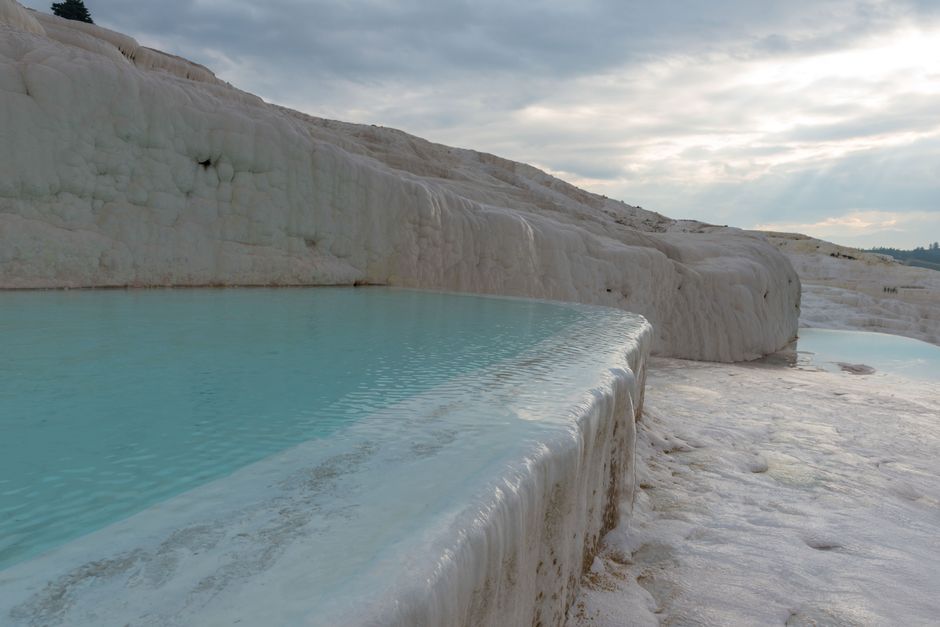
Travertine forms over thousands of years as mineral rich water flows through limestone deposits, leaving behind a stone full of tiny air pockets and channels once the water evaporates. This is what gives travertine its distinctive texture, but it is also the reason it behaves so differently from denser stones like granite or engineered surfaces like porcelain. While porcelain tile is essentially non porous and can survive years without any sealing at all, travertine is the exact opposite. Left untreated, it acts almost like a sponge, quietly absorbing everything it comes into contact with.
In a shower environment, this porosity becomes a serious problem. Water exposure is constant, humidity levels are high, and soap residue accumulates daily. Without proper waterproofing, travertine can suffer from:
- Water stains and dark discoloration that are extremely difficult to remove
- Mold and mildew growth inside the pores of the stone
- Efflorescence, which is a white, chalky mineral deposit that forms on the surface
- Weakening of the stone structure over time, leading to cracks and crumbling
- Grout deterioration caused by moisture seeping through unsealed tiles
All of these issues can be prevented with a proper waterproofing routine using a high quality water repellent product. This is where the choice of sealer becomes critical. A cheap or improperly formulated sealer might sit on the surface without truly penetrating the stone, giving you a false sense of protection that fails within weeks of shower use.
The Hidden Cost of Skipping Waterproofing
Many homeowners underestimate just how expensive it can be to ignore proper sealing. A travertine shower that has suffered years of water damage often cannot simply be cleaned back to its original state. In many cases, the discoloration runs so deep into the stone that the only real solution is to remove and replace the affected tiles entirely, along with the grout and sometimes even the underlying waterproof membrane behind the wall. What might have cost a small amount of time and a bottle of water repellent at the outset can turn into a renovation project costing thousands of dollars a few years down the line. Waterproofing is, in this sense, one of the most cost effective maintenance tasks a homeowner can perform.
How Porosity Varies Across Travertine Tiles
Not all travertine is equally porous. Filled travertine, where the natural holes have been filled at the factory with resin or grout during manufacturing, tends to be somewhat less absorbent than unfilled travertine, which retains its natural open pores. However, even filled travertine still requires sealing, because the fill material itself can wear away over time, and the surrounding stone remains vulnerable. Honed travertine, which has a smooth matte finish, and polished travertine, which has a glossy finish, also absorb water differently, with honed surfaces generally being more porous due to the open pores left exposed by the honing process. Understanding which type of travertine you have installed in your shower can help you gauge how often resealing may be necessary, though in all cases a deep penetrating water repellent remains essential.
Why Ferber Painting’s Travertine Water Repellent Stands Out
Not all sealers are created equal, and this is especially true when it comes to travertine, which requires a breathable yet highly water resistant formula. Here is why our product consistently outperforms other options on the market:
| Criteria | Ferber Painting Travertine Water Repellent | Typical Competitor Products |
|---|---|---|
| Money back guarantee | Full satisfaction guaranteed or refunded, no questions asked | Rarely offered, often with strict conditions |
| Penetration depth | Deep penetrating formula that bonds within the stone pores | Many products only coat the surface |
| Breathability | Allows the stone to breathe, preventing trapped moisture | Some sealers trap moisture, causing damage over time |
| Shipping | Fast worldwide delivery through an international carrier network | Often limited to domestic markets or slow shipping |
| Ease of application | Simple application process, no professional required | Varies widely, some require special tools or expertise |
| Payment process | Secure and easy online payment directly on our website | Inconsistent checkout experiences |
| Durability | Long lasting protection, reducing reapplication frequency | Often requires reapplication every few months |
Beyond these practical advantages, our formula has been specifically tested on natural stones like travertine, ensuring compatibility with its unique porous structure. Many generic sealers are designed for a wide range of surfaces and end up being mediocre for all of them, rather than excellent for one. Ferber Painting’s Travertine Water Repellent is different because it was developed with travertine’s specific needs in mind, something that gives it a real edge over generic multi-surface sealers.
And of course, there is the guarantee. No other brand in this space offers a true satisfied or refunded policy. This alone should give you confidence that we stand behind the quality of our product. We are not asking you to take a risk, we are removing the risk entirely.
Breathability: The Detail Most Homeowners Overlook
One of the most misunderstood aspects of sealing natural stone is the concept of breathability. Many people assume that the goal of a sealer is to create the thickest, most impermeable barrier possible, similar to a coat of paint or varnish. With travertine, this approach can actually backfire. Because the stone naturally contains moisture from the environment, a sealer that completely blocks all vapor movement can trap that moisture inside the stone. Over time, trapped moisture can cause the stone to spall, meaning small flakes or chips break away from the surface as pressure builds from within. Our formula is designed to repel liquid water on the surface while still allowing water vapor to escape from within the stone, which is exactly the balance travertine needs to stay structurally sound over the long term.
Why a Travertine Specific Formula Matters
Walk into any hardware store and you will likely find several sealers marketed as suitable for tile, grout, stone, and concrete all at once. While these products are not necessarily bad, they are built around a compromise, since a formula that works reasonably well on dense granite will not behave the same way on porous travertine. Ferber Painting’s Travertine Water Repellent was formulated with travertine’s specific pore structure in mind, which means the molecules in the sealer are sized and balanced to travel deep into travertine’s channels rather than simply sitting on denser stones where they were never meant to penetrate in the first place. This specificity is a major reason our customers see better, longer lasting results compared to generic alternatives.
Step by Step Guide: How to Waterproof Travertine in a Shower
Now that you understand why the product matters so much, let’s go through the actual process of waterproofing travertine tiles and grout in your shower. Follow these steps carefully to achieve the best possible results.
Step 1: Clean the Travertine Thoroughly
Before applying any sealer, the travertine surface must be completely clean and free of soap scum, dirt, or previous sealer residue. Use a pH neutral stone cleaner, never anything acidic like vinegar or lemon based cleaners, as these can etch and damage the travertine surface permanently. Scrub gently with a soft bristle brush, focusing on grout lines where grime tends to accumulate.
If your shower has not been cleaned in a while, you may need to go over the surface more than once. Soap scum in particular can build up in thin, nearly invisible layers over months of use, and this residue will prevent a water repellent from bonding properly with the stone. A good test is to run your hand across a dry section of the tile after cleaning. If it feels slightly slick or waxy, there is likely still residue present that needs to be removed with an additional cleaning pass. For heavily soiled showers, a dedicated soap scum remover formulated for natural stone can be used before the final rinse with a pH neutral cleaner.
It is also worth paying special attention to corners, the base of the shower where it meets the floor, and any decorative niches or shelves built into the travertine, since these areas often collect more residue than flat wall sections and are easy to overlook during a quick cleaning session.
Step 2: Let the Surface Dry Completely
This step is often overlooked, but it is absolutely essential. Travertine must be completely dry before sealing, otherwise trapped moisture will prevent the water repellent from penetrating properly into the pores. Depending on humidity levels in your bathroom, this can take anywhere from 24 to 48 hours. If you live in a particularly humid climate, consider using a fan or dehumidifier to speed up the drying process.
A simple way to check whether the stone is truly dry is to tape a small square of plastic sheeting to the surface and leave it overnight. If condensation appears on the underside of the plastic the next morning, the stone still contains excess moisture and needs more time to dry. Rushing this step is one of the most common reasons homeowners are disappointed with their sealing results, since applying a water repellent to a damp surface essentially blocks the moisture already inside the stone rather than sealing it against future exposure.
Step 3: Inspect for Cracks or Damage
Before sealing, check the travertine tiles and grout lines for any visible cracks, chips, or holes. If you find any damage, it is best to repair it first using an appropriate travertine filler. Sealing over damaged stone will not fix the underlying problem and may actually trap moisture inside the crack, worsening the issue over time.
Take your time during this inspection, ideally using a flashlight held at a low angle across the tile surface, which makes small cracks and chips much easier to spot than under standard overhead bathroom lighting. Pay particular attention to the corners of tiles and the areas around any built in soap dishes or benches, since these spots experience more physical stress and are more prone to cracking over time. Any grout lines that appear crumbly or that have visible gaps should be repaired with fresh grout before you proceed to the sealing stage.
Step 4: Apply Ferber Painting’s Travertine Water Repellent
This is where the right product truly makes a difference. Using a clean applicator, such as a foam brush or a lint free cloth, apply the water repellent evenly across the travertine surface, working in small sections to ensure full coverage. Our formula is designed to be user friendly, meaning you do not need professional experience to get excellent results.
Make sure to apply the product not just on the tile surface but also on the grout lines, since grout is often even more porous than the stone itself and is a common entry point for water damage.
Working in small, manageable sections, roughly two to three square feet at a time, helps ensure that no part of the surface is missed and that the product does not begin to dry before you have a chance to spread it evenly. Start from the top of the shower wall and work downward, since this prevents drips from landing on sections you have already treated. For shower floors, work from the corner farthest from the drain toward the drain itself, so you are not stepping back over freshly sealed tile.
Step 5: Allow Proper Absorption Time
After application, let the product absorb into the stone for the time recommended on the packaging, typically between 10 and 15 minutes. During this time, the water repellent penetrates deep into the pores, creating a long lasting barrier from within rather than just sitting on the surface.
During this absorption window, resist the temptation to touch or wipe the surface, since disturbing the product before it has had time to soak in can leave uneven patches once the sealer cures. If you notice that certain areas of the stone are absorbing the product very quickly, leaving a dry looking patch after only a few minutes, this is often a sign that the stone is particularly porous in that spot and may benefit from a light second application in that specific area before you move on to wiping off the excess.
Step 6: Wipe Off Excess Product
Using a clean, dry cloth, wipe away any excess sealer that has not been absorbed. This prevents a hazy or sticky residue from forming on the surface, ensuring a natural, matte finish that preserves the beauty of the travertine.
When wiping, use a consistent, even pressure and change to a fresh section of the cloth frequently, since a cloth that has become saturated with excess sealer will simply redistribute it rather than lifting it away. Microfiber cloths tend to work particularly well for this step because of their ability to absorb liquid without leaving lint behind. Take a moment after wiping to inspect the surface from a few different angles under good lighting, checking for any cloudy or hazy patches that might indicate leftover product still sitting on the surface.
Step 7: Apply a Second Coat if Necessary
For showers, which experience heavy and constant water exposure, we recommend applying a second coat of Travertine Water Repellent after the first coat has fully dried, usually after several hours. This double layer approach significantly increases the durability and effectiveness of the waterproofing, especially in high moisture areas like shower floors and walls.
When applying the second coat, follow the exact same process used for the first, cleaning any dust that may have settled on the surface during the drying period before you begin. Areas that receive the most direct water exposure, such as the shower floor and the lower half of the walls where water pools and runs, benefit the most from this extra layer of protection. Some homeowners even choose to apply a light third coat specifically to the shower floor, given that this surface endures the most consistent standing water and foot traffic of any part of the shower.
Step 8: Let the Sealer Cure Fully Before Use
Once both coats have been applied, avoid using the shower for at least 24 to 48 hours to allow the sealer to cure completely. Using the shower too soon can compromise the effectiveness of the water repellent barrier, reducing its lifespan and performance.
This curing period is when the real chemical bonding between the sealer and the stone takes place, and interrupting it with water exposure or heavy steam can prevent the product from reaching its full protective potential. If possible, plan your resealing project for a time when you have access to another shower or bathroom in your home, so the newly treated travertine can cure undisturbed. Keeping the bathroom well ventilated during this curing window, by leaving a window cracked or running an exhaust fan, also helps the process along by allowing any remaining solvent in the product to evaporate properly.
Maintenance Tips to Extend the Life of Your Waterproofed Travertine
Sealing your travertine shower is not a one time task that lasts forever. However, with proper maintenance, you can significantly extend the time between reapplications. Here are some tips to keep your travertine shower looking flawless for years:
- Wipe down the shower walls and floor after each use to prevent water spots and mineral buildup
- Use a squeegee on tile surfaces to remove excess water immediately after showering
- Avoid harsh, acidic cleaning products that can strip away the sealer over time
- Ensure proper ventilation in the bathroom to reduce overall humidity levels
- Reapply Ferber Painting’s Travertine Water Repellent approximately once every 12 to 18 months, depending on shower usage frequency
- Address any grout discoloration or cracking promptly to prevent water infiltration
Following these simple habits, combined with using a high quality sealer from the start, will keep your travertine shower protected and beautiful for many years to come.
Daily and Weekly Habits That Make a Big Difference
Beyond the basic tips above, a few small daily habits can meaningfully extend the life of your sealed travertine. Keeping a squeegee hanging on a hook inside the shower makes it far more likely that you will actually use it after every shower, since the tool is right there and ready rather than tucked away in a cabinet. A quick thirty second pass over the walls and floor removes the vast majority of standing water that would otherwise evaporate slowly and leave behind mineral deposits, commonly known as hard water spots, which can dull the appearance of the stone over time even when the sealer itself is still performing well.
On a weekly basis, a light cleaning with a pH neutral stone cleaner and a soft cloth helps prevent soap scum from building up to the point where it becomes difficult to remove. It is worth noting that many mainstream bathroom cleaners marketed for general use contain acidic ingredients that are perfectly safe for ceramic tile but can slowly degrade both the sealer and the stone itself when used on travertine. Always check the label for language indicating the product is safe for natural stone before using it in your travertine shower.
Recognizing the Signs That Resealing Is Needed
Rather than relying solely on a fixed schedule, it helps to know the visual and tactile signs that indicate your travertine is due for resealing. One of the simplest tests is the water droplet test: splash a small amount of water onto a dry section of tile and observe what happens. If the water beads up and sits on the surface, the sealer is still doing its job. If the water quickly darkens the stone and appears to be absorbed within a minute or two, this is a clear sign that the water repellent has worn down and it is time to reapply. Performing this test every few months, particularly in high traffic areas like the shower floor, allows you to catch the need for resealing before any real damage occurs, rather than waiting for stains or discoloration to appear.
Dealing With Hard Water in Sealed Showers
Homes with hard water, meaning water with a high mineral content, often see faster buildup of mineral deposits on travertine surfaces even when the stone is properly sealed. This buildup sits on top of the sealer rather than penetrating into the stone, but it can still dull the finish and make the shower look less clean than it actually is. Using a squeegee consistently is the single most effective way to reduce this buildup, since it removes the water before it has a chance to evaporate and leave mineral residue behind. For households with particularly hard water, an occasional gentle cleaning with a stone safe hard water remover, used according to the manufacturer’s instructions, can help keep the sealed surface looking its best without damaging the underlying water repellent treatment.
Why Buying From Ferber Painting Is the Smart Choice
When it comes to purchasing a waterproofing product for your travertine shower, the buying experience matters just as much as the product itself. Here is what makes shopping with Ferber Painting different:
- Fast worldwide delivery thanks to our international network of trusted carriers, meaning you receive your product quickly no matter where you are located
- Simple and secure online payment directly through our website, with no complicated steps or hidden fees
- A satisfaction guaranteed or refunded policy on every single product we sell, giving you complete peace of mind
- A formula specifically designed for natural stones like travertine, rather than a generic multi-surface sealer
- Clear, easy to follow application instructions suitable for both beginners and professionals
Combined, these factors make Ferber Painting the most reliable choice for anyone looking to waterproof their travertine shower effectively and without unnecessary risk.
Trusted by Homeowners and Professionals Alike
While many sealing products are marketed primarily toward either the do it yourself homeowner or the professional contractor, Ferber Painting’s Travertine Water Repellent has found a loyal following in both groups. Homeowners appreciate the straightforward application process that does not require special equipment or advanced knowledge of stone care, while professional tile installers and stone restoration specialists value the consistency and reliability of the results, which allows them to confidently recommend the product to their clients without worrying about callbacks due to premature sealer failure.
This dual appeal is not an accident. From the beginning, the formula was developed with the goal of making professional grade protection accessible to everyday homeowners, without sacrificing the performance that professionals demand on job sites where their reputation is on the line.
Customer Support That Actually Helps
Beyond the product itself, Ferber Painting is committed to supporting customers through every step of the sealing process. If you run into questions while cleaning your travertine, deciding how many coats to apply, or troubleshooting an uneven finish, our support team is available to walk you through the solution. This level of support is part of why our satisfaction guaranteed policy is so easy for us to offer with confidence, since most concerns can be resolved quickly with the right guidance rather than requiring a return in the first place.
Frequently Asked Questions
How often should I reseal my travertine shower?
Generally, travertine showers should be resealed every 12 to 18 months, though this can vary depending on how frequently the shower is used and how well it is maintained between applications.
Can I apply Travertine Water Repellent myself without professional help?
Yes, our product is designed to be user friendly, allowing homeowners to apply it themselves following the simple step by step instructions included with the product.
What happens if I am not satisfied with the results?
Ferber Painting offers a full satisfaction guaranteed or refunded policy on all products, including the Travertine Water Repellent. If you are not happy with the results, simply contact our support team for a refund.
Is the product safe to use in enclosed shower spaces?
Yes, our formula is designed for indoor use, including enclosed showers, and does not release harmful fumes when used according to the provided instructions.
How long does shipping take?
Thanks to our international network of carriers, most orders are delivered quickly, with exact delivery times depending on your specific location.
Does the sealer change the appearance of my travertine?
No, our formula is designed to preserve the natural look of travertine, providing a matte, non-glossy finish that protects without altering the stone’s original beauty.
Can this product be used on other natural stones besides travertine?
While the formula is specifically optimized for travertine’s unique porous structure, it can also perform well on other porous natural stones such as limestone and certain types of marble. That said, for the best possible results on travertine specifically, our dedicated formula remains the top recommendation.
Will the sealer prevent all staining in my shower?
The water repellent significantly reduces the likelihood of staining by preventing liquids from penetrating the stone, but it does not make the surface completely stain proof. Prompt cleanup of spills and regular maintenance remain important even after sealing.
Conclusion
Waterproofing travertine in a shower does not have to be complicated, but it absolutely requires the right product to achieve lasting results. From deep penetration and breathability to fast worldwide shipping and a genuine satisfaction guaranteed or refunded policy, Ferber Painting offers everything you need to protect your travertine shower for years to come. Taking the time to properly clean, dry, inspect, and seal your travertine, and then maintaining it with simple daily habits afterward, is the difference between a shower that ages gracefully for decades and one that requires costly repairs within just a few years. If you are ready to protect your travertine shower with a product that truly delivers on its promises, click here to purchase Ferber Painting’s Travertine Water Repellent today.