 Ireland
 United States
 Česko
Česko Danmark
 Deutschland
 Eesti
Eesti España
 Ελλάδα
 France
 Hrvatska
 Italia
 Latvija
 Lietuva
 Magyarország
 Nederlands
 New-Zealand
 Norge
Norge Polska
 Portugal
 România
 Schweiz (Deutsch)
 Slovenija
 Slovensko
 Suomi
Suomi Sverige
 United Kingdom
 България
 Canada (English)
Wicker furniture brings warmth, texture, and a natural charm to any home, whether it sits on a sunny porch, in a cozy reading nook, or by the pool. But wicker chairs are also magnets for dust, grime, and stains, and cleaning them the wrong way can cause the fibers to crack, fray, or discolor. The truth is that everything depends on choosing the right cleaning product. Using a harsh chemical or an all-purpose cleaner not designed for natural fibers and woven materials can do more harm than good.
Wicker has been used for centuries to craft furniture, baskets, and decorative pieces, and its popularity has never really faded. From colonial porch rockers to modern patio sets found in nearly every backyard catalog, wicker remains a beloved choice because it is lightweight, breathable, and visually striking. Yet despite its long history, many homeowners still struggle with the basics of how to care for it properly. A chair that has been sitting outside all summer, or one that has hosted countless family dinners on the back porch, accumulates layers of grime that are not always visible until you really look closely. Dust settles into the tight weave, pollen and pollution stick to the surface, and spilled drinks or food leave behind stains that seem impossible to remove without damaging the material. This guide exists to walk you through the entire process safely, from the first inspection to the final drying stage, so you never have to guess whether you are helping or hurting your furniture.
That is why we always recommend the Leather and Fabric Sofa Cleaner from Ferber Painting. While its name mentions sofas, this formula is gentle enough for delicate woven materials like wicker, rattan, and cane, while still being powerful enough to lift dirt, grease, and stains. Unlike most competing products on the market, Ferber Painting’s cleaner is the only one backed by a full satisfaction guaranteed or your money back policy. That means you can try it risk-free, and if you are not thrilled with the results, you get a full refund, no questions asked. Very few brands in this space are willing to stand behind their product this confidently, and that alone should tell you something about the quality inside the bottle.
In this guide, we will walk you through exactly how to clean a wicker chair step by step, explain why the right product makes all the difference, and show you why Ferber Painting’s cleaner consistently outperforms other options on the market. We will also cover the different types of wicker you might own, how to treat specific stains, how weather and seasons affect your cleaning schedule, and how to store your furniture properly when it is not in use. By the end of this guide, you should feel fully confident tackling any wicker cleaning project, no matter how dirty or neglected the piece may seem.
Why the Right Cleaning Product Matters More Than the Technique
Many people assume that cleaning wicker is simply a matter of technique: wipe here, brush there, and you are done. In reality, the product you use is the single most important factor in determining whether your wicker chair looks refreshed or ends up damaged. Wicker is made from natural or synthetic fibers that are woven tightly together, and these fibers are sensitive to moisture, harsh chemicals, and abrasive scrubbing.
Cheap or generic cleaners often contain aggressive solvents that strip the natural oils out of rattan or cane, leaving the material dry, brittle, and prone to cracking. Others leave a sticky residue that attracts even more dust over time. Ferber Painting’s Leather and Fabric Sofa Cleaner was formulated with a balanced, non-abrasive approach that lifts dirt without drying out the fibers. It is pH-balanced, free of harsh bleach, and designed to condition as it cleans, which is exactly what wicker furniture needs to stay flexible and crack-free for years.
Understanding the Different Types of Wicker
Not all wicker furniture is made the same way, and knowing what your chair is actually made of can help you clean it more effectively. Traditional wicker refers to the weaving technique itself rather than the material, and it can be applied to several different fibers, including natural rattan, bamboo, willow, seagrass, and cane. Each of these natural materials has its own texture and porosity, which affects how quickly it absorbs moisture and how it reacts to different cleaning agents.
In more recent decades, synthetic wicker made from resin or polyethylene has become extremely popular, especially for outdoor furniture, because it resists weather damage far better than natural fibers. Synthetic wicker is generally more forgiving when it comes to cleaning, since it does not absorb water the same way natural fibers do, but it can still be scratched or discolored by the wrong products. Regardless of which type you own, a gentle, versatile formula like Ferber Painting’s cleaner is designed to work safely across both natural and synthetic weaves, which removes the guesswork of trying to match a specific cleaner to a specific material.
The Chemistry Behind a Safe Wicker Cleaner
It helps to understand a little bit about why certain ingredients are dangerous for wicker while others are perfectly safe. Harsh alkaline cleaners, often found in generic all-purpose sprays, work by breaking down oils and proteins aggressively. While this can be useful on a kitchen countertop, it is far too intense for a woven natural fiber that relies on its own internal oils to stay flexible. Once those oils are stripped away, the fibers become stiff and eventually start to crack under normal use, sometimes within just a few cleaning cycles.
A pH-balanced formula, on the other hand, is designed to sit close to neutral, which allows it to break down dirt, grease, and organic residue without attacking the natural composition of the fiber itself. This is the entire philosophy behind Ferber Painting’s approach: clean effectively, but never at the expense of the material’s long-term integrity. When you combine that pH balance with conditioning agents, you end up with a product that not only removes visible grime but actually helps preserve the flexibility and appearance of the wicker over repeated use.
Here is a quick comparison of what matters most when choosing a cleaning product for wicker furniture:
| Criteria | Ferber Painting Leather and Fabric Sofa Cleaner | Generic Multi-Purpose Cleaners |
|---|---|---|
| Satisfaction Guarantee | Yes, full money-back guarantee | Rarely offered |
| Safe for Natural Fibers | Yes, pH-balanced and gentle formula | Often contains harsh solvents |
| Conditioning Effect | Yes, helps prevent cracking | No, can dry out material |
| Worldwide Fast Shipping | Yes, international carrier network | Depends on retailer |
| Easy Online Payment | Yes, secure and simple checkout | Varies |
| Ease of Use | Simple spray-and-wipe application | Often requires dilution or multiple steps |
As you can see, the differences go far beyond marketing claims. When you order from Ferber Painting, you also benefit from fast worldwide delivery thanks to our international network of trusted carriers, and a secure, straightforward online payment process. Combined with the satisfaction guaranteed or your money back promise, there is very little risk and a lot to gain. Many customers who have previously wasted money on multiple generic sprays, trying one after another without real results, describe finally finding a product that works consistently and predictably every single time they use it.
How to Clean a Wicker Chair Step by Step
Now that you understand why product choice matters, let’s go through the actual cleaning process. Follow these steps carefully to keep your wicker chair looking its best without causing damage. Set aside about thirty to forty-five minutes for a thorough cleaning session, plus additional drying time, and try to work in a well-ventilated space or outdoors whenever possible.
Step 1: Dust and Vacuum First
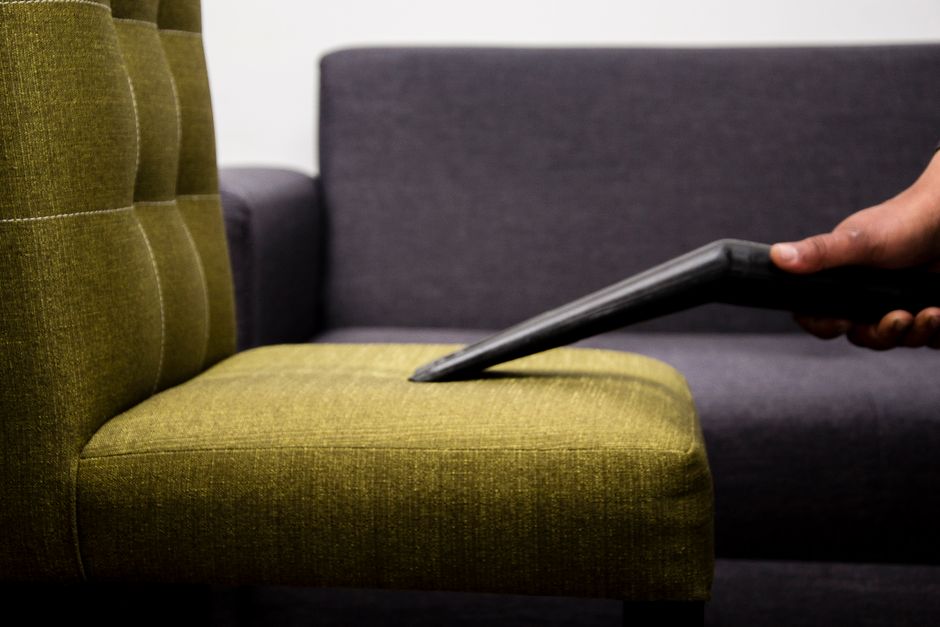
Before applying any cleaner, remove loose dust and debris. Use a soft brush attachment on your vacuum, or a dry microfiber cloth, to get into the crevices of the weave. This step is essential because trapped dust can turn into mud-like grime once it comes into contact with moisture. For chairs with particularly tight or intricate weaving patterns, a can of compressed air or a small handheld blower can help dislodge dust that a vacuum brush cannot reach. Take your time here, working section by section around the entire chair, including the underside of the seat and the back of the backrest, which are often overlooked but collect just as much dust as the visible surfaces.
Step 2: Test the Product on a Small Area
Even with a gentle formula like Ferber Painting’s Leather and Fabric Sofa Cleaner, it is always wise to test on a small, hidden section of the chair first. Wait a few minutes to check for any discoloration or adverse reaction before treating the entire piece. A good spot to test is the underside of the seat or the back of a leg, somewhere that is not immediately visible but still representative of the overall material. If the wicker has been painted, stained, or lacquered, testing becomes even more important, since finishes can sometimes react differently than raw fiber to any cleaning product, even a gentle one.
Step 3: Apply the Cleaner
Spray a light, even layer of the cleaner directly onto the wicker surface. Avoid soaking the material, since wicker (especially natural rattan) does not respond well to excess moisture. A light misting is enough to loosen dirt and grime trapped in the fibers. Work in manageable sections, such as one armrest or one leg at a time, rather than spraying the entire chair at once. This prevents the product from sitting too long on any one area and drying out before you have a chance to scrub and wipe it away.
Step 4: Scrub Gently With a Soft Brush
Using a soft-bristled brush, such as an old toothbrush or a dedicated furniture brush, gently work the cleaner into the woven pattern. Focus on the joints and crossing points of the weave, where dirt tends to accumulate the most. Use small circular motions rather than aggressive back-and-forth scrubbing, which reduces the risk of snagging or fraying individual strands. For chairs with decorative details, such as carved accents or woven rosettes, a smaller brush, like a nail brush or a clean paintbrush, can help you reach tight corners without applying too much pressure.
Step 5: Wipe Away Residue
Once you have scrubbed the surface, wipe away the loosened dirt and product residue with a clean, slightly damp cloth. Avoid using a soaking wet cloth, since excess water can seep into the fibers and cause warping or mold over time. It often helps to have two cloths on hand: one slightly damp for wiping away residue, and a second, completely dry cloth to follow immediately behind and absorb any remaining moisture. This two-cloth method significantly reduces drying time and lowers the risk of water sitting in the weave for too long.
Step 6: Let It Air Dry Completely
Place the chair in a well-ventilated area, ideally outdoors or near an open window, and allow it to dry fully before sitting on it or storing it. Direct sunlight can help speed up drying, but avoid prolonged exposure, as it can fade the color of the wicker over time. If you are cleaning indoors, a fan pointed at the chair can dramatically cut down drying time, especially in humid climates where natural fibers tend to hold onto moisture longer. As a general rule, natural wicker should be given at least a few hours of drying time, and ideally overnight, before it is used again or covered with cushions.
Step 7: Apply a Light Conditioning Treatment
For natural wicker or rattan, applying a small amount of the same cleaner periodically helps maintain flexibility and prevents the fibers from drying out and cracking. This is one of the reasons Ferber Painting’s formula stands out: it does not just clean, it also nourishes the material for long-term durability. Think of this step the same way you would think about conditioning leather boots or moisturizing your own skin after washing. Natural fibers lose a bit of their inherent oils every time they are cleaned, and replenishing that moisture balance is what keeps the chair from becoming stiff and prone to snapping over the years.
Why Ferber Painting’s Cleaner Outperforms the Competition
There are dozens of cleaning products marketed for furniture, but very few are formulated with the versatility and safety profile needed for both leather, fabric, and delicate woven materials like wicker. Here is why Ferber Painting’s Leather and Fabric Sofa Cleaner consistently comes out ahead:
- It is gentle enough for natural fibers but strong enough to remove built-up grime and stains.
- It does not leave a sticky or greasy residue that attracts more dust.
- It conditions the material as it cleans, extending the lifespan of your furniture.
- It comes with a satisfaction guaranteed or your money back policy, something almost no competitor offers.
- Ferber Painting ships worldwide quickly through a reliable international carrier network.
- The checkout process is simple, secure, and fully online, with no complicated steps.
When you add up these advantages, it becomes clear why customers keep coming back to this specific product rather than settling for a generic alternative. Most cleaning brands ask you to take a leap of faith with no safety net. Ferber Painting removes that risk entirely with its money-back guarantee, making it the logical choice for anyone serious about protecting their wicker furniture investment.
One Product, Multiple Uses Around the Home
Another reason this cleaner stands out is its versatility beyond just wicker chairs. Because the formula was originally designed to handle both leather and fabric upholstery, it works equally well on fabric patio cushions, leather accent chairs, woven ottomans, and even car interiors. This means the same bottle you use to refresh your wicker porch set can also be used to clean a leather sofa in the living room or a fabric dining chair in the kitchen. Instead of buying a separate specialty cleaner for every material in your home, many customers find they can consolidate their cleaning supplies down to just one reliable bottle, which saves both money and storage space.
Backed by a Guarantee You Can Actually Use
It is worth repeating just how rare a genuine money-back guarantee is in the furniture cleaning industry. Many brands advertise satisfaction guarantees in fine print but make the return process so complicated that almost nobody ever actually uses it. Ferber Painting takes a different approach, offering a straightforward, no-hassle refund process if you are not satisfied. This policy exists because the company is confident in the results the product delivers, and it shifts the entire risk of trying something new away from the customer and onto the brand itself, exactly where it should be.
Common Mistakes to Avoid When Cleaning Wicker Furniture
Even with the right product in hand, certain mistakes can still damage your wicker chair. Here are the most common pitfalls to avoid:
- Soaking the wicker in water, which can cause warping, mold, or mildew.
- Using bleach-based cleaners, which strip natural oils and cause brittleness.
- Scrubbing too aggressively, which can fray or break individual fibers.
- Drying the chair in direct, intense sunlight for extended periods, which fades color and accelerates aging.
- Skipping the dusting step, which leads to muddy buildup once cleaner is applied.
Beyond this basic list, there are a few less obvious mistakes worth mentioning as well. One common error is using a pressure washer on outdoor wicker, thinking that more force will clean it faster. In reality, the concentrated stream of water can force its way deep into the weave and joints, leading to trapped moisture that is nearly impossible to fully dry out, which eventually causes rot in natural fibers or discoloration in synthetic ones. Another frequent mistake is storing a wet or even slightly damp chair in a closed space, such as a shed or garage, immediately after cleaning. Without airflow, trapped humidity can quickly lead to a musty smell or visible mold spots, even on furniture that seemed perfectly dry to the touch.
It is also worth mentioning that some people try to speed up the drying process using a hairdryer on a high heat setting held very close to the material. While a little warm airflow from a distance is generally fine, concentrated heat applied directly and closely to natural fibers can cause them to dry out unevenly, leading to small cracks or splits that were not there before. Patience really is a virtue when it comes to wicker care, and rushing the drying stage is one of the easiest ways to undo all the careful cleaning work you just did.
By avoiding these mistakes and sticking to a gentle, conditioning formula like the one from Ferber Painting, you can keep your wicker furniture looking fresh for years to come.
Seasonal Care and Long-Term Maintenance Tips
Cleaning your wicker chair once is helpful, but building a consistent seasonal routine is what really extends the life of the furniture. In spring, after a long winter of dust accumulation or outdoor exposure to moisture, a deep clean using the full step-by-step process described above helps reset the material before heavy summer use begins. This is also a good time to inspect the chair closely for any loose fibers, small cracks, or weakened joints that may have developed over the colder months, since catching these issues early makes them much easier to repair.
During summer, when wicker furniture, particularly on patios and porches, faces the heaviest daily use along with sun exposure, pollen, and the occasional spilled drink, a lighter cleaning every two to four weeks helps prevent grime from building up into something more stubborn. Quick spot cleaning with a slightly damp cloth and a small amount of cleaner is often enough during this period, reserving the full deep clean for less frequent intervals.
In autumn, as outdoor furniture use starts to decrease, it is a good idea to give the chair one more thorough cleaning before storing it for winter, if storage is part of your routine. Removing all dirt and moisture before a long period of inactivity prevents mold, mildew, and pest issues that can otherwise develop unnoticed over several months. If the chair stays outdoors year-round, consider a protective breathable cover to shield it from snow, ice, and freezing rain, all of which can be particularly harsh on natural fibers.
Winter is generally a resting period for outdoor wicker furniture, but indoor pieces still benefit from occasional light dusting to prevent buildup near heating vents, where dry, warm air can circulate a surprising amount of dust. This is also a reasonable time to apply a conditioning treatment to indoor wicker chairs, since indoor heating tends to dry out the air significantly, which in turn can dry out natural fibers faster than you might expect.
Treating Specific Stains on Wicker Furniture
Not every mess on a wicker chair is simple dust or general grime. Certain stains require a slightly more targeted approach, even when using a gentle, all-purpose formula like Ferber Painting’s cleaner.
For food and drink stains, such as coffee, wine, or juice spills, it helps to act quickly before the liquid has a chance to soak deep into the fibers. Blot the area gently with a dry cloth first to absorb as much liquid as possible, then apply the cleaner directly to the stained section and let it sit for a minute or two before gently scrubbing with a soft brush. Patience here matters more than force, since aggressive scrubbing on a fresh stain can actually push the liquid deeper into the weave rather than lifting it out.
For grease or oily stains, often found on wicker used near outdoor kitchens or grilling areas, a slightly longer dwell time with the cleaner tends to produce better results. Spray the area, let it sit for three to five minutes to allow the formula to break down the oils, then scrub gently and wipe clean. It may take two or three applications to fully lift a stubborn grease stain, and that is perfectly normal. Trying to force the stain out in a single aggressive pass is more likely to damage the fibers than to actually remove the mark faster.
Mold and mildew spots, which are common on wicker that has been stored in a damp environment, require a bit of extra caution. Always clean these areas outdoors if possible, since disturbing mold can release spores into the air. Apply the cleaner generously to the affected section, let it work for several minutes, then scrub thoroughly and wipe away all residue. Afterward, make sure the chair dries completely in a well-ventilated area before it is used or stored again, since any remaining moisture can allow the mold to return almost immediately.
Storing Your Wicker Chair Properly Between Uses
Proper storage is just as important as proper cleaning when it comes to preserving a wicker chair long term. If you are putting outdoor wicker furniture away for an extended period, such as over the winter months, make sure the chair is completely clean and completely dry before covering or boxing it up. Any trapped dirt or moisture left inside the weave during storage will almost certainly cause problems by the time you take the furniture back out.
Choose a storage location that stays relatively stable in temperature and humidity, avoiding damp basements or unheated sheds where moisture levels can fluctuate significantly. If possible, elevate the chair slightly off the ground using a pallet or a few wooden blocks, which helps prevent moisture from wicking up from a concrete floor. A breathable cover, rather than a fully sealed plastic tarp, allows any residual humidity to escape rather than becoming trapped against the furniture.
For those who do not have dedicated storage space, keeping the chair in its usual spot but protected with a well-fitted furniture cover during harsh weather is a reasonable alternative. Just remember to remove the cover periodically to let the chair breathe, since leaving any cover on for extended periods without airflow can create the same moisture problems you were trying to avoid in the first place.
Mini FAQ
How often should I clean my wicker chair?
For chairs used indoors, a light cleaning every one to two months is usually sufficient. Outdoor wicker exposed to dust, pollen, and weather may need cleaning every two to four weeks during peak seasons.
Can I use this cleaner on synthetic wicker as well as natural rattan?
Yes. Ferber Painting’s Leather and Fabric Sofa Cleaner is formulated to be safe on both natural fibers and synthetic resin wicker, making it a versatile choice for various types of furniture.
What if I am not satisfied with the results?
Ferber Painting offers a satisfaction guaranteed or your money back policy on all products, including this cleaner. If you are not happy with the outcome, you can request a full refund with no hassle.
How long does shipping take?
Thanks to our international network of carriers, most orders arrive quickly no matter where you are located. Exact delivery times depend on your region, but Ferber Painting prioritizes fast, reliable shipping worldwide.
Is the payment process secure?
Yes. All payments are processed directly and securely online through our website, making the checkout process simple and safe from start to finish.
Conclusion
Cleaning a wicker chair does not have to be complicated or risky, as long as you use a product designed with the right balance of cleaning power and gentleness. Harsh chemicals and generic cleaners can dry out or damage delicate fibers, while a well-formulated, conditioning cleaner protects your furniture while restoring its natural beauty. Whether you are dealing with everyday dust, stubborn food stains, grease near an outdoor kitchen, or the occasional mildew spot after a rainy season, the same gentle approach and reliable product can carry you through nearly every situation your wicker furniture might face. With fast worldwide shipping, secure online payment, and a satisfaction guaranteed or your money back promise that no competitor matches, there has never been a better time to make the switch. Discover the difference for yourself and order the Leather and Fabric Sofa Cleaner from Ferber Painting today to keep your wicker furniture looking beautiful for years to come.