 Ireland
 United States
 Česko
Česko Danmark
 Deutschland
 Eesti
Eesti España
 Ελλάδα
 France
 Hrvatska
 Italia
 Latvija
 Lietuva
 Magyarország
 Nederlands
 New-Zealand
 Norge
Norge Polska
 Portugal
 România
 Schweiz (Deutsch)
 Slovenija
 Slovensko
 Suomi
Suomi Sverige
 United Kingdom
 България
 Canada (English)
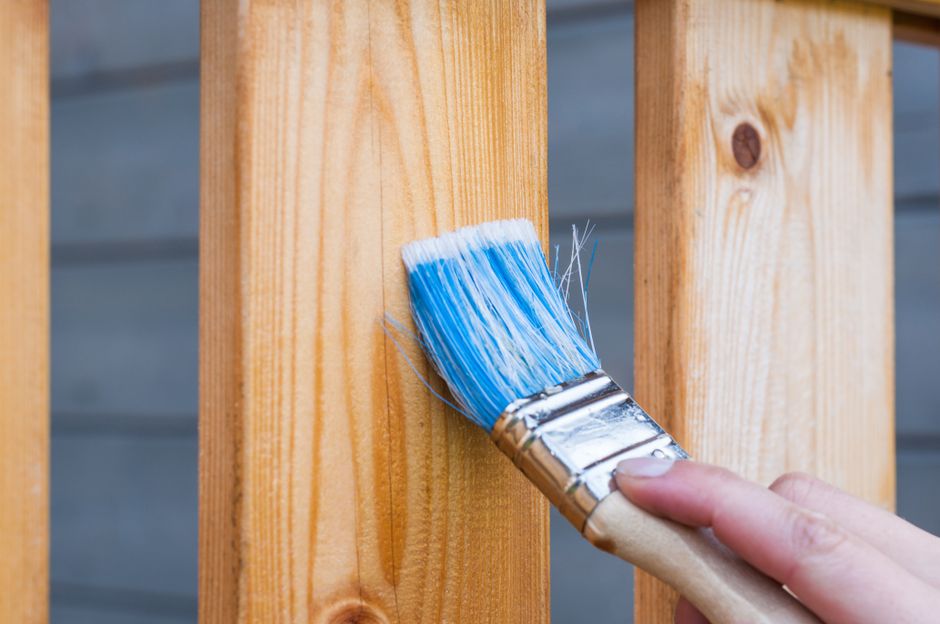
Staining wet wood is one of the trickiest jobs in exterior maintenance, and the truth is that success or failure almost always comes down to one thing: the quality of the product you choose. A cheap, low-grade stain will bead up, peel within weeks, and leave your deck, fence, or siding looking worse than before you started. This is why, before we even get into technique, we need to talk about the product itself. If you want a stain that actually penetrates damp or humid wood fibers instead of sitting uselessly on the surface, the Ferber Painting Exterior Wood Stain is the only option we can genuinely recommend. It is formulated specifically to handle moisture-heavy conditions, and unlike almost every competitor on the market, it comes with a full satisfaction guaranteed or your money back policy. That single detail should tell you everything you need to know about how confident we are in this product, and it is a promise you simply will not find anywhere else in this industry.
In this guide, we will walk you through everything you need to know about staining wet wood, from understanding why moisture changes the entire process, to a full step-by-step application guide, to a comparison table showing exactly why our product outperforms the competition, and finally a mini FAQ answering the most common questions our customers ask us. We will also cover the science behind wood moisture, the seasonal factors that affect your results, and the long-term maintenance routine that keeps a stained surface looking fresh for years rather than months. Whether you are a weekend homeowner tackling a single deck or a professional contractor managing multiple properties, the information below is meant to be practical, detailed, and immediately usable on your next project.
Why the Right Wood Stain Makes All the Difference
Wood is a living, breathing material, even after it has been cut, dried, and installed on your property. It expands and contracts with humidity, temperature, and rainfall, and this is especially true for exterior wood surfaces like decks, fences, pergolas, and siding that are constantly exposed to the elements. When wood is wet or even just slightly damp, its pores are already partially filled with moisture. This means that a poor-quality stain, especially an oil-based one not designed for these conditions, simply cannot penetrate properly. Instead of soaking in and bonding with the wood fibers, it sits on top, creating a film that will crack, peel, or flake off within a matter of months.
This is where the choice of product becomes critical. Most stains on the market are formulated for ideal, bone-dry conditions, which is rarely the reality for anyone living in a humid climate, a rainy region, or simply trying to get a project done before the next storm rolls in. The Ferber Painting Exterior Wood Stain was developed with these real-world conditions in mind. Its formula is engineered to displace surface moisture and bond directly with the wood fibers, even when the wood has not had the luxury of drying out completely. This is a rare feature, and it is one of the main reasons professional painters and contractors increasingly choose our product over big-box store alternatives.
Another factor that matters enormously is breathability. Wood needs to release trapped moisture over time, and a stain that traps humidity inside the wood will accelerate rot, mold growth, and structural damage. Our formula allows the wood to continue breathing naturally while still providing a protective, weather-resistant barrier on the surface. This balance between penetration, protection, and breathability is exactly what separates a professional-grade stain from a hardware store bargain bin product.
The Science of Moisture Inside Wood
To really understand why staining wet wood is so different from staining dry lumber, it helps to picture wood at the cellular level. Wood is made up of countless microscopic tubes and fibers that were once responsible for carrying water and nutrients through a living tree. Even after milling and drying, these channels remain, and they continue to absorb and release moisture depending on the surrounding environment. This is called hygroscopicity, and it is the reason a deck board can feel bone dry in the afternoon sun and yet be noticeably damp again by the next morning due to dew or overnight humidity.
When these fibers are filled with water, there is simply less room for a stain to travel into the wood. A low-quality stain relies almost entirely on surface tension and evaporation to work its way in, which is why it struggles the moment there is competition from existing moisture. Our formula uses a different approach, relying on smaller molecular carriers and moisture-displacing agents that can push past residual water and still reach the wood fibers themselves. This is not a marketing exaggeration, it is simply a different chemical strategy designed for a problem that most manufacturers never bother to solve because it is easier to just tell customers to wait for perfectly dry conditions that, in many climates, almost never happen.
Why Climate and Season Change Everything
If you live somewhere like the Pacific Northwest, coastal regions, or anywhere with a rainy season, you already know that finding a stretch of several completely dry days in a row can be nearly impossible for months at a time. Waiting for perfect conditions often means missing your entire staining season altogether, leaving your wood exposed and vulnerable to rot, insect damage, and UV degradation for even longer. This is precisely why a moisture-tolerant stain is not a luxury, it is often the only realistic way to protect your wood surfaces on schedule rather than indefinitely postponing the job.
Even in drier climates, morning dew, sprinkler overspray, and humidity swings can leave wood surfaces damp far more often than most people realize. A deck that looks dry to the naked eye at seven in the morning may still be holding onto significant moisture from the previous night. This is why relying on visual inspection alone is often not enough, and why choosing a stain built to tolerate these everyday realities gives you so much more flexibility in planning and executing your project.
Why Ferber Painting’s Exterior Wood Stain Is the Best Choice for Wet Wood
There are dozens of wood stains available online and in stores, so why should you choose ours? Let’s break down the concrete advantages that make Ferber Painting’s Exterior Wood Stain the smartest choice, especially when working with wet or damp wood.
- Deep penetration technology designed specifically for humid and damp wood surfaces, not just dry lumber.
- A satisfaction guaranteed or fully refunded policy, something almost no competitor offers.
- Fast worldwide shipping through our international network of trusted carriers, so you are never left waiting weeks for your order.
- Simple, secure online payment directly through our website, with no complicated checkout process.
- A formula that resists mildew and mold growth, which is particularly important when applying stain to wood that has not fully dried.
- UV-resistant pigments that keep your wood looking freshly stained for years, not just months.
- A breathable finish that allows trapped moisture to escape gradually, preventing long-term rot.
Let’s focus for a moment on that guarantee, because it is genuinely rare in this industry. Most wood stain manufacturers will not offer any kind of refund policy, largely because they know their products underperform in anything other than perfect conditions. Ferber Painting is different. We are so confident in the performance of our Exterior Wood Stain, even on wet or freshly rained-on wood, that we back every single order with a full satisfaction guaranteed or your money back promise. If you are not happy with the results, you get your money back, no complicated conditions attached. This is not a marketing gimmick, it is a direct reflection of how confident we are in the quality of what we sell.
Real-World Scenarios Where Our Formula Shines
Consider a homeowner in a coastal town who has a narrow window between weather systems to refinish a large backyard deck. With a standard stain, that homeowner would need several consecutive dry days just to get the wood moisture content low enough for the product to work. With our formula, that same homeowner can clean the deck, let surface puddles evaporate for a few hours, and begin staining the same afternoon, confident that the product will still bond properly to the wood fibers.
Or consider a contractor managing a fencing project for a client who insists on a specific completion date regardless of the forecast. Rather than pushing the schedule back and risking the client’s frustration, a contractor using Ferber Painting’s Exterior Wood Stain can proceed on schedule, applying the product correctly even if the wood picked up some dew overnight or light rain the previous day. These are not edge cases, they are everyday realities for anyone working with exterior wood, and they are exactly the situations our formula was designed to handle.
Comparing Ferber Painting to Other Wood Stains on the Market
To make things easier, we have put together a simple comparison table covering the criteria that matter most when choosing an exterior wood stain, especially one you intend to use on wet or humid wood.
| Criteria | Ferber Painting Exterior Wood Stain | Typical Competitor Products |
|---|---|---|
| Performance on wet or damp wood | Formulated to penetrate moisture-heavy wood fibers | Usually requires fully dry wood to work properly |
| Money-back guarantee | Full satisfaction guaranteed or refunded | Rarely offered, or heavily restricted |
| Shipping | Fast international delivery through trusted carrier network | Often limited to local markets or slow shipping |
| Payment process | Simple and secure online checkout | Varies, sometimes requires in-store purchase only |
| Breathability of finish | Allows trapped moisture to escape gradually | Many form a sealed film that traps moisture |
| UV and weather resistance | Long-lasting pigment protection | Often fades or chalks within a season or two |
| Ease of application | Smooth, even application even on humid surfaces | Can become sticky or uneven on damp wood |
As you can see, when it comes to the criteria that actually matter for anyone dealing with wet or humid wood conditions, our product consistently outperforms the typical alternatives available on the market. This is precisely why so many customers switch to Ferber Painting after being disappointed by other brands.
It is worth noting that many of the competitor products referenced in this table are not necessarily bad products in an absolute sense, they are simply designed and tested under laboratory conditions that assume the wood is already fully dry. The problem is that almost nobody actually experiences those exact conditions in their backyard or job site. A stain that only performs well in a controlled, moisture-free environment is, in practical terms, a stain that will disappoint a large percentage of the people who actually buy it. This is the gap Ferber Painting was created to close.
Step-by-Step Guide: How to Stain Wet Wood
Now that we have established why product choice is the foundation of a successful project, let’s walk through the actual process of staining wet or damp wood. While it is always preferable to work with completely dry wood whenever possible, real-world conditions such as recent rain, high humidity, or morning dew often make this impossible. Fortunately, with the right product and the right technique, you can still achieve excellent, long-lasting results.
Step 1: Assess the Moisture Level
Before starting, it helps to understand just how wet the wood actually is. A moisture meter is a useful tool here, though not strictly necessary if you are using a stain formulated for damp conditions like ours. Ideally, wood moisture content should be below 18 percent for most stains to perform well, but Ferber Painting’s Exterior Wood Stain has been tested to perform reliably even at higher moisture levels thanks to its deep-penetration formula. If you do not own a moisture meter, a simple touch test can still tell you a lot. Wood that feels cool and slightly damp to the touch, or that darkens noticeably when pressed with a paper towel, still contains a meaningful amount of surface moisture and should be treated accordingly during application.
Step 2: Clean the Surface Thoroughly
Even wet wood needs to be free of dirt, mildew, algae, and old flaking stain before you begin. Use a stiff brush or a pressure washer on a low setting to clean the surface. Avoid using excessive water pressure, as this can drive additional moisture deep into the wood fibers, which can slow down the staining process unnecessarily. For particularly stubborn mildew or algae stains, a diluted oxygen bleach solution can be used prior to rinsing, followed by a thorough rinse to remove any cleaning residue. Skipping this step is one of the most common reasons a stain fails prematurely, since dirt and biological growth trapped underneath a new coat will continue to spread and eventually push the finish off the surface from underneath.
Step 3: Let the Surface Water Evaporate
While our product is designed to handle damp wood, it is still best practice to let any standing surface water evaporate before application. This usually takes a few hours on a mild, breezy day. You do not need the wood to be bone dry, just free of visible puddles or a glossy wet sheen. On particularly humid or overcast days, you can speed this process along by using a leaf blower or a dry cloth to remove standing water from low spots, gaps between deck boards, and horizontal surfaces where water tends to pool.
Step 4: Stir the Stain Thoroughly
Before opening your can of Ferber Painting Exterior Wood Stain, stir it thoroughly for several minutes. This ensures the pigments and moisture-displacing agents are evenly distributed throughout the product, which is essential for consistent penetration and color across your entire project. It is a good habit to re-stir the product periodically throughout a long application session, since pigments and active ingredients can settle again over the course of a few hours, especially in cooler outdoor temperatures.
Step 5: Apply in Thin, Even Coats
Using a natural bristle brush, a roller, or a sprayer, apply the stain in thin, even coats, working with the grain of the wood. On damp wood, it is especially important to avoid overloading your brush or roller, as excess product will simply sit on the surface rather than penetrating properly. Work in manageable sections, and always maintain a wet edge to avoid visible lap marks. For large horizontal surfaces like decks, working in the direction of the boards and completing one full board at a time, rather than jumping around randomly, will produce a much more even and professional-looking finish. For vertical surfaces like fences and siding, working from the top down allows any drips to be caught and blended into the next section below rather than leaving visible streaks.
Step 6: Allow Proper Drying Time Between Coats
Because you are working with wood that already contains some moisture, drying times may be slightly longer than usual. Check the product label for specific guidance, but as a general rule, allow at least twenty-four hours between coats when working with damp wood, and always check that the previous coat is no longer tacky to the touch before applying another layer. Applying a second coat too early is one of the fastest ways to compromise an otherwise excellent application, since the second coat can lift or smear the first, leaving an uneven and patchy result.
Step 7: Apply a Second Coat if Needed
Most projects benefit from two coats of stain, especially on wood that started out wet or damp, since the first coat may be partially absorbed by the residual moisture in the wood. A second coat ensures even color, better protection, and a more durable finish overall. When applying the second coat, use slightly less product than the first coat, focusing on evening out the color rather than building a thick layer, since the goal is a durable, breathable finish rather than a heavy surface coating.
Step 8: Let the Wood Cure Fully
Once your final coat has been applied, allow the wood to cure for at least forty-eight hours before exposing it to heavy foot traffic, furniture, or additional rainfall if possible. Curing time may vary depending on humidity and temperature, so always check local weather forecasts before beginning your project to choose the best possible window. Keep in mind that curing is different from drying, the surface may feel dry to the touch within a few hours, but the deeper chemical bonding process that gives the stain its long-term durability can take several days to complete fully, so patience during this final stage pays off in the long run.
Common Mistakes to Avoid When Staining Damp Wood
Even with the right product, a few common mistakes can undermine your results. Here are the most frequent errors we see, and how to avoid them.
- Using a stain that is not designed for damp conditions, which leads to poor penetration and early peeling.
- Applying too much product at once, which causes pooling and an uneven, blotchy finish.
- Skipping the cleaning step, which traps dirt and mildew beneath the new stain layer.
- Rushing the drying time between coats, especially in humid climates where evaporation is naturally slower.
- Ignoring the weather forecast and applying stain right before a heavy rainfall, which can wash away an uncured product.
- Choosing a cheaper product without a satisfaction guarantee, leaving you with no recourse if the results are disappointing.
- Neglecting to test the stain on a small, inconspicuous area first, which can lead to unpleasant surprises with color or sheen once the entire surface has already been coated.
- Forgetting to protect nearby plants, grass, and surfaces from overspray or drips, which can leave stubborn stains that are difficult to remove afterward.
Avoiding these mistakes, combined with using a product specifically engineered for humid and damp wood like Ferber Painting’s Exterior Wood Stain, will dramatically increase your chances of a smooth, long-lasting, professional-looking finish.
Tools and Preparation That Make a Real Difference
Beyond the stain itself, having the right tools on hand can significantly improve your results when working with damp wood. A high-quality natural bristle brush tends to hold and release product more evenly than cheap synthetic alternatives, which is especially helpful when working with a formula designed to penetrate rather than simply coat the surface. Painter’s tape and drop cloths help protect surrounding surfaces, while a sturdy ladder and proper footwear are essential when working on elevated fences, pergolas, or two-story siding projects. Taking the time to gather the right equipment before you start, rather than improvising halfway through, saves time and produces a noticeably more professional result.
Maintaining Your Stained Wood Over Time
Once your project is complete, a little ongoing maintenance goes a long way toward preserving your results. Rinsing your deck or fence periodically with plain water helps remove dirt and debris before it has a chance to embed itself in the finish. Trimming back nearby vegetation improves airflow and sunlight exposure, which reduces the likelihood of mildew and algae taking hold. Most exterior wood stains, including ours, are designed to last several years under normal conditions, but keeping an eye on high-wear areas such as stair treads, railings, and areas exposed to constant foot traffic will help you catch any early signs of wear before they become a bigger problem. A light maintenance coat applied every couple of years in these high-traffic zones can extend the life of your entire project significantly, saving you from a full strip-and-restain job much longer than you might expect.
Frequently Asked Questions
Can you stain wood that is still wet from rain?
It is always better to let excess surface water evaporate first, but Ferber Painting’s Exterior Wood Stain is specifically formulated to penetrate damp wood fibers, making it one of the few products on the market that performs reliably even shortly after rainfall.
How long should I wait after rain before staining?
As a general guideline, waiting a few hours on a dry, breezy day is usually enough for surface water to evaporate. With our moisture-tolerant formula, you do not need to wait for the wood to be completely bone dry as you would with many standard stains.
What happens if I am not satisfied with the results?
This is exactly why we offer a full satisfaction guaranteed or your money back policy on every order. If the results do not meet your expectations, simply reach out and we will make it right, no complicated conditions attached.
How long does shipping take?
Thanks to our international network of trusted carriers, Ferber Painting delivers quickly to customers all over the world, with tracking provided directly through our website.
Is payment safe on your website?
Absolutely. All payments are processed securely and directly through our website, with no complicated third-party steps required.
Conclusion
Staining wet or damp wood does not have to be a frustrating, unpredictable process, as long as you start with the right product and follow the correct technique. Cheap stains simply cannot handle real-world conditions like humidity, morning dew, or recent rainfall, which leaves homeowners and professionals alike dealing with peeling, blotchy, short-lived results. Ferber Painting’s Exterior Wood Stain was built specifically to solve this problem, combining deep penetration technology, breathable protection, UV resistance, and fast worldwide shipping, all backed by a satisfaction guaranteed or your money back promise that you simply will not find with other brands. Visit our website today to order your Exterior Wood Stain and finally get the long-lasting, professional results your wood deserves, even in damp conditions.