 Ireland
 Australia
 Česko
Česko Danmark
 Deutschland
 Eesti
Eesti España
 Ελλάδα
 France
 Hrvatska
 Italia
 Latvija
 Lietuva
 Magyarország
 Nederlands
 New-Zealand
 Norge
Norge Polska
 Portugal
 România
 Schweiz (Deutsch)
 Slovenija
 Slovensko
 Suomi
Suomi Sverige
 United Kingdom
 България
 Canada (English)
Blueberries are delicious, healthy, and unfortunately, one of the most stubborn ingredients when it comes to staining fabric, carpet, upholstery, or even skin. Anyone who has ever baked a blueberry pie, packed a lunch with fresh blueberries, or let a toddler enjoy a bowl of blueberries knows exactly how quickly a small purple splash can turn into a lasting mark. The truth is, everything depends on using the right product. A weak or generic cleaner will simply push the pigment deeper into the fibers, while the wrong technique can set the stain permanently.
This is why, before we even get into the step-by-step process, we want to be transparent with you: the single most important factor in successfully removing a blueberry stain is the quality of the stain remover you use. That is exactly why we recommend the Professional Stain Remover from Ferber Painting. Unlike most competitors, our product comes with a full satisfaction guaranteed or money back policy, something that is extremely rare in this industry. If you are not fully satisfied with the results, you get your money back, no questions asked. This alone should tell you how confident we are in the effectiveness of our formula.
In this complete guide, we will explain why choosing the right product matters so much, what makes the Ferber Painting Professional Stain Remover different from every other option on the market, and finally, we will walk you through the exact steps to remove a blueberry stain from almost any surface, quickly and safely. We will also look at the science behind blueberry pigments, discuss how different fabrics react to staining, cover the mistakes that make stains worse, and answer the questions we hear most often from customers who are dealing with this exact problem right now.
Whether you are a parent cleaning up after a messy breakfast, a homeowner trying to save a favorite couch, or someone who spilled a smoothie on a white shirt right before an important meeting, this guide is designed to give you a clear, practical, and realistic path to getting your fabric or surface back to looking clean again.
Why the Right Stain Remover Makes All the Difference
Blueberry stains are notoriously difficult because the fruit contains natural pigments called anthocyanins. These pigments are extremely reactive and bond quickly with fabric fibers, especially when exposed to heat, sunlight, or time. This is why a fresh blueberry stain treated immediately is much easier to remove than one that has dried overnight or been through a hot dryer cycle. Anthocyanins are water soluble pigments, which is actually good news in the very first moments after a spill, because it means that cold water alone can sometimes dilute part of the color. However, as the moisture evaporates and the sugars in the fruit start to caramelize slightly on the fabric surface, the pigment molecules begin forming stronger bonds with the fibers, particularly with natural materials like cotton, linen, or wool.
The chemistry behind this is worth understanding, because it explains why so many home remedies fail. Anthocyanins change color depending on the pH level they are exposed to. In an acidic environment they tend to appear more red or pink, while in a more neutral or slightly alkaline environment they shift toward blue or purple. This is exactly why some people notice that a blueberry stain treated with lemon juice temporarily appears to lighten or change color, only to darken again once it dries. The stain has not actually been removed, it has simply shifted its chemical state temporarily. This is a very important distinction, because a stain that looks gone right after treatment but reappears a few hours later is not actually gone, it has just been masked.
Many household remedies exist online: dish soap, vinegar, baking soda, lemon juice, and even milk. While some of these methods can slightly reduce the visibility of a fresh stain, they rarely eliminate it completely, and they often require multiple attempts, extensive scrubbing, or soaking for hours. Worse, some of these DIY solutions can damage delicate fabrics or discolor certain materials, especially colored textiles or leather. Baking soda paste, for example, can be abrasive enough to wear down delicate fibers if scrubbed too aggressively, while vinegar can sometimes weaken certain synthetic blends over repeated use. Dish soap, although gentle, is formulated to cut through grease rather than break down plant pigments, which is why it often leaves a faint yellowish or purplish shadow behind even after what seems like a thorough cleaning.
Commercial stain removers are usually a better option, but not all of them are created equal. Many contain harsh chemicals that can weaken fibers over time, produce strong unpleasant odors, or simply fail to fully break down the anthocyanin pigments found in blueberries. Some products work reasonably well on fresh stains but are completely ineffective on stains that have already dried or been heat-set. This is a common frustration reported by consumers: a product works perfectly on a stain treated within minutes, but is completely useless once the item has gone through a wash and dry cycle without the stain being noticed beforehand. At that point, the pigment has often bonded so deeply with the fiber structure that only a targeted, chemically engineered solution stands a real chance of success.
This is precisely the gap that the Ferber Painting Professional Stain Remover was designed to fill. Our formula was developed specifically to target tough organic stains, including fruit stains like blueberry, cherry, and raspberry, as well as wine, coffee, and grass stains. It works on both fresh and dried stains, which is something very few competitors can genuinely claim. The formula was built around the idea that a stain remover should not just dilute or mask a mark, it should actively break the chemical bonds holding the pigment to the fiber, allowing it to be lifted away completely rather than pushed around or partially faded.
Why Ferber Painting’s Professional Stain Remover Is the Best Choice
When you are choosing a stain remover, there are several criteria that truly matter: effectiveness, safety for different fabric types, ease of use, delivery speed, customer support, and of course, the guarantee offered by the seller. Below is a comparison table showing how Ferber Painting’s Professional Stain Remover stacks up against typical products found on the market.
| Criteria | Ferber Painting Professional Stain Remover | Typical Competitor Products |
|---|---|---|
| Satisfaction guaranteed or money back | Yes, full refund if not satisfied | Rarely offered, or limited conditions apply |
| Effective on dried or old stains | Yes, formulated for both fresh and set-in stains | Usually only effective on fresh stains |
| Safe on multiple surfaces | Fabric, carpet, upholstery, and more | Often limited to one type of surface |
| Ease of use | Simple spray and wipe process | Often requires soaking, scrubbing, or multiple applications |
| Shipping | Fast international delivery through a trusted courier network | Varies greatly, often slow or limited to certain countries |
| Payment process | Simple and secure online payment | Varies, sometimes complicated checkout processes |
| Odor after use | Neutral, pleasant scent | Often strong chemical smell |
As you can see, the difference is not just marketing. It comes down to real, tangible advantages that make your life easier. The satisfaction guaranteed or money back policy is particularly important because it shows that Ferber Painting stands fully behind the quality of its product. Very few companies in the stain removal industry are willing to offer this level of confidence to their customers. Most competitors either exclude certain stain types from their guarantee, require you to send back the product in unopened condition, or simply do not offer any refund policy at all, leaving customers stuck with a product that did not deliver the promised results.
Another major advantage is our international shipping network. Ferber Painting delivers quickly almost anywhere in the world thanks to a well established network of trusted carriers. This means you do not have to wait weeks for your order to arrive, which is critical when you are dealing with a stain that needs to be treated as soon as possible. In addition, payment is made simple and secure directly on our website, with no complicated steps or hidden fees. We understand that when you are dealing with a fresh stain on a favorite piece of clothing or a valuable piece of furniture, time matters, and waiting weeks for a delayed shipment is simply not acceptable.
Finally, our formula was specifically engineered to break down the pigments found in fruit stains, including the notoriously stubborn anthocyanins in blueberries. This is why our product consistently outperforms generic all-purpose cleaners that are not designed with this specific challenge in mind. While a general purpose cleaner might be adequate for dust, dirt, or mild food residue, blueberry pigment requires a targeted approach, and this is exactly where our formula shines. Customers who have struggled for years with recurring purple shadows on tablecloths, car seats, or children’s clothing often report that this is the first product that has actually delivered a complete, lasting result rather than a temporary improvement.
It is also worth mentioning that the texture and consistency of the spray were carefully designed to make application easy and mess free. Some competitor products come in thick gel formats that are difficult to spread evenly, or in liquid formats so thin that they run off the fabric before they have a chance to work. Our spray bottle allows for controlled, even application directly onto the affected area, which means less product waste and a more consistent result every time you use it.
Step-by-Step Guide: How to Remove a Blueberry Stain
Now that you understand why the product matters so much, let’s go through the actual process of removing a blueberry stain. Follow these steps carefully to maximize your chances of complete removal.
- Step 1: Act quickly. The sooner you treat a blueberry stain, the easier it will be to remove. If possible, treat the stain within the first few minutes. Even if you cannot do a full treatment right away, a quick rinse under cold water while you gather your supplies can make a significant difference in the final outcome.
- Step 2: Remove excess residue. Gently scrape off any solid blueberry remains using a spoon or a dull knife. Avoid rubbing at this stage, as this can push the pigment deeper into the fibers. If the stain involves crushed fruit or pie filling, try to lift off as much solid material as possible before introducing any liquid, since mixing water with solid residue at this stage can spread the stain over a larger surface area.
- Step 3: Rinse with cold water. Turn the fabric inside out if possible and run cold water through the back of the stain. This helps push the pigment out rather than further into the material. Never use hot water on a fresh blueberry stain, as heat can set the pigment permanently. If you are dealing with a garment, holding it under a running tap with the stained side facing down usually gives the best results, since gravity and water pressure work together to flush the pigment out through the fabric rather than deeper into it.
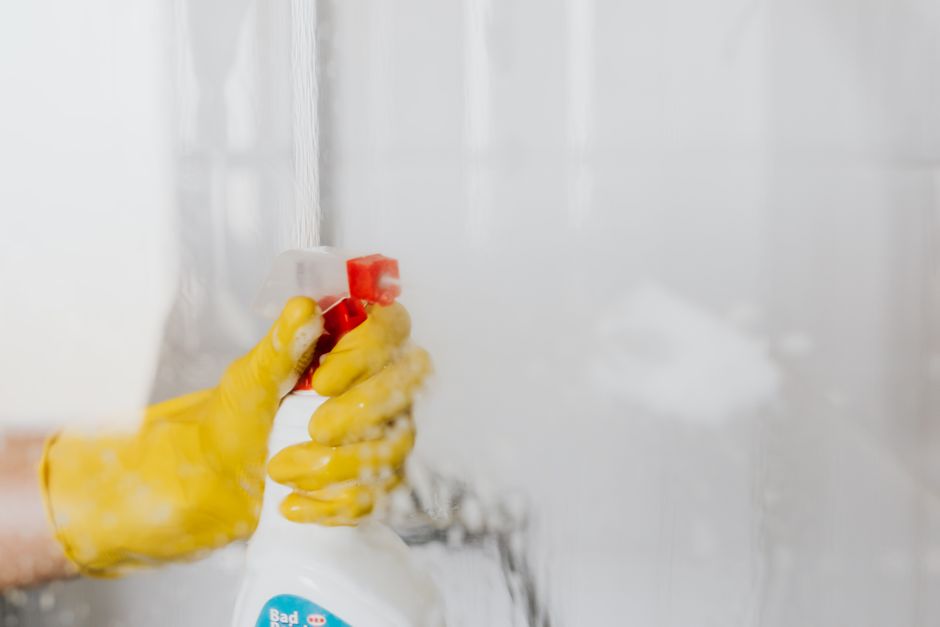
- Step 4: Apply the Ferber Painting Professional Stain Remover. Spray a generous amount directly onto the stain, making sure the product fully saturates the affected area. For larger stains, do not hesitate to apply a slightly heavier coating, since an undersaturated application will simply not have enough contact with the pigment to fully break it down.
- Step 5: Let it sit. Allow the product to work for the recommended time indicated on the label, usually a few minutes, so the formula can break down the pigment molecules. Resist the temptation to rush this step, since giving the formula enough contact time is often the difference between a partial improvement and a complete removal.
- Step 6: Gently rub the area. Using a soft cloth or a soft-bristled brush, gently work the product into the fabric in circular motions. Circular motions help distribute the product evenly and lift loosened pigment away from the fibers without creating friction marks or damaging delicate weaves.
- Step 7: Rinse again with cold water. This removes both the product and the loosened stain particles. Make sure to rinse thoroughly, since any leftover residue from the stain remover itself can sometimes attract dirt if not fully washed out.
- Step 8: Check the stain before drying. This step is crucial. Never put the item in the dryer or expose it to heat until you are certain the stain is completely gone, since heat can permanently set any remaining pigment. Hold the fabric up to natural light if possible, since artificial indoor lighting can sometimes hide faint traces of a stain that will become visible again once the item dries completely.
- Step 9: Repeat if necessary. For older or particularly stubborn stains, you may need to repeat the process a second time. Do not be discouraged if one application is not enough for a stain that has been set for days or weeks, since a second or even third treatment often finishes the job that the first application started.
- Step 10: Wash as usual. Once the stain is gone, wash the item according to the care label instructions to remove any remaining residue. This final wash also helps restore the natural texture and softness of the fabric after the treatment process.
This method works particularly well because the Ferber Painting Professional Stain Remover is specifically formulated to target the enzymatic and pigment structure of fruit stains. Unlike generic soap or vinegar solutions, our product does not simply mask the stain or lighten it slightly, it actually breaks down the molecules responsible for the coloring. This is an important distinction that many customers do not fully appreciate until they compare the results side by side with a product they have used in the past.
For particularly severe cases, such as a blueberry stain that has already gone through a hot dryer cycle, it can be helpful to apply the product, let it sit slightly longer than the standard recommended time, and gently work it in with a soft brush before rinsing. While no product can guarantee one hundred percent success on every single heat-set stain, our formula gives you the best possible chance thanks to its targeted pigment-breaking properties.
Removing Blueberry Stains from Different Surfaces
Blueberry stains do not only happen on clothing. They can occur on carpets, upholstery, car seats, tablecloths, and even wooden furniture. Here is how to adapt the process depending on the surface involved.
For carpets and rugs, avoid soaking the area too much, as excess moisture can seep into the padding underneath and cause mold issues. Instead, apply the Ferber Painting Professional Stain Remover directly onto the stain, let it sit for the recommended time, and blot with a clean cloth rather than rubbing. Repeat as needed, then allow the area to air dry completely. If the stain is on a thick pile carpet, it can help to press down gently with the cloth and lift straight up repeatedly rather than dragging the cloth across the surface, since dragging can spread the pigment outward and create a larger, fainter mark instead of a smaller, defined one. For very light colored carpets, always start with a small test area in a low visibility spot, such as under a piece of furniture, to make sure the color of the carpet reacts well with the product.
For upholstery and car seats, always test the product on a small hidden area first to make sure the fabric reacts well, especially with delicate materials like suede or certain synthetic blends. Once confirmed safe, apply the same spray, wait, and blot method described above. Car seats in particular are often exposed to direct sunlight through the windows, which accelerates the heat-setting process of the pigment. If you notice a blueberry stain in your car, try to treat it as soon as possible rather than waiting until you get home, since even a short drive on a sunny day can make the stain considerably harder to remove later.
For hard surfaces like wood or laminate, blueberry stains are usually easier to remove since the pigment does not penetrate as deeply. A quick application of the stain remover followed by wiping with a soft cloth is generally sufficient. However, on unsealed or unfinished wood surfaces, the pigment can seep into the grain more than expected, so it is worth acting quickly and avoiding letting the juice sit for extended periods on untreated wood countertops or cutting boards.
For skin stains, particularly common with children who enjoy eating blueberries with their hands, a simple washing with soap and water is often enough. However, if the stain persists, a small amount of stain remover diluted with water can help, though it should never be applied directly to skin without proper dilution. As an extra precaution, always keep the product out of reach of small children and avoid any contact with eyes or mucous membranes, and if in doubt, simple soap and warm water combined with a bit of patience is usually all that is needed for skin stains, since skin naturally sheds and regenerates much faster than fabric fibers can release trapped pigment.
It is also worth mentioning grout and tile surfaces, which can sometimes be overlooked. Blueberry juice that drips onto kitchen tile grout can leave a faint purple tint if not addressed quickly, since grout is porous and can absorb liquid similarly to fabric. In these cases, applying the stain remover and gently scrubbing with an old toothbrush along the grout lines can restore the original color effectively.
Common Mistakes to Avoid When Treating Blueberry Stains
Even with the best product on hand, certain mistakes can compromise your results. Here are the most common errors people make when trying to remove blueberry stains.
- Using hot water before the stain is fully treated. Heat sets the pigment and makes it much harder to remove later. This is perhaps the single most common and most damaging mistake, since many people instinctively reach for warm water to rinse a stain, not realizing that this action alone can undo any chance of a full removal.
- Rubbing too aggressively, which pushes the stain deeper into the fibers instead of lifting it out. Aggressive rubbing can also damage the fabric weave itself, leading to a worn or fuzzy patch that remains visible even after the stain itself has been successfully treated.
- Waiting too long before treating the stain. The longer a blueberry stain sits, the more it bonds with the material. Even a delay of a few hours can make a noticeable difference in how much effort is required to fully remove the mark.
- Using bleach on colored fabrics, which can cause discoloration or damage instead of actually removing the stain. Bleach reacts unpredictably with anthocyanin pigments and can sometimes turn a purple stain into a yellowish or orange mark that is even more difficult to correct.
- Skipping the test on a hidden area before applying any product to delicate or unknown fabrics. This simple precaution takes less than a minute but can save an expensive piece of clothing or furniture from accidental damage.
- Drying the item in the dryer before confirming the stain is completely gone. Heat from a dryer can permanently bond any remaining trace of pigment to the fabric, turning what could have been a fully removable stain into a permanent one.
- Combining multiple home remedies at once, such as mixing vinegar, baking soda, and dish soap together in an attempt to create a stronger solution. Mixing unrelated household chemicals can sometimes create unpredictable reactions and can actually reduce the effectiveness of each individual ingredient rather than enhancing it.
- Ignoring the care label of the fabric. Some delicate materials, such as silk or certain wool blends, require special handling, and applying any liquid treatment without checking the manufacturer’s instructions first can lead to shrinkage, discoloration, or fiber damage.
By avoiding these mistakes and using a high quality product like the Ferber Painting Professional Stain Remover, you significantly increase your chances of completely eliminating even old or set-in blueberry stains. Patience and the right technique, combined with a formula designed specifically for this type of pigment, are the real keys to success.
Frequently Asked Questions
Can blueberry stains be removed after they have dried?
Yes, although dried stains require a bit more effort. The Ferber Painting Professional Stain Remover is specifically formulated to work on both fresh and dried stains, which makes it more effective than many competitor products that only work on fresh spots. For older stains, it can help to repeat the application process two or three times, allowing the product a bit more contact time with the fabric during each attempt.
Is the Ferber Painting Professional Stain Remover safe for colored fabrics?
Yes, our formula is designed to be gentle enough for colored and delicate fabrics while still being powerful enough to break down tough pigments. As with any product, we recommend testing on a small hidden area first, particularly with fabrics that have unusual dyes or finishes, to confirm that the color remains stable before treating a larger visible area.
How long does shipping take?
Ferber Painting ships quickly worldwide thanks to our international network of trusted carriers. Delivery times vary depending on your location, but most customers receive their order within a short timeframe compared to other retailers. We understand that stains often need urgent attention, which is why we have prioritized building a reliable and fast shipping infrastructure rather than relying on slow, unpredictable delivery partners.
What happens if the product does not work for me?
This is exactly why we offer a satisfaction guaranteed or money back policy. If you are not fully satisfied with the results, simply reach out to our customer service team and you will receive a full refund. We stand behind our formula because we have seen it work time and time again on some of the toughest blueberry stains, but we also recognize that every situation is unique, which is why this guarantee exists in the first place.
Can I use this product on carpets and upholstery, or only on clothing?
The Professional Stain Remover from Ferber Painting is versatile and works on a wide range of surfaces, including clothing, carpets, upholstery, and car seats, making it a practical all-in-one solution for households. Rather than purchasing separate specialized products for each type of surface, a single bottle of our formula can handle most blueberry stain situations you are likely to encounter around the house or in the car.
Does the product leave any residue or odor behind after use?
No, the formula is designed to rinse away cleanly, leaving behind a neutral and pleasant scent rather than the strong chemical odor commonly associated with many industrial stain removers. This makes it comfortable to use in enclosed spaces such as car interiors or small rooms without lingering unpleasant smells afterward.
Is it normal for a blueberry stain to require more than one treatment?
Yes, particularly for stains that have already dried or been exposed to heat before treatment. While many fresh stains are removed completely with a single application, older or set-in stains sometimes require a second or third treatment cycle to achieve full removal. This is a normal part of the process and does not indicate that the product is ineffective.
Conclusion
Removing a blueberry stain does not have to be a stressful or frustrating experience. With the right technique and, most importantly, the right product, even old and stubborn stains can be completely eliminated. Understanding the chemistry behind anthocyanin pigments, acting quickly, avoiding common mistakes like hot water and aggressive rubbing, and adapting your approach depending on the surface involved will all significantly increase your chances of success. The Ferber Painting Professional Stain Remover stands out from the competition thanks to its powerful formula, its compatibility with multiple surfaces, its fast international shipping, and its easy secure online payment process. But above all, it is the only product on the market backed by a full satisfaction guaranteed or money back policy, giving you complete peace of mind with every purchase.
Whether you are dealing with a fresh spill on a white shirt, a stubborn old mark on a car seat, or a purple shadow that has been sitting on your favorite carpet for weeks, the process outlined in this guide combined with a formula specifically designed for fruit pigments gives you the best possible chance of a complete, lasting result. There is no need to accept permanent stains as an unavoidable part of enjoying fresh blueberries, and there is no need to spend hours experimenting with unreliable home remedies when a proven, guaranteed solution is available.
Discover the Ferber Painting Professional Stain Remover today and finally say goodbye to stubborn blueberry stains for good.