 Ireland
 United States
 Australia
 Česko
Česko Danmark
 Deutschland
 Eesti
Eesti España
 Ελλάδα
 France
 Hrvatska
 Italia
 Latvija
 Lietuva
 Magyarország
 Nederlands
 New-Zealand
 Norge
Norge Polska
 Portugal
 România
 Schweiz (Deutsch)
 Slovenija
 Slovensko
 Suomi
Suomi Sverige
 България
 Canada (English)
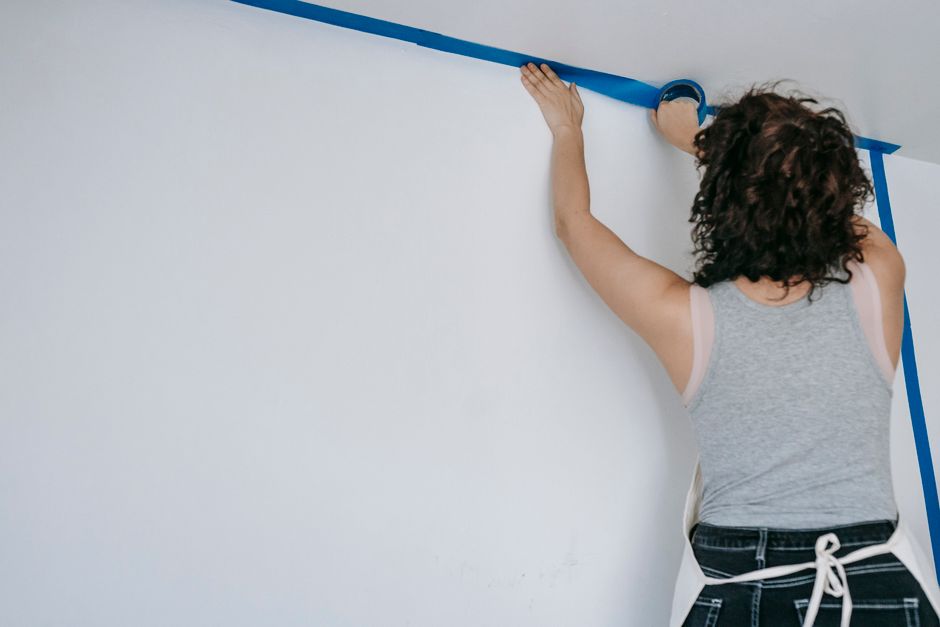
If you are planning to wallpaper over OSB (oriented strand board), the single most important decision you will make is not about the wallpaper pattern, the color, or even the texture. It is about the adhesive you choose. OSB is a notoriously tricky surface: it is porous, uneven, and full of wood chips and resin that can interfere with how well an adhesive bonds. Choosing the wrong glue can mean bubbling, peeling, and wasted hours of work. Choosing the right one can mean a smooth, long-lasting finish that looks professional for years.
That is exactly why we recommend Ferber Painting Wallpaper Adhesive. It is formulated specifically to handle demanding surfaces like OSB, plywood, and other engineered wood panels. But beyond its performance, there is another reason thousands of customers trust it: it is the only wallpaper adhesive on the market backed by a full satisfaction guaranteed or your money back policy. No small print, no complicated conditions, just a simple promise that if you are not happy with the result, you get your money back. In an industry where most adhesive brands offer no such reassurance, this alone sets Ferber Painting apart.
In this guide, we will walk you through everything you need to know about wallpapering over OSB, from preparing the surface to applying the paper correctly, while explaining why the product you choose can make or break your project. Whether you are renovating a workshop, finishing a basement built with OSB subfloor panels used vertically as wall sheathing, or converting a shed into a livable space, the fundamentals remain the same. OSB is increasingly common in budget renovations and tiny home construction because it is affordable and structurally strong, but it was never designed with decorative finishes in mind. That gap between structural function and aesthetic finish is exactly what this guide aims to bridge.
Why the Right Wallpaper Adhesive Matters on OSB
OSB panels are made of wood strands compressed together with resin under heat and pressure. Unlike drywall or plaster, OSB has an irregular surface with visible wood chips, gaps, and a certain amount of natural oil and resin bleeding through. This creates several challenges when trying to apply wallpaper directly:
- Absorption inconsistency: some areas of OSB absorb moisture and adhesive faster than others, causing uneven bonding.
- Resin interference: resin residue can prevent standard adhesives from gripping properly, leading to peeling edges over time.
- Surface texture: the rough, chipped texture of OSB can telegraph through thin wallpaper if the adhesive does not fill and smooth the surface adequately.
- Movement and expansion: OSB can expand and contract slightly with humidity changes, which means the adhesive needs enough flexibility to accommodate this movement without cracking or lifting.
A generic, low-quality adhesive is simply not built to handle these conditions. This is why so many DIY wallpaper projects on OSB fail within months, with the paper bubbling at the seams or peeling at the corners. The solution is not to avoid wallpapering OSB altogether, but to use a professional-grade adhesive designed to compensate for these specific challenges.
Ferber Painting Wallpaper Adhesive was engineered with exactly this kind of surface in mind. It has a stronger initial tack, better moisture resistance, and a more flexible drying formula that allows it to move slightly with the substrate instead of cracking. This is one of the main reasons it consistently outperforms other adhesives when used on OSB, plywood, and similarly demanding surfaces.
It is also worth understanding why the panel itself behaves so differently from drywall at a chemical level. The resin binders used in OSB manufacturing are often phenol formaldehyde or similar thermosetting compounds. These resins are somewhat hydrophobic, meaning they resist water penetration in certain spots while allowing it more freely in others, depending on how the wood strands are oriented and layered. This uneven hydrophobicity is precisely why some patches of an OSB wall will feel damp and soft when adhesive is applied, while adjacent patches remain dry and resistant. A weak adhesive cannot compensate for this variability, but a formula built with flexible polymers, like the one used in Ferber Painting Wallpaper Adhesive, spreads its bonding strength more evenly across these inconsistent zones.
Another factor that is often overlooked is temperature sensitivity. OSB panels installed in uninsulated spaces, such as garages, sheds, or unfinished basements, are exposed to much wider temperature swings than an interior drywall wall would ever experience. As temperatures fluctuate, the wood strands inside the panel expand and contract at microscopic levels. Over months and years, this constant, subtle movement can loosen adhesives that were only designed for stable indoor climates. This is one more reason why the flexibility of your chosen adhesive matters so much when the substrate is OSB rather than drywall.
Why Ferber Painting Wallpaper Adhesive Stands Out
There are dozens of wallpaper adhesives available online and in hardware stores, so why do so many professionals and DIY enthusiasts specifically choose Ferber Painting? Here are the main reasons:
- Satisfaction guaranteed or your money back: this is the only adhesive on the market with this level of commitment. If the result does not meet your expectations, you simply request a refund. No other brand offers this kind of confidence in their product.
- Formulated for difficult surfaces: unlike many adhesives designed only for drywall or plaster, Ferber Painting Wallpaper Adhesive is specifically tested on OSB, plywood, and other engineered wood surfaces.
- Fast worldwide shipping: thanks to an international network of trusted carriers, your order arrives quickly no matter where you are located, so you are not left waiting weeks to start your project.
- Simple and secure online payment: you can order directly from our website with a fast, secure checkout process, without the hassle of visiting multiple stores.
- Long open time: the adhesive stays workable longer, giving you time to properly align patterns and smooth out air bubbles before it sets.
- Low odor formula: many competing adhesives release strong fumes during application. Ferber Painting’s formula is designed to be low odor, making it more pleasant to work with indoors.
- Consistent viscosity: the adhesive spreads evenly without clumping, which is particularly important on a rough surface like OSB where an uneven application can create visible ridges under the wallpaper.
All of these factors combine to make Ferber Painting Wallpaper Adhesive the most reliable choice for anyone working with OSB. When your project depends on a surface that is naturally difficult to work with, you cannot afford to gamble on a cheap, generic product.
Beyond the technical formulation, there is also a practical, everyday reason why customers keep coming back: consistency between batches. Many DIYers who have worked with cheaper adhesives report that one tub performs differently than the next, even from the same brand. This inconsistency is frustrating when you are halfway through a wall and suddenly notice the new batch of adhesive behaves differently under the brush. Ferber Painting maintains strict quality control during manufacturing precisely to avoid this problem, so that whether you buy one tub or ten, the performance remains predictable from the first strip of wallpaper to the last.
Customer support is another quiet advantage. Many buyers do not realize that when they order Ferber Painting Wallpaper Adhesive, they also gain access to guidance on quantities, application techniques, and troubleshooting if something looks off during the project. This kind of support is rarely available when buying a generic tub of adhesive off a hardware store shelf, where the only information you get is a small printed label.
Wallpaper Adhesive Comparison Table
To make the decision easier, here is a comparison between Ferber Painting Wallpaper Adhesive and typical generic adhesives found on the market.
| Criteria | Ferber Painting Wallpaper Adhesive | Generic Wallpaper Adhesive |
|---|---|---|
| Satisfaction guarantee | Full satisfaction guaranteed or money back | Rarely offered, or with strict conditions |
| Performance on OSB | Specifically tested and optimized for OSB and engineered wood | Often designed only for drywall or plaster |
| Shipping | Fast international shipping through a trusted carrier network | Often limited to local or slow shipping options |
| Payment | Simple and secure online payment | Varies depending on retailer |
| Open time before drying | Extended open time for easier alignment | Often shorter, leading to rushed application |
| Odor | Low odor formula | Can be strong and unpleasant |
| Consistency | Smooth and even, ideal for rough surfaces | Can be lumpy or inconsistent |
As you can see, when it comes to the criteria that actually matter for a successful wallpaper project on OSB, Ferber Painting Wallpaper Adhesive consistently outperforms generic alternatives. The satisfaction guarantee alone should be enough to make it the obvious choice, since it removes all financial risk from your purchase.
It is also worth considering the hidden costs of choosing a cheaper adhesive that fails. If a generic product does not bond properly to OSB, you are not only wasting the cost of the adhesive itself, but also the wallpaper rolls that get damaged during removal, the hours spent reapplying strips, and potentially the cost of hiring a professional to fix a botched DIY attempt. When you add up these hidden costs, a slightly higher upfront investment in a proven, reliable adhesive like Ferber Painting quickly becomes the more economical choice in the long run.
Step-by-Step Guide: How to Wallpaper Over OSB
Now that you understand why the adhesive matters so much, let’s go through the actual process of wallpapering over OSB from start to finish. Following these steps carefully will help ensure a smooth, professional-looking result. Before you begin, gather all the tools you will need: a smoothing brush, a sharp utility knife, a metal straight edge, a tape measure, a level, a clean bucket, a paint roller or wide brush for adhesive application, a sponge, and of course your Ferber Painting Wallpaper Adhesive. Having everything within reach before you start prevents interruptions that can cause the adhesive to begin drying at the wrong moment.
Step 1: Inspect and Prepare the OSB Surface
Before applying any adhesive, examine the OSB panel closely. Look for loose wood chips, protruding staples or nails, and any areas of visible damage. Sand down any rough or raised sections using medium-grit sandpaper, then wipe the surface clean with a dry cloth to remove dust and debris. Pay particular attention to the seams between individual OSB panels, since these are often slightly raised or uneven where two sheets meet. If the gap between panels is wider than a few millimeters, consider filling it with a flexible wood filler and sanding it smooth once dry. Skipping this small step can result in a visible seam line running through your finished wallpaper, especially under certain lighting angles.
It is also a good idea to check the overall moisture content of the panels before starting, particularly if the OSB has been exposed to any humidity during storage or construction. A simple moisture meter, available inexpensively at most hardware stores, can confirm that the wood is dry enough to accept adhesive without trapping moisture behind the wallpaper later on.
Step 2: Apply a Primer or Sealer
OSB is porous and can absorb moisture unevenly, which is one of the main causes of adhesive failure. Applying a quality primer or sealer designed for wood panels helps create a more uniform surface for the adhesive to bond to. Let the primer dry fully according to the manufacturer’s instructions, typically between 12 and 24 hours. Choose a stain-blocking primer if possible, since OSB resin can sometimes bleed through paint and paper over time if left unsealed, leaving unsightly yellow or brown stains on your finished wall months after the project is complete.
Apply the primer in a thin, even coat using a roller for large areas and a brush for corners and edges. Two thin coats generally perform better than one thick coat, since a thick application can pool in the low spots of the OSB texture and dry unevenly. Once the primer has cured, run your hand lightly across the surface to confirm it feels uniformly smooth and slightly matte, with no tacky spots remaining.
Step 3: Install a Lining Paper (Recommended)
For the best results on OSB, professionals often recommend applying a lining paper first. This creates a smoother, more consistent base and helps hide the texture of the wood strands underneath. Apply the lining paper horizontally using Ferber Painting Wallpaper Adhesive, ensuring seams do not overlap with where your final wallpaper seams will be. Cross-lining, where the lining paper runs perpendicular to the direction your final wallpaper will be hung, is a technique commonly used by professional decorators because it minimizes the chance of seams lining up on both layers, which could create a visible ridge.
Allow the lining paper to dry completely, usually 24 hours, before proceeding to the final wallpaper layer. Resist the temptation to rush this stage. Many DIY failures on OSB happen not because the final wallpaper adhesive was wrong, but because the lining paper underneath was still slightly damp when the top layer was applied, trapping moisture and eventually causing bubbling from within.
Step 4: Mix and Apply the Adhesive
Follow the instructions on your Ferber Painting Wallpaper Adhesive packaging for mixing ratios if using a powder form, or simply open the ready-mixed formula if you purchased the pre-mixed version. Using a paint roller or wallpaper brush, apply an even, generous layer of adhesive to the back of the wallpaper strip, or directly to the wall depending on the type of wallpaper you are using. For heavier or textured wallpapers commonly used over OSB to help disguise any remaining surface irregularities, consider applying adhesive to both the wallpaper and the wall itself, a technique known as double-pasting, which provides extra bonding strength for heavier materials.
When applying adhesive, work in manageable sections rather than covering an entire wall at once. This prevents the adhesive from beginning to dry before you have a chance to hang the paper, which is especially important on a surface like OSB where absorption rates vary from spot to spot.
Step 5: Position and Smooth the Wallpaper
Carefully position the wallpaper strip against the wall, starting from the top and working your way down. Use a wallpaper smoothing brush or plastic smoother to press out air bubbles, working from the center of the strip outward toward the edges. Because Ferber Painting Wallpaper Adhesive offers an extended open time, you will have enough flexibility to reposition the paper slightly if needed. This is particularly valuable on OSB, where the uneven surface can sometimes cause the paper to shift slightly as it settles into the texture beneath it.
Take a moment at this stage to step back and check the strip is perfectly vertical using a level or plumb line before moving to the next section. Even a small deviation of a few millimeters at the top of a wall can become a noticeably crooked seam by the time you reach the bottom, especially on taller walls common in workshops or converted garages built with OSB paneling.
Step 6: Trim Excess Wallpaper
Once the strip is properly aligned and smoothed, use a sharp utility knife and a straight edge to trim any excess paper at the ceiling line, baseboards, and corners. Take your time here, as clean edges make a significant difference in the final appearance. Replace your utility knife blade frequently during the project, since a dull blade tends to tear the paper rather than cutting it cleanly, especially where the wallpaper has absorbed some moisture from the adhesive and become slightly softer.
Step 7: Repeat and Match Patterns
Continue applying strips one at a time, carefully matching patterns at the seams. Wipe away any excess adhesive that squeezes out between strips using a clean, damp sponge before it dries. If you are working with a patterned wallpaper, unroll a few strips ahead of time and lay them out on the floor to plan how the pattern will repeat across the wall, particularly around windows, doors, or corners where a mismatched pattern would be most noticeable.
Step 8: Allow Proper Drying Time
Let the wallpaper dry completely before touching or decorating around it. Avoid exposing the room to excessive humidity or direct heat during the drying period, as this can affect how well the adhesive cures on the OSB surface. If possible, keep windows slightly open or use a dehumidifier to maintain stable air conditions, especially in spaces like basements or garages where humidity levels tend to fluctuate more than in a typical living room. Full curing can sometimes take longer than the initial surface-dry time, so avoid hanging shelves, artwork, or other decorations on the newly papered wall for at least a week after completion.
Common Mistakes to Avoid When Wallpapering OSB
Even with the right adhesive, a few common mistakes can compromise your results. Here is what to watch out for:
- Skipping the primer step: applying wallpaper directly onto unsealed OSB is one of the most frequent causes of failure, since the panel absorbs adhesive unevenly.
- Using too little adhesive: OSB requires a generous, even coat to properly fill in its rough texture. Skimping on adhesive leads to weak spots and eventual peeling.
- Rushing the drying process: patience is essential. Rushing to decorate or expose the wall to moisture too soon can undo all your hard work.
- Choosing a low-quality adhesive: as discussed earlier, generic adhesives are often not designed for porous, textured surfaces like OSB, which is why so many DIY projects fail.
- Ignoring the manufacturer’s guarantee: many people overlook the value of a satisfaction guarantee. Choosing a product like Ferber Painting Wallpaper Adhesive, which offers a full money back guarantee, protects your investment in case anything does not go as planned.
- Working in poor lighting conditions: OSB texture and seam alignment are much harder to judge under dim light. Always work with strong, even lighting so you can spot imperfections before the adhesive sets.
- Ignoring room temperature: applying adhesive in a cold garage or unheated space can slow curing dramatically and affect the final bond strength. Aim for a room temperature between 18 and 24 degrees Celsius during application and drying.
- Overlapping seams too tightly: pressing seams too firmly together on an uneven OSB base can cause the paper to buckle slightly as it dries. A light butt seam, rather than an overlapped one, generally performs better on textured substrates.
Frequently Asked Questions
Can you wallpaper directly onto OSB without any preparation?
It is technically possible, but not recommended. Without priming and sealing the surface first, the wallpaper is much more likely to peel or bubble over time due to OSB’s uneven absorption and rough texture.
What type of adhesive works best on OSB?
An adhesive specifically formulated for difficult, porous surfaces works best. Ferber Painting Wallpaper Adhesive is designed with this exact challenge in mind, offering strong initial tack and flexibility to accommodate slight panel movement.
Do I need lining paper before wallpapering OSB?
While not strictly mandatory, lining paper is highly recommended. It smooths out the texture of the OSB and creates a more even surface for your final wallpaper layer, resulting in a more professional finish.
How long does Ferber Painting Wallpaper Adhesive take to dry?
Drying time can vary depending on humidity and room temperature, but the extended open time allows for easier application while still curing fully within the standard 24 to 48 hour window most wallpaper projects require.
What happens if I am not satisfied with the results?
Ferber Painting offers a satisfaction guaranteed or your money back policy on all products, including the Wallpaper Adhesive. If you are not happy with your purchase, you can request a refund, which is a guarantee not commonly offered by other brands in this industry.
Is international shipping available?
Yes, Ferber Painting delivers quickly worldwide through an established international network of carriers, so customers outside the local market can still receive their order promptly.
Can OSB be wallpapered in a garage or workshop that is not climate controlled?
It is possible, but extra care is needed. Since these spaces often experience wider temperature and humidity swings, it is especially important to prime the OSB thoroughly and use an adhesive with good flexibility, like Ferber Painting Wallpaper Adhesive, so the bond can withstand seasonal changes without cracking or lifting.
What type of wallpaper works best over OSB?
Heavier, textured wallpapers such as vinyl-coated or paintable textured papers generally perform better over OSB than thin, delicate papers, since they are better at disguising any minor surface irregularities that remain after priming and lining.
Wallpapering over OSB does not have to be a stressful or risky project when you have the right materials and a clear process to follow. From preparing the surface properly to choosing an adhesive that can handle the unique challenges of engineered wood panels, every step matters. Explore our Wallpaper Adhesive today and enjoy fast worldwide shipping, secure online payment, and the peace of mind that comes with a full satisfaction guaranteed or your money back promise.