 Ireland
 United States
 Australia
 Česko
Česko Danmark
 Deutschland
 Eesti
Eesti España
 Ελλάδα
 France
 Hrvatska
 Italia
 Latvija
 Lietuva
 Magyarország
 Nederlands
 New-Zealand
 Norge
Norge Polska
 Portugal
 România
 Schweiz (Deutsch)
 Slovenija
 Slovensko
 Suomi
Suomi Sverige
 България
 Canada (English)
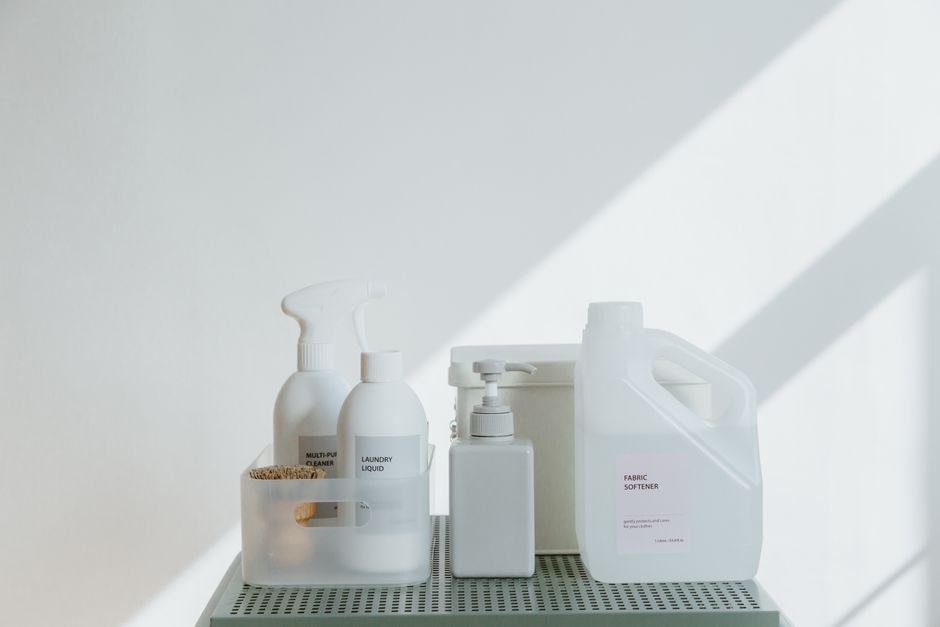
Keeping a water softener running efficiently for years is not complicated, but it does depend almost entirely on one thing: using the right product to clean and maintain the resin bed inside your unit. Too many homeowners assume that water softeners are “set it and forget it” appliances, only to discover a few years later that their system is producing hard water again, that their appliances are covered in scale, or that their softener has stopped regenerating properly. The truth is simple. Everything comes down to choosing a high quality resin cleaner and following a consistent maintenance routine.
This is exactly why we recommend the Water Softener Resin Cleaner from Ferber Painting. It is currently the only resin cleaner on the market backed by a full satisfaction guaranteed or your money back policy, which means you can try it completely risk free. If it does not perform exactly as promised, you get a full refund, no questions asked. No other brand on the market offers this level of confidence in their own product, and that alone should tell you something about the quality behind it.
In this complete guide, we will walk through everything you need to know about maintaining a water softener properly, explain why the type of resin cleaner you use matters more than most people realize, and show you step by step how to keep your system working like new for years to come. We will also look at real world scenarios, the signs that indicate your softener needs attention, and the small habits that separate a system that lasts fifteen years from one that fails after five.
Why the Right Resin Cleaner Makes All the Difference
Inside every water softener is a tank filled with tiny resin beads. These beads are responsible for the entire softening process. They attract and hold onto calcium and magnesium ions, the minerals responsible for water hardness, and exchange them for sodium or potassium ions. Over time, however, these resin beads become coated with mineral deposits, iron, manganese, and even bacterial buildup. When this happens, the resin loses its ability to exchange ions efficiently, and your water softener essentially stops doing its job, even though it may still appear to be running normally.
This is where a quality resin cleaner becomes essential. A resin cleaner is designed to dissolve and flush out the buildup that accumulates on the resin beads, restoring their full ion exchange capacity. Not all resin cleaners are created equal, though. Cheaper or poorly formulated products on the market often only address surface level buildup, leaving deeper mineral deposits and iron fouling untouched. Over time, this leads to a gradual decline in performance that many homeowners mistake for the natural aging of their softener, when in reality, the resin itself simply was not cleaned properly.
The Ferber Painting Water Softener Resin Cleaner was formulated specifically to address this problem at its root. Unlike generic cleaners, it targets iron, manganese, and mineral scale simultaneously, restoring the resin bed to near original condition. This is one of the main reasons customers consistently report noticeably softer water within days of their first treatment.
Understanding How Resin Beads Actually Fail
To really appreciate why cleaning matters so much, it helps to understand what happens at a microscopic level inside the tank. Each resin bead is covered in thousands of active exchange sites. In a brand new softener, nearly every one of these sites is available to trap calcium and magnesium as water passes through. As iron oxidizes on the surface of the beads, it physically coats the exchange sites, blocking them from doing their job. Manganese behaves in a similar way, often forming a dark, sticky film that is even harder to remove than iron alone. Meanwhile, organic matter and biofilm can develop in wells or municipal supplies with any degree of contamination, further reducing the surface area available for exchange.
The result is a slow, almost invisible decline. Unlike a leak or a broken part, resin fouling does not usually announce itself with an obvious symptom right away. Instead, homeowners notice subtle changes first: slightly less lather with soap, a bit more spotting on glassware, or faucets that need cleaning more often than they used to. By the time hard water is obvious to the naked eye, the resin bed may already have lost a significant portion of its original capacity.
Why Regeneration Alone Is Not Enough
Many people assume that because their softener regenerates on schedule, the resin must be clean. Unfortunately, a standard regeneration cycle using only salt brine is designed to recharge the resin with sodium ions, not to deep clean fouled beads. Brine alone is simply not aggressive enough to break down iron oxide or manganese deposits that have bonded to the resin surface. This is precisely the gap that a dedicated resin cleaner is designed to fill, and it is why relying on regeneration cycles by themselves, without ever adding a proper cleaning treatment, is one of the most common reasons softeners underperform years before they actually need to be replaced.
Why Ferber Painting’s Resin Cleaner Stands Out From the Competition
There are dozens of resin cleaners available online and in hardware stores, so it is fair to ask what makes ours different. The answer comes down to formulation, transparency, and customer confidence.
- Satisfaction guaranteed or your money back, a guarantee that no competing brand currently offers in full.
- A concentrated formula that removes iron, manganese, and hard water scale in a single treatment, rather than requiring multiple different products.
- Fast worldwide shipping through our international carrier network, so you are never left waiting weeks for a small maintenance product.
- Simple, secure online payment directly through our website, with no complicated ordering process.
- A formula that is safe for all standard resin types, meaning you do not need to worry about compatibility issues with your existing softener.
Many competitor products only address one type of buildup, forcing customers to purchase multiple cleaners and alternate between them. This not only costs more money over time, it also increases the risk of improper use and inconsistent results. Ferber Painting’s all in one formula eliminates this hassle entirely, saving both time and money while delivering more consistent results.
The Cost of Choosing the Wrong Product
It is worth pausing to consider what actually happens when someone buys a low quality resin cleaner. In the short term, it may seem like a bargain, often priced a few dollars lower than a proven formula. However, if that product only removes surface scale and leaves iron deposits behind, the homeowner is left with two options. Either they accept the gradual decline in softening performance, or they purchase a second, iron specific product and run an entirely separate treatment cycle. Both options end up costing more time and money than simply choosing a comprehensive formula from the start. This is one of the most overlooked hidden costs in water softener maintenance, and it is precisely the problem our formula was designed to solve.
Transparency Matters
Another factor that sets our approach apart is transparency about what the product actually does and how it should be used. Rather than making vague claims about restoring performance, we provide clear instructions on dosage, timing, and expected results, so customers know exactly what to expect at each stage of the treatment. Combined with the money back guarantee, this transparency removes the guesswork that so often surrounds water treatment products.
Here is a simple comparison of the key factors that matter most when choosing a resin cleaner:
| Criteria | Ferber Painting Resin Cleaner | Typical Competing Products |
|---|---|---|
| Money back guarantee | Yes, full satisfaction guaranteed | Rarely offered, or limited conditions apply |
| Removes iron and manganese | Yes, in a single treatment | Often requires separate products |
| Removes mineral scale | Yes | Yes, but often less effective |
| Shipping speed | Fast, worldwide delivery network | Varies, often slower for international orders |
| Ease of online purchase | Simple, secure online payment | Varies by retailer |
| Ease of use | Simple pour and run process | Often requires multiple steps or soaking cycles |
When you put these factors side by side, it becomes clear why choosing the right product from the start saves you time, money, and frustration down the road. A softener is not a small purchase, and treating its ongoing maintenance as an afterthought rarely ends well financially.
How to Maintain a Water Softener: Step by Step
Now that we have covered why product choice matters so much, let us walk through the actual maintenance process. Following these steps regularly will keep your water softener performing at its best for years. Think of this as a maintenance calendar you can return to throughout the year rather than a one time checklist.
Step 1: Check Your Salt Levels Monthly
If your softener uses salt for regeneration, check the brine tank at least once a month. The salt level should never drop below one third of the tank’s capacity. Low salt levels prevent proper regeneration, which allows hardness minerals to build up on the resin bed faster than normal. It is a good habit to check the tank on the same day each month, for example whenever you pay your water bill or take out the recycling, so it becomes part of your routine rather than something you have to remember separately. Keep a bag of the appropriate salt on hand at all times so you are never caught without it during a busy week.
It is also worth noting the type of salt you use matters for more than just purity. Pellet salt tends to dissolve more evenly than crystal salt, and it is generally considered the safer default choice for most residential brine tanks. Solar salt, made from evaporated seawater, is another commonly used option and tends to be relatively affordable, though it can leave slightly more residue than a higher purity pellet product.
Step 2: Break Up Salt Bridges
Over time, a hard crust can form in the brine tank, known as a salt bridge. This creates an empty space beneath it, which prevents the salt from dissolving properly into the water. If you notice this happening, gently break it up with a broom handle or similar tool, being careful not to damage the tank. Salt bridges are more common in humid environments or when the tank is kept in a location with fluctuating temperatures, so if you live somewhere with hot summers and cold winters, check for bridging a little more often during seasonal transitions. When you break up a bridge, look at the underlying salt too. If it appears grey, sludgy, or has an unusual smell, it may be a sign that sediment has built up at the bottom of the tank, and a more thorough cleaning of the brine tank itself may be needed in addition to the resin.
Step 3: Clean the Resin Bed With a Quality Resin Cleaner
This is the single most important maintenance task, and it is also the one most frequently overlooked. Even with regular salt top ups, resin beads gradually become fouled with iron, manganese, and mineral deposits that a normal regeneration cycle cannot fully remove. Using the Ferber Painting Water Softener Resin Cleaner every three to four months restores the resin’s full capacity and prevents the gradual performance decline that leads many people to replace their softener years earlier than necessary.
To use it, simply add the recommended amount directly into the brine tank before running a regeneration cycle. The cleaner works throughout the cycle to dissolve buildup on the resin beads and flush it out of the system. No disassembly, no scrubbing, and no complicated steps are required.
For households on well water or in areas with known iron content in the municipal supply, it can be worth shortening this interval to every two months rather than waiting the full three to four. Iron is one of the most aggressive foulants for resin beads, and homes with visibly orange staining in sinks, tubs, or toilets are usually dealing with a higher iron load than average. In these cases, a slightly more frequent treatment schedule pays for itself many times over by protecting the resin from long term damage. On the other hand, households on relatively clean municipal water with low iron and manganese content can often extend the interval closer to four months without noticing any decline in performance, so it is worth adjusting the schedule to match your specific water conditions rather than following a single rigid rule for every home.
Step 4: Inspect the Resin Tank for Wear
Every year or two, it is worth checking the physical condition of the resin tank and its internal components, including the distributor tube and injector, for cracks or wear. Catching small issues early prevents costly repairs later. While you are inspecting the tank, take a moment to look at the control valve head as well, checking for any signs of mineral crusting around seals or fittings. A small amount of white or orange residue is common, but heavy crusting can indicate a slow leak that deserves closer attention. If your softener has a bypass valve, exercise it occasionally even when you are not performing maintenance, since valves that sit unused for long periods can become stiff or difficult to turn when you actually need them.
Step 5: Clean the Venturi Valve and Injector
The venturi valve, sometimes called the injector, can become clogged with sediment over time. If you notice your softener is not drawing brine properly during regeneration, this is often the culprit. Removing and rinsing this small component every six months prevents blockages. Most manufacturers design this part to be removed without tools or with only a simple screwdriver, and the process typically takes just a few minutes. Rinse it under warm water and check that the small internal nozzle is completely clear before reinstalling it. If you notice consistent clogging every time you check it, this can sometimes be a sign of sediment further upstream, such as in your home’s main water line, which may warrant a separate sediment filter ahead of the softener.
Step 6: Test Your Water Hardness Regularly
Using an inexpensive water hardness test kit every few months allows you to catch performance issues early, before they become noticeable in your daily life through spotty dishes, dry skin, or scale buildup on fixtures. Test strips are widely available and give a quick approximate reading in under a minute, while liquid titration kits offer slightly more precise results if you want to track hardness levels more closely over time. Keeping a simple log, even something as basic as a note on your phone with the date and reading, makes it much easier to notice a gradual trend rather than only reacting once hardness becomes obviously severe.
Step 7: Sanitize the System Annually
Once a year, it is a good idea to fully sanitize your water softener system to eliminate any bacterial growth that may have developed in the brine tank or resin bed. This is especially important in humid climates or households with well water. Sanitizing typically involves adding a small, safe amount of unscented household bleach directly to the brine tank and running it through a full regeneration cycle, though it is worth checking your specific manufacturer’s guidance since procedures can vary slightly between models. Annual sanitizing pairs well with your resin cleaning schedule, and many homeowners find it convenient to perform both around the same time each year, for example at the start of spring, so the two tasks become linked in memory and neither one gets forgotten.
Following these seven steps consistently, especially step three, will dramatically extend the life of your water softener and ensure it continues to deliver consistently soft water year after year.
Common Mistakes That Damage Water Softeners
Even well intentioned homeowners often make mistakes that shorten the lifespan of their water softener. Here are the most common ones to avoid.
- Using the wrong type of salt, such as rock salt, which contains more insoluble impurities that clog the system faster.
- Waiting too long between resin cleanings, allowing iron and mineral buildup to become severe before addressing it.
- Ignoring small leaks around the tank or valve, which can lead to bigger problems over time.
- Using a low quality or single purpose cleaner that only removes one type of buildup, leaving the rest to accumulate.
- Forgetting to check the bypass valve position after maintenance, which can leave hard water flowing through the entire house.
Beyond these common issues, a few other habits are worth mentioning because they tend to sneak up on homeowners over time. One is overfilling the brine tank with salt in an attempt to reduce the frequency of monthly checks. While this seems efficient, it can actually make it harder to spot salt bridging and can trap moisture at the bottom of the tank, leading to sludge buildup that is more difficult to clean later. Another common mistake is placing the softener in an area with poor ventilation or excessive humidity, such as a damp basement corner, without addressing the moisture issue itself. Excess ambient humidity accelerates salt bridging and can contribute to bacterial growth inside the brine tank, undoing some of the benefit of regular maintenance.
A third mistake worth mentioning is neglecting to match your softener’s settings to your actual water hardness and household water usage. Many units are installed with generic factory settings that are never adjusted afterward, even though actual usage patterns and hardness levels vary significantly from one household to another. A system programmed to regenerate too infrequently will allow the resin to become overloaded with hardness minerals between cycles, effectively fouling faster than it should, while a system programmed to regenerate too often wastes salt and water without providing any additional benefit. Reviewing your settings once a year, especially after any change in household size or water usage, is a simple step that many people overlook entirely.
Avoiding these mistakes, combined with a regular maintenance schedule and a proven resin cleaner, is the simplest way to protect your investment and keep your water consistently soft.
Signs Your Water Softener Needs Attention Right Now
While a proactive maintenance schedule is the best approach, it helps to know the warning signs that indicate your softener needs immediate attention rather than waiting for the next scheduled check. Soap that no longer lathers well, even with fresh bars or liquid soap, is often one of the earliest indicators that hardness minerals are slipping through the system. Similarly, if you begin noticing white, chalky residue forming around faucets, showerheads, or on glassware after washing, this is a strong sign that the resin bed is no longer exchanging ions as effectively as it should.
Another common sign is a noticeable change in water pressure, particularly a gradual decline rather than a sudden drop. Scale buildup inside pipes and fixtures, caused by hard water bypassing an underperforming softener, restricts flow over time in a way that can be easy to miss because it happens so gradually. If you also notice your water heater working harder than usual, taking longer to produce hot water, or making unusual popping or knocking sounds, hardness minerals may be accumulating inside the tank itself, which is often one of the most expensive appliances to repair or replace as a result of untreated hard water.
If you notice any combination of these signs, it is worth performing a resin cleaning treatment immediately rather than waiting for your regular three to four month schedule, since these symptoms typically indicate the resin bed is already significantly fouled.
Why Ordering From Ferber Painting Is the Smart Choice
Beyond the performance of the product itself, ordering from Ferber Painting comes with additional advantages that make the entire experience easier and more reassuring.
- Fast, reliable shipping to virtually anywhere in the world through our established international carrier network.
- A simple, secure online payment system that lets you complete your order in just a few minutes.
- A satisfaction guaranteed or your money back policy on every single order, so there is no financial risk in trying the product.
- A formula developed specifically for effective resin cleaning, rather than a generic all purpose cleaner repackaged for water softeners.
This combination of product quality, service reliability, and genuine customer protection is difficult to find anywhere else in this market, which is why so many customers choose to stick with Ferber Painting for their ongoing water softener maintenance needs. Many of our customers begin with a single order simply to test the results for themselves, and after seeing a noticeable improvement in water softness within the first week, they set up a recurring schedule to reorder every few months, treating resin cleaning as a routine part of home maintenance rather than an occasional afterthought.
We also understand that every household’s water situation is a little different. Some homes deal primarily with calcium and magnesium hardness, while others contend with high iron content from well water, and still others face a combination of both along with occasional bacterial concerns in humid climates. Because our formula was designed to address iron, manganese, and mineral scale together rather than in isolation, it performs reliably across this wide range of real world water conditions, which is part of why it has become a trusted choice for households facing very different challenges.
Mini FAQ
How often should I clean my water softener resin?
Most systems benefit from a resin cleaning every three to four months, though households with high iron content in their water supply may need to clean more frequently, sometimes as often as every two months depending on severity.
Can I use a resin cleaner on any brand of water softener?
Yes, the Ferber Painting Water Softener Resin Cleaner is formulated to be compatible with all standard resin types found in residential water softeners, regardless of brand.
What happens if I do not maintain my resin bed?
Without regular cleaning, resin beads gradually lose their ion exchange capacity, leading to hard water even though the softener appears to be working normally. Eventually, this can require full resin replacement, which is significantly more expensive than routine maintenance.
Is the satisfaction guaranteed or money back policy really no questions asked?
Yes, if you are not satisfied with the results of the Ferber Painting Water Softener Resin Cleaner, you are entitled to a full refund, which is a level of confidence not offered by competing brands.
How long does shipping take?
Thanks to our international carrier network, most orders arrive quickly regardless of your location, with tracking provided from the moment your order ships.
Can resin cleaning fix a softener that has already stopped working completely?
In many cases, yes. A large percentage of softeners that appear to have stopped working entirely are actually suffering from severely fouled resin rather than a mechanical failure. Running a treatment with a proper resin cleaner often restores functionality before you need to consider replacing any parts or the entire unit.
Do I need to adjust my softener settings after cleaning the resin?
Generally no, cleaning the resin does not require changing your regeneration schedule or hardness settings. However, if you have not reviewed your settings in over a year, it is a good opportunity to confirm they still match your household’s current water usage and hardness level.
Final Thoughts
Maintaining a water softener does not need to be complicated, but it does require consistency and, above all, the right product. Regularly checking salt levels, cleaning key components, and testing water hardness will all help, but none of it matters as much as keeping the resin bed itself clean and functioning at full capacity. A little bit of attention every month, combined with a proper resin treatment every few months, is all it takes to keep a system delivering soft water reliably for well over a decade, rather than facing a gradual decline that ends in an expensive early replacement. Visit the Ferber Painting website today to order the Water Softener Resin Cleaner and take advantage of fast worldwide shipping, easy online payment, and a satisfaction guaranteed or your money back promise that no other brand can match.