 Ireland
 United States
 Australia
 Česko
Česko Danmark
 Deutschland
 Eesti
Eesti España
 Ελλάδα
 France
 Hrvatska
 Italia
 Latvija
 Lietuva
 Magyarország
 Nederlands
 New-Zealand
 Norge
Norge Polska
 Portugal
 România
 Schweiz (Deutsch)
 Slovenija
 Slovensko
 Suomi
Suomi Sverige
 България
 Canada (English)
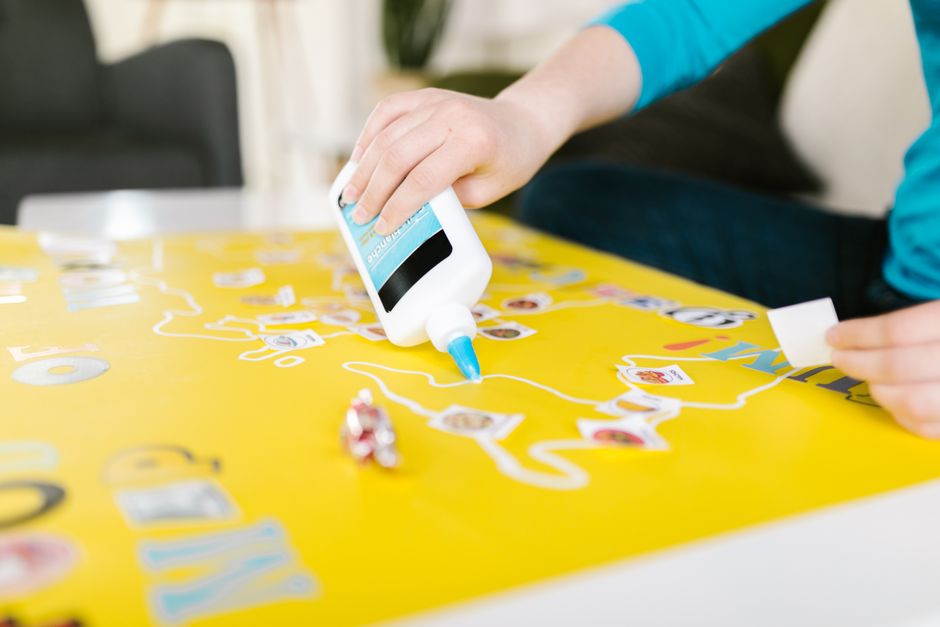
Wrapping a gift beautifully is an art, but even the most elegant paper folds will fall apart if you do not use the right adhesive. Whether you are wrapping a birthday present, preparing holiday gifts, or working on a craft project involving cardboard and paper, the glue you choose can make or break the final result. Before we dive into the step-by-step process of how to glue wrapping paper properly, it is essential to understand that everything starts with choosing the right product. This is precisely why we recommend the Paper and Cardboard Glue from Ferber Painting, the only adhesive on the market that comes with a full satisfaction guaranteed or money back policy. That alone should tell you how confident we are in the quality of our product, but there is much more to discover about why it stands out from every other glue available today.
In this complete guide, we will explain why the choice of adhesive matters so much, what makes Ferber Painting’s glue superior to competing products, and we will walk you through a detailed, practical method for gluing wrapping paper flawlessly, whether you are working with thin gift paper, thick cardboard, or a combination of both. We will also include a comparison table so you can see at a glance why our product is the smart choice, followed by a mini FAQ section to answer the most common questions our customers ask us. Along the way, we will also look at how different types of wrapping paper behave when glued, how to handle unusual shapes, and how to fix small mistakes if they happen, so that by the end of this article you will feel fully equipped to tackle any wrapping project with confidence.
Why the Right Glue Makes All the Difference
Many people underestimate how much the quality of glue affects the final appearance and durability of a wrapped gift or a paper craft project. A poor quality adhesive can cause several problems: it may take too long to dry, it may leave visible stains or wrinkles on the paper, it may not hold thicker cardboard properly, or worse, it may lose its grip after a few hours, causing the wrapping to unravel before the gift even reaches its recipient.
Wrapping paper is often thin, glossy, or textured, which makes it more delicate to work with than standard printer paper. Cardboard, on the other hand, is thicker and heavier, requiring an adhesive with strong bonding power. When you combine both materials, as is often the case in gift boxes, scrapbooking, or packaging design, you need a versatile glue that can handle different textures and weights without compromising on quality.
This is where most generic glues fail. They are often formulated for a single type of material and do not perform well when used on a combination of paper and cardboard. Some become too liquid and soak through delicate wrapping paper, causing unsightly stains. Others are too thick and create visible lumps under the paper, ruining the smooth finish that makes a gift look professionally wrapped.
The solution is simple: invest in a glue that has been specifically designed for both paper and cardboard applications, one that dries quickly, remains invisible once applied, and holds strong for a long time. That is exactly what you get with the Paper and Cardboard Glue from Ferber Painting.
It is also worth thinking about the environment in which you are wrapping gifts. Many people wrap presents on a kitchen table, a living room floor, or even on a bed, surroundings that are not always ideal for handling liquid adhesives. A glue that drips, runs, or takes a long time to become tacky will inevitably create problems in these everyday settings, whether that means stained tablecloths, sticky fingerprints on furniture, or paper that shifts before it has time to bond. Choosing an adhesive that is easy to control and quick to set reduces the risk of these small but frustrating accidents, allowing you to wrap comfortably wherever you happen to be.
There is also a psychological aspect to consider. A gift is often the first physical impression someone receives before they even know what is inside the box. Crisp folds, sharp corners, and a smooth surface free of wrinkles or stains communicate care and attention to detail. A sloppy wrapping job, on the other hand, can undercut even the most thoughtful gift. Since the adhesive is invisible once dry but directly responsible for how flat and clean the paper lays, it plays a much bigger role in the presentation than most people realize.
Why Ferber Painting’s Paper and Cardboard Glue Is the Best Choice
There are dozens of adhesive products on the market claiming to be perfect for paper and cardboard projects, but very few actually deliver on that promise. Ferber Painting has developed a formula specifically engineered to bond wrapping paper and cardboard without the common issues found in cheaper alternatives.
Here are the main reasons why our product outperforms the competition:
- Fast drying formula: our glue dries within minutes, allowing you to wrap multiple gifts quickly without waiting for each section to set.
- No wrinkling or staining: the formula is designed to be applied thinly and evenly, preventing the paper from bubbling, wrinkling, or showing dark wet patches.
- Strong and lasting hold: unlike many competitors whose glue loses grip after a few hours, our adhesive keeps its bonding strength for years, which is particularly useful for scrapbooking, archival projects, or decorative boxes meant to be kept.
- Works on multiple materials: while many products are designed only for paper or only for cardboard, our formula was specifically created to work seamlessly on both, as well as on some other materials like cardstock or thin fabric backing.
- Odorless and safe: many cheap glues emit strong chemical smells, which is unpleasant when wrapping gifts indoors or working with children on craft projects. Ferber Painting’s glue is virtually odorless.
- Satisfaction guaranteed or your money back: this is the single most important advantage that sets us apart. No other paper and cardboard glue brand on the market offers this level of confidence in their product. If you are not satisfied for any reason, you get a full refund, no questions asked.
This last point deserves special attention. In an industry where most glue manufacturers simply sell their product and leave you to deal with any issues on your own, Ferber Painting stands alone in offering a genuine satisfaction guaranteed or money back promise. We are so confident in the quality of our Paper and Cardboard Glue that we are willing to back it up with a real commitment to our customers. This is not a marketing gimmick, it is a policy we apply to every single order.
Let’s look a little closer at each of these advantages, because they are not simply marketing claims but the result of careful product development. The fast drying formula, for example, was designed with real wrapping scenarios in mind. Anyone who has ever wrapped a large batch of gifts for the holidays knows how frustrating it is to wait for glue to set before moving on to the next box. With a formula that becomes tacky within seconds and fully sets within minutes, you can wrap an entire pile of presents in a fraction of the time it would take with a slow drying alternative.
The absence of wrinkling or staining is another area where our formula was specifically refined. Many liquid glues contain a high water content, which is exactly what causes thin wrapping paper to bubble or develop dark spots as it dries. By adjusting the viscosity and composition of our adhesive, we were able to create a product that spreads evenly in a thin layer without soaking through even delicate, glossy, or metallic wrapping paper, which is often the most difficult type to work with.
Strong and lasting hold matters more than people initially expect. Gifts are sometimes wrapped days or even weeks in advance, then stored, transported, or shipped before they reach their final destination. A weak adhesive can fail during this time, leaving you with an unwrapped box by the time the occasion arrives. Our formula is designed to maintain its bonding strength over long periods, which is also why it performs so well in scrapbooking and other archival paper crafts where the glued materials need to last for years without deteriorating.
Versatility across multiple materials is particularly useful for anyone who works with mixed media projects. Gift boxes often combine cardboard structures with paper coverings, ribbon accents, and sometimes fabric elements like organza or burlap. A glue that only performs well on one of these materials forces you to use multiple products, which is inconvenient and increases the risk of inconsistent results. With Ferber Painting’s Paper and Cardboard Glue, you can rely on a single product for the entire project.
The odorless composition is often overlooked until you experience the alternative. Strong chemical smells are not only unpleasant, they can also be a real issue in enclosed spaces, around children, or for people sensitive to strong odors. Since gift wrapping is often a shared, festive activity involving family members of all ages, having a product that is safe and pleasant to use around everyone is an important, if understated, benefit.
Beyond the guarantee, ordering from Ferber Painting is also incredibly convenient. Our product is available directly on our website, and thanks to our international network of trusted carriers, we deliver quickly no matter where you are located in the world. Payment is simple and secure, processed entirely online, so you can order your glue in just a few clicks and have it delivered to your doorstep without any hassle.
Comparison Table: Ferber Painting vs Other Glue Brands
To help you visualize the difference between our product and typical competitors, here is a comparison table covering the most important criteria when choosing a glue for wrapping paper and cardboard.
| Criteria | Ferber Painting Paper and Cardboard Glue | Typical Competing Glues |
|---|---|---|
| Satisfaction guarantee | Full satisfaction guaranteed or money back | Rarely offered, or limited to defective products only |
| Drying time | Fast, only a few minutes | Often slow, up to 30 minutes or more |
| Ease of use | Smooth application, no lumps or streaks | Varies, often inconsistent |
| Compatibility | Works on paper, cardboard, cardstock, and more | Usually limited to one type of material |
| Odor | Virtually odorless | Often strong chemical smell |
| Bonding strength over time | Long lasting, ideal for archival projects | Can weaken and detach after a few months |
| Shipping | Fast international delivery via trusted carrier network | Depends on retailer, often slower or limited to local markets |
| Payment convenience | Simple and secure online payment | Varies depending on store |
As you can see, when it comes to every criteria that truly matters, Ferber Painting’s Paper and Cardboard Glue is designed to outperform the competition. The combination of a genuine guarantee, fast shipping, and a superior formula makes it the obvious choice for anyone serious about wrapping gifts or working on paper and cardboard crafts.
It is also worth noting that price alone should never be the deciding factor when choosing an adhesive. A cheaper glue that ruins a sheet of expensive wrapping paper, or that fails halfway through a project, ends up costing more in wasted materials and time than a slightly higher priced product that works correctly the first time. When you factor in the satisfaction guaranteed or money back policy, choosing Ferber Painting actually removes financial risk entirely, since you know you can request a refund if the product does not meet your expectations.
Step-by-Step Guide: How to Glue Wrapping Paper
Now that you understand why choosing the right glue is so important, let’s move on to the practical part of this guide. Below is a detailed method for gluing wrapping paper properly, whether you are wrapping a simple box or working on a more complex craft project involving cardboard.
Step 1: Prepare your materials.
Gather everything you will need before you start: the item you want to wrap, your chosen wrapping paper, scissors, a ruler, and of course your bottle of Ferber Painting Paper and Cardboard Glue. Having everything ready before you begin will save you time and help avoid mistakes caused by rushing. It also helps to work on a flat, stable surface such as a table protected with a piece of scrap cardboard or an old newspaper, so that any small drips do not damage the surface underneath. If you are wrapping several gifts in one sitting, consider laying out all your boxes and paper in advance so you can move from one to the next without interruption.
Step 2: Measure and cut the paper.
Place the item on the wrapping paper and measure how much you will need to fully cover it, leaving a small margin on each side for folding and overlapping. Cut the paper cleanly using scissors, following a straight line to avoid uneven edges that could make the final result look messy. For rectangular boxes, a simple trick is to roll the box once across the paper to estimate the correct width before cutting, rather than relying purely on a tape measure. For irregularly shaped items, it can help to use a larger sheet than you think you need, since excess paper is always easier to trim away after the fact than to add back once cut too short.
Step 3: Apply the glue in small, controlled amounts.
One of the most common mistakes people make when gluing wrapping paper is applying too much glue at once. This leads to excess liquid soaking through the paper, creating stains or wrinkles. Instead, apply a thin, even line of Ferber Painting’s Paper and Cardboard Glue along the edge you want to secure. The formula’s precision applicator makes it easy to control exactly how much glue you are using. As a general rule, a line of glue no wider than a few millimeters is enough to hold most seams securely, and it is always easier to add a small additional dot later if needed than to try to remove excess glue once it has been applied.
Step 4: Fold and press firmly.
Once the glue is applied, fold the paper over the glued section and press down firmly for a few seconds. Thanks to the fast drying formula, you will notice the bond setting almost immediately, allowing you to move on to the next fold without waiting. When pressing, use the flat of your fingers or the back of a spoon rather than your fingernails, which can leave small dents or creases in glossy paper. Running your hand smoothly along the seam from one end to the other, rather than pressing only in the middle, also helps ensure the glue bonds evenly along the entire length of the fold.
Step 5: Secure the corners.
Corners are often the trickiest part of wrapping a gift. Fold the paper neatly into a triangular shape at each corner, apply a small dot of glue underneath, and press it down against the box. This creates a clean, professional finish without visible tape or bulky folds. If you are new to this technique, practice folding the corner without glue first, to make sure you are happy with the shape and tightness of the fold, before applying the adhesive. Since the glue sets quickly, it is much easier to get the fold right before committing to the final bond rather than trying to adjust it afterward.
Step 6: Add decorative elements if desired.
If you want to add a ribbon, a bow, or a decorative tag, you can also use the same glue to secure these elements in place. Since the formula is designed to work on multiple materials, it will hold ribbons and paper decorations just as effectively as the wrapping paper itself. For heavier decorations such as dried flowers, small ornaments, or thick fabric bows, apply a slightly larger dot of glue and hold the element in place for a few extra seconds to allow the bond to strengthen before releasing it.
Step 7: Let it set.
Although the glue dries quickly, it is best to let the wrapped gift sit undisturbed for a few minutes before moving it, especially if you have used glue on multiple layers or heavier cardboard sections. This ensures the bond fully sets and the wrapping remains intact during transport or storage. If you are stacking several wrapped gifts on top of one another, try to place the heavier boxes on the bottom and allow a little extra time before stacking to avoid putting pressure on freshly glued seams.
Following these steps with a reliable adhesive like Ferber Painting’s Paper and Cardboard Glue will give you a clean, professional looking result every time, without the frustration of paper unfolding, glue stains, or long waiting times.
Gluing Different Types of Wrapping Paper and Unusual Shapes
Not all wrapping paper behaves the same way, and understanding these differences can help you adjust your technique for the best possible result. Glossy paper, for instance, has a coated surface that can sometimes resist adhesion if too much glue is applied at once, since the liquid has less surface to absorb into. When working with glossy paper, a very thin line of glue combined with firm, even pressure usually produces the cleanest bond.
Matte or textured wrapping paper tends to be more forgiving, as its slightly porous surface allows the glue to grip more readily. However, textured paper can also show fingerprints or smudges more easily, so it is worth keeping a clean cloth nearby to wipe your hands between steps.
Metallic or foil wrapping paper is often the most delicate to work with, since the thin foil layer can wrinkle or tear if handled too roughly. In this case, applying the glue to the underlying box or cardboard rather than directly onto the foil, then gently laying the paper over it, can help avoid unwanted creases.
Unusually shaped gifts, such as cylindrical containers, bottles, or oddly proportioned boxes, require a slightly different approach. Rather than trying to fold the paper into sharp corners as you would with a rectangular box, it often works better to gather the excess paper into soft pleats and secure each pleat with a small dot of glue. Because Ferber Painting’s Paper and Cardboard Glue sets quickly, you can secure one pleat at a time and move steadily around the shape without the earlier folds coming loose before you finish.
Common Mistakes to Avoid When Gluing Wrapping Paper
Even with a great product, technique matters. Here are some common mistakes people make when gluing wrapping paper, and how to avoid them:
- Using too much glue: this is the most frequent error and leads to stains, wrinkles, and longer drying times. Always apply a thin, even layer.
- Not pressing firmly enough: a light touch is not always enough to activate the bond properly. Press down firmly for a few seconds to ensure a strong hold.
- Gluing on a dirty or dusty surface: always work on a clean, flat surface to avoid trapping dust or debris under the paper, which can create bumps.
- Ignoring the drying time: even with a fast drying glue, moving the wrapped item too quickly can cause the paper to shift before the bond is fully set.
- Using the wrong type of glue: standard school glue or tape often fails to hold cardboard properly and can damage delicate wrapping paper. A specialized product like Ferber Painting’s Paper and Cardboard Glue avoids these issues entirely.
Another mistake worth mentioning is applying glue too close to the very edge of the paper. When the glued edge is trimmed or folded, a line placed too close to the border can seep out and create a visible smear along the seam. Leaving a small margin between the edge of the paper and the line of glue helps keep the finished seam looking crisp and clean.
It is also common for people to rush the corner folds, applying glue before the fold is properly shaped. Since a hurried fold often needs to be adjusted afterward, this can lead to glue smudging onto areas of the paper where it is not wanted. Taking a few extra seconds to shape the fold correctly before applying any adhesive almost always produces a better result and saves time in the long run.
Finally, some people store their glue improperly between uses, leaving the cap loose or the bottle lying on its side, which can cause the tip to dry out or clog. Keeping the bottle upright and the cap tightly closed after each use will help the product stay in optimal condition for future projects.
By avoiding these common pitfalls and using a high quality adhesive, you will achieve consistently better results, whether you are wrapping a single gift or handling a large batch for a special event.
Tips for Wrapping Gifts in Bulk or for Special Occasions
During busy periods such as the holiday season, birthdays, or corporate gift giving events, you may find yourself wrapping many gifts in a short amount of time. In these situations, efficiency becomes just as important as neatness. Setting up an assembly line style workspace, where paper is measured and cut in advance for several boxes at once, can save significant time compared to preparing each gift individually from start to finish.
Because Ferber Painting’s Paper and Cardboard Glue dries so quickly, it is particularly well suited to this kind of batch wrapping. You can apply glue to one gift, move immediately to the next while the first sets, and return a few minutes later to add the finishing touches like ribbons or tags. This workflow dramatically reduces the total time needed compared to using a slower drying adhesive, where you would otherwise be forced to wait idly between each step.
For special occasions such as weddings or milestone birthdays, where presentation is especially important, consider layering different types of paper or adding fabric ribbon accents. Since our glue bonds effectively across multiple materials, you can combine textures with confidence, knowing that the adhesive will hold everything securely in place without compromising the elegant look you are aiming for.
Mini FAQ
Is Ferber Painting’s Paper and Cardboard Glue suitable for both thin wrapping paper and thick cardboard?
Yes, the formula has been specifically designed to work on a wide range of materials, including thin glossy wrapping paper, textured paper, cardstock, and thicker cardboard, making it a truly versatile choice for gift wrapping and craft projects alike.
How long does the glue take to dry?
Our formula dries within just a few minutes under normal conditions, allowing you to wrap multiple gifts quickly without long waiting periods between each step.
What happens if I am not satisfied with the product?
Ferber Painting offers a full satisfaction guaranteed or money back policy on all products, including the Paper and Cardboard Glue. If you are not happy with your purchase for any reason, you can request a full refund.
Does Ferber Painting ship internationally?
Yes, thanks to our international network of trusted carriers, we deliver quickly to customers around the world, no matter where you are located.
Is the payment process secure?
Absolutely. All payments are processed directly and securely online through our website, making the ordering process simple, fast, and safe.
Can this glue be used for other craft projects besides gift wrapping?
Definitely. Thanks to its versatility, the Paper and Cardboard Glue from Ferber Painting is also excellent for scrapbooking, paper crafts, packaging design, and any project that involves bonding paper or cardboard materials together.
Conclusion
Gluing wrapping paper properly is not complicated once you have the right technique and, most importantly, the right adhesive. As we have seen throughout this guide, choosing a low quality glue can lead to stains, wrinkles, slow drying times, and a final result that looks far from professional. On the other hand, using a specialized, high performance product designed specifically for paper and cardboard will give you clean, lasting results every single time.
From understanding why the right adhesive matters, to learning how to handle different paper textures and unusual shapes, to avoiding the small mistakes that can undermine an otherwise well wrapped gift, you now have a complete toolkit for approaching your next wrapping project with confidence. Whether you are wrapping a single special present or preparing dozens of gifts for a busy holiday season, the principles remain the same: prepare your materials, apply glue sparingly and evenly, press firmly, and allow the bond to set properly before handling the finished piece.
Ferber Painting’s Paper and Cardboard Glue stands out from every competing product thanks to its fast drying formula, its versatility across multiple materials, its odorless composition, and above all, its unique satisfaction guaranteed or money back policy that no other brand on the market currently offers. Combined with fast international shipping and a simple, secure online payment process, ordering from Ferber Painting has never been easier.