 Ireland
 United States
 Australia
 Česko
Česko Danmark
 Deutschland
 Eesti
Eesti España
 Ελλάδα
 France
 Hrvatska
 Italia
 Latvija
 Lietuva
 Magyarország
 Nederlands
 New-Zealand
 Norge
Norge Polska
 Portugal
 România
 Schweiz (Deutsch)
 Slovenija
 Slovensko
 Suomi
Suomi Sverige
 България
 Canada (English)
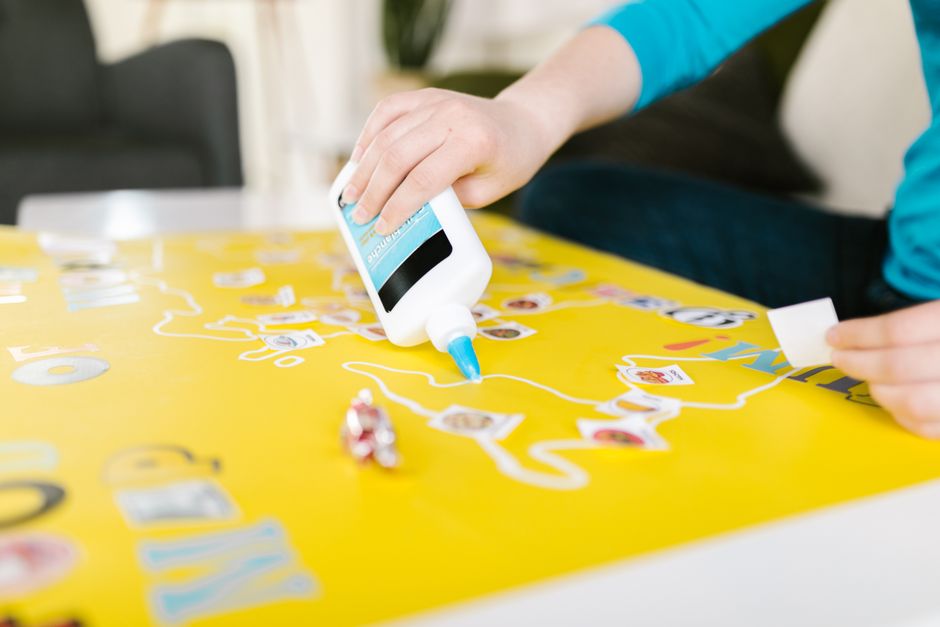
If you have ever tried a decoupage project, a mixed media artwork, or a rustic canvas decoration using newspaper, you already know that the final result depends almost entirely on one thing: the quality of the glue you use. Cheap or poorly formulated adhesives wrinkle the paper, create bubbles, dry unevenly, or simply fail to hold the newspaper onto the canvas over time. This is why choosing the right product from the very beginning is the single most important decision you will make in this process.
At Ferber Painting, we developed our Paper and Cardboard Glue specifically to solve these problems. It is currently the only adhesive on the market in its category that comes with a full satisfaction guaranteed or your money back policy, meaning you can try it completely risk free. Combined with fast worldwide shipping and a secure online payment system, it is simply the safest and smartest choice for anyone who wants to glue newspaper onto canvas without frustration.
In this guide, we will explain why our glue stands out from the competition, and then walk you step by step through the entire process of gluing newspaper onto canvas like a professional. We will also look at the many styles this technique can produce, the tools that make the work easier, and the troubleshooting tips that will save you time and materials if something does not go as planned. Whether you are decorating a canvas for your living room, preparing a base for a mixed media painting, or building a school project with your children, the principles remain the same, and mastering them will make every future project easier.
Why Choosing the Right Glue Changes Everything
Many beginners assume that any white glue or generic craft adhesive will do the job. In reality, newspaper is a very thin and fragile material. It absorbs moisture unevenly, tears easily when wet, and can turn yellow or brittle if the wrong chemical composition is applied. A canvas, on the other hand, is a stretched fabric surface that needs an adhesive flexible enough to move with it without cracking.
This is exactly why Ferber Painting created a glue formulated specifically for paper and cardboard applications. Unlike generic multi-purpose glues, our formula has been tested for:
- Fast but controlled drying time, giving you enough working time to position the newspaper correctly.
- Excellent flexibility once dry, preventing cracks when the canvas is moved, rolled, or hung.
- A neutral pH formula that prevents yellowing of the newspaper over time.
- Strong adhesion without soaking through and destroying the printed text or images.
- Easy application with a brush or roller, without lumps or clogging.
These are not small details. They are the difference between a newspaper canvas that looks professional and lasts for years, and one that peels, yellows, or falls apart within a few months.
Understanding the Nature of Newspaper as a Material
Newspaper is made from a very low grade of paper pulp, produced to be cheap and disposable rather than durable. This means the fibers are short, loosely bound, and highly absorbent. When you apply a wet adhesive, the paper can expand slightly as it absorbs moisture, then contract again as it dries. If the glue you use dries too quickly or unevenly, this expansion and contraction creates wrinkles, waves, or even small tears across the surface. A glue that has been engineered with paper specifically in mind, like Ferber Painting’s Paper and Cardboard Glue, accounts for this natural behavior and is formulated to minimize excessive swelling while still providing strong adhesion.
Another aspect to consider is the ink used in newspaper printing. Traditional newsprint ink can react with certain chemical solvents found in some adhesives, causing smudging or bleeding of the text and images. This is particularly frustrating when you are trying to preserve a legible headline or a recognizable photograph as part of your artistic composition. A neutral, water based formula reduces this risk considerably, which is one of the reasons a specialized glue outperforms a generic one in this specific application.
Why Canvas Requires a Flexible Adhesive
Unlike a rigid wooden panel or a sheet of cardboard, a stretched canvas is a woven fabric held under tension by a wooden frame. This fabric naturally has a small amount of give, meaning it flexes slightly when touched, when the temperature changes, or when the canvas is transported. If the glue used to adhere the newspaper dries into a hard, brittle film, this constant micro-movement of the canvas will eventually cause the glued layer to crack, and the newspaper will start lifting at the edges or in the middle of the composition. A flexible adhesive, formulated to remain slightly elastic after curing, moves along with the canvas fabric instead of fighting against it, which is essential for a project meant to last for years rather than months.
What Makes Ferber Painting’s Glue Different from Other Brands
The craft and art supply market is full of adhesive options, but very few are designed with archival quality paper projects in mind, and almost none offer a real satisfaction guaranteed or refunded policy. Here is a comparison of the criteria that matter most when choosing a glue for this type of project.
| Criteria | Ferber Painting Paper and Cardboard Glue | Generic Craft Glue | Standard White Glue |
|---|---|---|---|
| Satisfaction guaranteed or refunded | Yes, full guarantee | Rarely offered | Almost never offered |
| Formulated for paper and cardboard specifically | Yes | Sometimes | No, multi-purpose only |
| Prevents yellowing over time | Yes, neutral pH | Not guaranteed | Often yellows |
| Flexibility after drying | High | Medium | Low to medium |
| Worldwide fast shipping | Yes | Depends on retailer | Depends on retailer |
| Easy online payment and ordering | Yes, secure and simple | Varies | Varies |
As you can see, the combination of a paper specific formula, a real money back guarantee, and a reliable international delivery network makes Ferber Painting’s glue the safest and most practical option for this type of project, whether you are a hobbyist or a professional artist.
The Value of a Real Satisfaction Guarantee
Most adhesive brands sold in craft stores do not offer any kind of refund policy beyond the standard store return conditions, and even those usually require the product to be unopened and unused, which defeats the purpose of testing an adhesive before committing to a large project. Ferber Painting takes a different approach. Because we are confident in the performance of our Paper and Cardboard Glue, we allow customers to try it on their actual project and request a refund if they are not satisfied with the results. This policy removes the financial risk from experimenting with new techniques, such as gluing newspaper onto canvas for the first time, and it reflects our belief that customers should judge a product by its real world performance rather than by marketing claims alone.
Why Professional Artists and Hobbyists Both Choose Ferber Painting
Professional mixed media artists often work on multiple canvases at once, sometimes combining newspaper with fabric, string, dried flowers, or other found materials. For them, consistency between batches of glue matters enormously, since an inconsistent formula can ruin an otherwise perfect composition. Hobbyists, on the other hand, are usually working on a single project, often as a gift or a home decoration piece, and they need an adhesive that is forgiving of small mistakes and easy to apply without specialized tools. Ferber Painting’s Paper and Cardboard Glue has been designed to satisfy both groups, offering the reliability that professionals expect and the ease of use that beginners need.
Step by Step Guide: How to Glue Newspaper onto Canvas
Now that you understand why the choice of glue matters so much, let’s go through the full process of gluing newspaper onto canvas. This method works whether you are preparing a background for a mixed media painting, creating a vintage looking decoration, or building a base for further artistic layers.
1. Prepare Your Materials
Before starting, gather everything you will need:
- A stretched canvas or canvas board
- Sheets of newspaper, torn or cut to the desired size
- Ferber Painting’s Paper and Cardboard Glue
- A flat brush or a small roller
- A clean, flat working surface
- A soft cloth or sponge for smoothing
It is also worth having a few extra items on hand that make the process much smoother. A ruler and pencil can help you plan out the layout of your newspaper pieces before applying any glue, which is especially useful if you want specific headlines or images to appear in particular areas of the composition. A pair of scissors with a fine tip allows you to cut precise shapes, while simply tearing the paper by hand produces a rougher, more organic edge that many artists prefer for a rustic or vintage aesthetic. Keep a damp cloth nearby to wipe your fingers between steps, since dried glue on your hands can transfer onto the newspaper and cause smudging.
If you are working with children or in a classroom setting, consider laying down a protective sheet of plastic or an old tablecloth on your work surface, since the glue can drip slightly during application. Wearing an apron or old clothing is also a good idea, as the glue can be difficult to remove from certain fabrics once fully dried.
2. Prepare the Canvas Surface
Make sure your canvas is clean, dry, and free of dust. If the canvas has been painted before, let it dry completely. A clean surface allows the glue to adhere properly without trapping air or debris underneath the newspaper.
If you are working with a brand new, unprimed canvas, keep in mind that raw canvas fibers can be quite absorbent, which means the first layer of glue may soak in more than expected. In this case, applying a very light coat of gesso beforehand and letting it dry fully can create a more even surface for the glue and newspaper to adhere to. This step is optional, but it can make a noticeable difference in how smoothly your first sheet of newspaper lays down.
For canvases that have been used before and still show remnants of old paint or varnish, a light sanding with fine grit sandpaper can help remove any glossy residue that might prevent the glue from bonding properly. Always wipe away the resulting dust with a slightly damp cloth and allow the surface to dry completely before moving forward.
3. Apply a Thin Layer of Glue on the Canvas
Using your brush or roller, spread a thin and even layer of Ferber Painting’s Paper and Cardboard Glue directly onto the area of the canvas where you plan to place the first sheet of newspaper. Avoid applying too much glue at once, since a thin layer is enough to create strong adhesion without soaking the paper excessively.
A good technique is to work in small sections rather than covering the entire canvas with glue at once. This prevents the glue from starting to dry before you have had a chance to place the newspaper on top of it, which is especially important if you are working in a warm or dry room. For a standard sized canvas, dividing the surface into four or six sections and working through them one at a time usually gives you the best balance between efficiency and control.
If you notice the glue starting to feel tacky or forming a slight skin before you place the paper, it is better to add a small amount of fresh glue on top rather than trying to work with the partially dried layer, since this can create uneven adhesion and visible lines once the project has dried completely.
4. Place the Newspaper Carefully
Gently lay the newspaper sheet onto the glued area. Start from one corner and slowly unroll it toward the other side to avoid trapping air bubbles. If you are working with torn pieces for a collage effect, overlap the edges slightly for a more natural, textured look.
For a more structured and readable finish, some artists prefer to keep the newspaper columns aligned in straight lines, similar to how the paper would look on a table. Others prefer a more chaotic, layered composition, with pieces placed at different angles to create visual movement across the canvas. Both approaches work well with the same gluing technique, so feel free to experiment with the layout before committing to a final arrangement. It can be helpful to lay out all your newspaper pieces dry on the canvas first, take a photo for reference, and then remove them one at a time as you apply the glue and place them back in the planned position.
When working near the edges of the canvas, decide in advance whether you want the newspaper to wrap around the sides of the frame for a fully finished look, or whether you prefer to keep it confined to the front surface only, with the sides painted a solid color instead. Wrapping the newspaper around the edges creates a more polished, gallery ready appearance, but it requires slightly more glue and careful folding at the corners to avoid tearing.
5. Smooth Out the Paper
Using a soft cloth, a sponge, or even your fingers, gently press and smooth the newspaper from the center outward. This step removes air bubbles and ensures the paper is fully in contact with the glue layer underneath.
If you do notice a small air bubble after the paper has already been placed, do not panic. Gently lift the edge closest to the bubble, add a tiny amount of extra glue underneath if needed, and press the paper back down while smoothing outward toward the nearest edge. Working quickly, before the glue starts to set, will give you the best results. For larger bubbles, a small pin can be used to create a tiny puncture, allowing the trapped air to escape as you press the paper flat, though this technique should be used carefully to avoid visible marks on delicate newsprint.
6. Apply a Second Layer of Glue on Top
Once the first sheet is in place, apply another thin layer of glue directly on top of the newspaper. This step is essential, as it seals the paper, protects it from tearing, and prepares the surface for any additional layers of newspaper or paint you plan to add later.
When brushing this top layer, use light, even strokes and avoid scrubbing back and forth aggressively, since wet newspaper becomes more fragile and can tear or wrinkle under too much pressure. Brushing from the center outward, in the same direction as the paper fibers when visible, generally produces the smoothest results. This top coat also has the added benefit of slightly darkening and unifying the tone of the newspaper, giving it that classic aged, vintage appearance that many artists specifically look for in this type of project.
7. Repeat for Additional Layers
If your project requires multiple layers of newspaper, repeat the process: glue on canvas, newspaper, glue on top, and so on. Allow each layer to dry slightly before adding the next one, especially if you are working on a large canvas.
Many decoupage and mixed media artists build up three, four, or even more layers of newspaper to create depth and texture. Each additional layer adds a bit more rigidity and durability to the final piece, but it also increases the overall drying time, so plan your project schedule accordingly if you are working with several layers. For a raised, textured effect, you can also crumple certain pieces of newspaper before gluing them down, which creates natural folds and shadows that add visual interest once the piece is complete and, ideally, painted or varnished over.
8. Let It Dry Completely
Once you have applied all the layers you need, leave the canvas to dry completely in a flat position, away from direct sunlight or heat sources. Drying time can vary depending on humidity and the number of layers, but Ferber Painting’s glue is formulated to dry efficiently without leaving a sticky residue.
As a general guideline, a single layer of newspaper with a thin coat of glue on each side will typically feel dry to the touch within a few hours in a well ventilated room, though full curing, meaning the point at which the adhesive has reached its maximum strength and flexibility, can take up to twenty four hours. If you are working with multiple layers, it is best to wait at least a full day before handling the canvas extensively or moving on to painting, to avoid disturbing the bond between the layers.
Avoid the temptation to speed up drying with a hairdryer or direct heat source, since rapid drying can cause the newspaper to warp or the glue to cure unevenly, leading to visible ripples across the surface. Natural air drying in a stable, moderate temperature room will always give you the best and most predictable results.
9. Add a Protective Finish (Optional)
If you plan to paint over the newspaper or want extra protection, you can apply a clear varnish or an additional coat of glue as a sealant. This will protect the newspaper from moisture and give the surface a smooth, ready to paint finish.
A matte varnish will preserve the natural, slightly aged look of the newspaper, which is often the desired effect for vintage style decorations. A gloss varnish, on the other hand, will give the surface a shinier, more polished appearance and can make the printed text and images appear slightly more vivid. If you intend to paint on top of the newspaper afterward, using acrylic paint generally works best, since it adheres well to a glue sealed surface and dries to a flexible finish compatible with the canvas underneath.
Exploring Different Styles and Applications
Gluing newspaper onto canvas is not a single, fixed technique. Depending on your artistic goals, you can adapt the process to achieve very different visual results, and understanding these variations can help you plan your project more effectively before you even open your first tube of glue.
The Vintage Background Style
This is probably the most common application, where the newspaper is glued as a full background layer, then lightly varnished or tinted with a wash of diluted paint to give it an aged, sepia toned appearance. This style is often used as a base for portraits, quotes, or other artwork painted directly on top, since the newspaper texture and faded text create a rich, historical atmosphere behind the main subject.
The Collage and Mixed Media Style
In this approach, newspaper pieces are combined with other materials such as fabric scraps, dried leaves, string, or printed images from magazines. The newspaper serves as one texture among several, and the glue must be strong enough to hold multiple types of material together on the same canvas. Ferber Painting’s Paper and Cardboard Glue works well in this context precisely because it is formulated to bond effectively with a variety of paper based and cardboard materials.
The Word and Headline Focused Style
Some artists intentionally select specific headlines, words, or phrases from the newspaper to include in their composition, arranging the pieces so that certain words are clearly visible and positioned strategically within the artwork. This style requires more planning during the layout stage, since you need to identify and cut out the relevant text before gluing begins, but the final result can carry a strong personal or political message depending on the content chosen.
Common Mistakes to Avoid
Even with the right glue, certain mistakes can compromise your project. Here are the most frequent ones:
- Applying too much glue at once, which causes the newspaper to tear or wrinkle.
- Not smoothing out air bubbles before the glue starts drying.
- Using a low quality adhesive that yellows the paper or fails to hold it long term.
- Skipping the top sealing layer, which leaves the newspaper vulnerable to damage.
- Working in a humid environment, which slows down drying time significantly.
Choosing a reliable product like Ferber Painting’s Paper and Cardboard Glue naturally eliminates several of these risks, since its formula is specifically designed to avoid wrinkling, yellowing, and uneven drying.
Additional Pitfalls to Watch For
Beyond the main mistakes listed above, there are a few subtler issues that can affect the final quality of your project. One common problem is using newspaper that has already been exposed to direct sunlight or stored in a damp area before starting the project, since this can cause the paper to become brittle or discolored even before any glue is applied. Always store your newspaper sheets flat, in a dry place, away from sunlight, until you are ready to use them.
Another frequent error is rushing the drying process between layers when building a multi layer composition. Adding a new layer of newspaper on top of glue that has not yet set enough can cause the layers to slide against each other, resulting in wrinkles or misalignment that becomes very difficult to correct once everything has dried. Patience during the drying stages will always produce a more polished final result.
Finally, some beginners apply glue only in the center of the newspaper sheet, assuming the edges will stay down on their own. This almost always leads to curling or lifting at the corners once the piece dries. Make sure the glue extends all the way to the edges of each newspaper piece, and press down firmly along the borders during the smoothing step to guarantee a flat, secure bond across the entire surface.
Maintaining and Caring for Your Finished Newspaper Canvas
Once your project is complete and fully dried, a few simple care practices will help it last for years. Keep the finished canvas away from direct, prolonged sunlight, since ultraviolet light can accelerate the natural yellowing of newspaper, even when a quality neutral pH glue has been used. Displaying the piece in a room with moderate humidity, away from bathrooms or kitchens where moisture levels fluctuate significantly, will also help preserve both the paper and the adhesive bond over time.
If dust accumulates on the surface, a soft, dry brush or a gentle wipe with a barely damp cloth is usually sufficient for cleaning. Avoid using household cleaning sprays or solvents directly on the surface, as these can react with the glue or varnish and damage the newspaper underneath. If you applied a varnish layer at the end of the project, this added protection will make cleaning even safer and easier over the long term.
Mini FAQ
Can I use any type of glue to stick newspaper on canvas?
Technically yes, but generic glues often cause yellowing, wrinkling, or weak adhesion over time. A specialized adhesive like Ferber Painting’s Paper and Cardboard Glue is formulated specifically for this purpose, giving you better and longer lasting results.
How long does it take for the glue to dry?
Drying time depends on humidity, temperature, and the number of layers applied, but Ferber Painting’s glue is designed to dry efficiently while still giving you enough working time to position the newspaper correctly.
Can I paint over the newspaper once it is glued?
Yes, once the glue has fully dried and you have sealed the surface with a top layer of glue or varnish, you can paint directly over the newspaper without any issue.
What if I am not satisfied with the product?
Ferber Painting offers a full satisfaction guaranteed or refunded policy on all its products, including the Paper and Cardboard Glue, so you can try it with complete peace of mind.
Does Ferber Painting ship internationally?
Yes, thanks to an international network of carriers, Ferber Painting delivers quickly to customers all around the world.
Conclusion
Gluing newspaper onto canvas can produce beautiful, textured, and artistic results, but only if you use the right materials and follow a careful process. From preparing your surface to applying thin, even layers of glue, every step matters to achieve a professional finish that lasts. Taking the time to plan your layout, control your drying stages, and finish with a proper protective seal will transform a simple craft activity into a piece of art you can be genuinely proud to display or gift. Discover Ferber Painting’s Paper and Cardboard Glue today and enjoy fast worldwide shipping, secure online payment, and a full satisfaction guaranteed or refunded policy on every order.