 Ireland
 United States
 Australia
 Česko
Česko Danmark
 Deutschland
 Eesti
Eesti España
 Ελλάδα
 France
 Hrvatska
 Italia
 Latvija
 Lietuva
 Magyarország
 Nederlands
 New-Zealand
 Norge
Norge Polska
 Portugal
 România
 Schweiz (Deutsch)
 Slovenija
 Slovensko
 Suomi
Suomi Sverige
 България
 Canada (English)
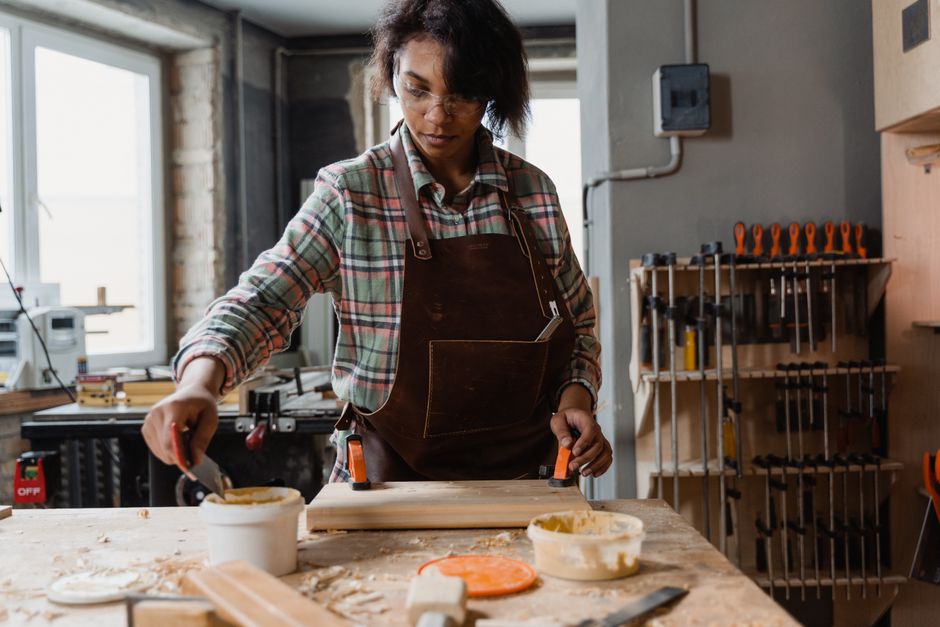
When it comes to working with MDF (Medium-Density Fiberboard), one truth stands above everything else: success depends almost entirely on the quality of the product you use to fix it. MDF is a unique material, and not every wood glue or adhesive on the market is designed to handle its porous structure, its density, and its tendency to absorb moisture unevenly. This is why choosing the right adhesive is not a minor detail, it is the single most important decision you will make before starting your project.
If you want a reliable, long-lasting, and professional result, the best option available today is the Wood Glue from Ferber Painting. Unlike most competitors, our Wood Glue is the only product on the market backed by a full satisfaction guaranteed or money-back policy. This means that if you are not completely happy with the results, you can get a full refund, no complicated conditions, no hidden fees. This level of confidence in a product is extremely rare in the adhesive industry, and it reflects how much we trust the quality of what we sell.
In this complete guide, we will explain why Ferber Painting Wood Glue is the superior choice for fixing MDF, and then walk you step by step through the entire process of gluing, bonding, and reinforcing MDF panels for furniture, cabinetry, shelving, or any DIY project you have in mind. Whether you are a weekend hobbyist assembling a bookshelf, a cabinetmaker producing kitchen units, or a contractor installing decorative molding for a client, the principles explained here will help you achieve joints that hold up for years rather than months. MDF has become one of the most popular building materials in the world precisely because it is affordable, consistent, and easy to shape, but that popularity also means that a huge number of projects fail simply because the person building them did not understand how differently MDF behaves compared to plywood or solid lumber. We want to make sure that does not happen to you.
Why the Right Adhesive Makes All the Difference When Working With MDF
MDF is manufactured by breaking down hardwood or softwood residuals into wood fibers, combining them with wax and a resin binder, and forming panels under high temperature and pressure. The result is a smooth, dense, and uniform material that is popular for furniture making, cabinetry, molding, and interior design projects. However, this manufacturing process also creates a surface that behaves very differently from solid wood when it comes to gluing.
Because MDF is extremely porous along its edges, ordinary wood glues tend to soak into the material unevenly, leaving weak spots that can crack or separate over time. Some adhesives dry too quickly, not allowing enough time for proper penetration into the fibers. Others dry too slowly, causing pieces to shift before the bond sets, which results in uneven joints and structural weaknesses.
This is precisely where Ferber Painting Wood Glue outperforms other products on the market. Our formula has been engineered specifically to penetrate porous materials like MDF while maintaining an optimal open time, giving you enough working time to align and clamp your pieces without sacrificing bonding strength. The result is a joint that is not only strong immediately after clamping but remains durable for years, even under stress, humidity changes, or temperature fluctuations.
Many hobbyists and professionals make the mistake of assuming that any wood glue will work on MDF simply because it is called “wood glue.” In reality, the chemistry needs to be adapted to the specific density and fiber structure of MDF, which is very different from solid hardwood or plywood. Using the wrong adhesive can lead to visible seams, weak joints, and pieces that fail under normal use. This is why professionals increasingly trust Ferber Painting Wood Glue, a product designed with these exact challenges in mind.
The Difference Between Face Gluing and Edge Gluing on MDF
One aspect that many DIYers overlook is that the flat faces of an MDF panel and the cut edges of that same panel behave in almost opposite ways when it comes to glue absorption. The face of an MDF sheet is relatively sealed and smooth, since it is compressed heavily during manufacturing, which means glue tends to sit on top of the surface rather than soaking deep into the fibers. The edges, on the other hand, are exposed fiber ends that act almost like a sponge, drawing adhesive in quickly and unevenly. If you use the same technique and the same amount of glue on both surfaces, you will almost always end up with a weaker edge joint and a stronger face joint, which creates an imbalance in your finished piece.
Ferber Painting Wood Glue is formulated to compensate for this difference. Its balanced viscosity means it does not disappear into the edge fibers as quickly as thinner adhesives, while still bonding strongly and evenly across flat faces. This is particularly important for cabinet doors, drawer fronts, and shelving units where both types of joints are often present in the same project.
Why Density and Moisture Sensitivity Matter
MDF panels are dense, often heavier than plywood of the same thickness, and this density affects how quickly and how deeply adhesives can penetrate. A glue with the wrong viscosity may simply sit on the surface of dense MDF without properly bonding to the fiber structure underneath, leading to what looks like a solid joint on the outside but is actually weak on the inside. Over time, this kind of joint can fail under vibration, weight, or seasonal humidity changes.
Moisture sensitivity is another factor that is often underestimated. MDF absorbs and releases moisture more readily than solid wood in certain conditions, especially at cut edges. If your adhesive is not designed to create a flexible yet strong bond, seasonal expansion and contraction can eventually crack the glue line. This is one of the reasons Ferber Painting Wood Glue is formulated to remain resilient even when exposed to normal household humidity fluctuations, making it a dependable choice for kitchens, bathrooms, and other rooms where humidity levels change throughout the year.
What Makes Ferber Painting Wood Glue the Best Choice for MDF Projects
There are dozens of wood glue brands available online and in hardware stores, so why should you choose Ferber Painting? The answer lies in a combination of formula quality, customer service, and logistics that no other brand currently matches.
First, our Wood Glue is formulated with a balanced viscosity that is thick enough to prevent excessive absorption into porous MDF edges, yet fluid enough to spread evenly across the surface without requiring excessive force. This balance is difficult to achieve, and many competing products fail on one side or the other, either being too runny (leading to weak, starved joints) or too thick (leading to poor penetration and surface-only bonding).
Second, our Wood Glue offers a working time of ten to fifteen minutes, which is ideal for MDF projects that require precise alignment, such as cabinet corners, drawer boxes, or decorative moldings. This window gives you enough time to make small adjustments before the glue begins to set, something that many fast-drying alternatives simply do not allow. For anyone who has ever had a joint set crooked because a glue dried too fast, this extended open time can be the difference between a wasted panel and a finished project you are proud of.
Third, and most importantly, no other brand on the market offers a full satisfaction guaranteed or money-back policy on their wood glue. This is a direct reflection of our confidence in the product. If a customer is unhappy with the results, for any reason, we offer a full refund. This policy alone sets Ferber Painting apart from every competitor, because it shows that we are willing to stand behind our product with real, concrete action, not just marketing claims. Most adhesive manufacturers hide behind vague warranty language or simply refuse returns on opened containers, but we believe that if our product is truly as strong as we say it is, then customers should never have to worry about wasting their money.
Fourth, ordering from Ferber Painting is remarkably simple. Everything happens directly on our website, where payment is fast, secure, and fully online, without complicated steps or unnecessary registration processes. Once your order is placed, our international network of shipping carriers ensures that your Wood Glue reaches you quickly, no matter where you are located in the world. Few competitors can offer this level of speed and reliability at a global scale.
Consistency From Batch to Batch
Another factor that professionals appreciate about Ferber Painting Wood Glue is batch-to-batch consistency. Some adhesive brands change their formulas slightly over time without informing customers, which can lead to unpredictable results if you are used to a certain drying time or viscosity. We maintain strict quality control on every production run, so whether you bought your bottle last year or you are ordering for the first time today, you can expect the same reliable performance every single time. For contractors and cabinet shops that depend on consistent results across dozens or hundreds of projects, this reliability is just as important as the raw bonding strength of the glue itself.
Environmentally Conscious Formulation
Many customers today are also concerned about the environmental impact and indoor air quality of the products they use in their homes and workshops. Ferber Painting Wood Glue is formulated to minimize harsh fumes during application, making it more pleasant to use in enclosed spaces such as garages or small workshops compared to some older-generation adhesives. This is particularly relevant for MDF projects, since MDF itself already contains resins, and adding a second harsh-smelling chemical on top of that can make a workspace uncomfortable very quickly.
Below is a comparison table summarizing why Ferber Painting Wood Glue stands out compared to typical wood glue products found on the market.
| Criteria | Ferber Painting Wood Glue | Typical Competing Wood Glues |
|---|---|---|
| Satisfaction guaranteed or money-back | Yes, full refund policy | Rarely offered, often no refund policy |
| Formula adapted to porous MDF | Yes, specifically engineered | Often generic, not optimized for MDF |
| Working time before setting | 10 to 15 minutes | Varies widely, often too short |
| Worldwide shipping | Fast, international carrier network | Often limited to local regions |
| Online payment process | Simple, secure, fully online | Sometimes complicated or restricted |
| Long-term joint durability | Excellent, resistant to humidity and stress | Inconsistent depending on brand |
| Batch-to-batch consistency | Strict quality control on every run | Can vary between production batches |
| Odor and workspace comfort | Formulated to reduce harsh fumes | Often strong, unpleasant odor |
As you can see, the difference is not only in the chemistry of the product itself, but in the entire customer experience surrounding it. From the moment you place your order to the moment your project is finished, Ferber Painting is designed to give you peace of mind at every step.
Step-by-Step Guide: How to Fix MDF Properly
Now that we have established why choosing the right adhesive matters, let’s go through the practical process of fixing MDF panels together, whether you are building furniture, installing molding, or assembling cabinetry.
Step 1: Prepare Your MDF Surfaces
Before applying any adhesive, make sure your MDF pieces are clean, dry, and free of dust. Since MDF is manufactured with fine wood fibers, cutting or sanding it often leaves a layer of fine dust on the surface, which can interfere with proper glue adhesion. Use a soft brush or a slightly damp cloth to remove any residue, then let the surface dry completely before moving forward. If you are working in a workshop with a table saw or router, it is worth vacuuming the immediate work area before gluing, since airborne MDF dust tends to settle back onto freshly wiped surfaces within minutes. For larger panels, wiping down both faces and all edges that will be joined, not just the visible surfaces, will help ensure a consistent bond across the entire joint.
Step 2: Sand the Edges Lightly
MDF edges are particularly porous and can sometimes be uneven straight from the cut. Lightly sanding the edges with fine-grit sandpaper (180 to 220 grit) helps create a smoother surface for the glue to bond with, without over-sanding, which could weaken the fiber structure. A sanding block rather than a free hand pass will help keep the edge flat and square, which matters a great deal when you are trying to achieve a tight, gap-free joint. If your cut was made with a dull blade, you may notice small burn marks or compressed fibers along the edge, and a light pass of sandpaper will also help remove this glazed layer so the adhesive can properly penetrate rather than sitting on top of a sealed surface.
Step 3: Apply Ferber Painting Wood Glue Evenly
Apply a thin, even layer of Wood Glue along the surfaces you plan to join. Because our formula is designed with balanced viscosity, you do not need to apply excessive amounts, a thin, consistent layer is enough to achieve maximum bonding strength. Avoid pooling the glue in one spot, as this can create uneven pressure points once clamped. For long edges, such as those found on shelving panels, using a small notched spreader or an old credit card can help distribute the glue evenly across the entire length in a matter of seconds. For smaller joints, such as corner blocks or trim pieces, a fine glue applicator tip allows for precise placement without waste.
Step 4: Align and Clamp the Pieces
Once the glue is applied, carefully align your MDF pieces according to your project design. Use clamps to hold the pieces firmly together, applying even pressure across the joint. Thanks to the extended working time of Ferber Painting Wood Glue, you will have enough flexibility to make small corrections before the bond begins to set. For box-shaped assemblies, such as drawer boxes or cabinet carcasses, it is often helpful to dry-fit the entire assembly without glue first, checking for square with a measuring tape across both diagonals, so that when you do apply glue, you already know exactly how the pieces should sit. Corner clamps or band clamps can be particularly useful for keeping four-sided assemblies square while the adhesive cures.
Step 5: Allow Proper Curing Time
While the glue may feel set after 30 to 60 minutes, it is important to let the joint cure fully for at least 24 hours before subjecting it to stress or weight. This ensures that the bond reaches its full strength, especially important for structural joints in furniture or cabinetry. During this curing window, avoid moving the clamped assembly excessively, since even small vibrations can create micro-gaps in a joint that has not yet fully hardened. If you are working on multiple pieces at once, labeling each clamped assembly with the time it was glued can help you keep track of which pieces are ready to be unclamped and which still need more time.
Step 6: Sand and Finish the Joint
Once fully cured, lightly sand any excess glue or uneven edges around the joint. MDF takes paint and primer exceptionally well, so this is the perfect time to apply your chosen finish, whether it is paint, laminate, or veneer, to complete your project with a professional look. A high-quality primer designed for MDF will help seal the porous edges even further, giving you a smoother final surface and reducing the amount of paint needed for full coverage. If you plan to apply veneer over your glued MDF joint, make sure the surface is perfectly flat and free of any dried glue ridges, since even a small bump can telegraph through thin veneer and ruin an otherwise flawless finish.
Common Mistakes to Avoid When Gluing MDF
Even with the best adhesive, certain mistakes can compromise the strength and appearance of your MDF joints. Here are some of the most common pitfalls to avoid.
- Using too much glue, which can cause excess squeeze-out and weaken the bond due to uneven pressure distribution. Excess glue that squeezes out of a joint can also interfere with finishing later, since dried glue does not accept paint or stain the same way MDF does, leaving visible blotches once the project is finished.
- Skipping the sanding step on cut edges, which reduces surface contact and adhesion quality. A rough or glazed edge straight from the saw blade often looks fine to the naked eye but can significantly reduce how well the adhesive bonds to the fiber structure underneath.
- Clamping too briefly, which does not allow the adhesive enough time to properly cure and bond the fibers together. Many beginners remove clamps as soon as the glue feels dry to the touch, not realizing that surface dryness and full structural cure are two very different things.
- Choosing a generic adhesive not designed for porous materials, resulting in weak, brittle joints over time. This mistake is often invisible at first, since the joint may hold together fine for weeks or even months before failing under normal use.
- Ignoring humidity levels in your workspace, since excessive moisture can affect drying time and bond strength. Working in a damp basement or an unheated garage during winter can dramatically slow down curing time and, in some cases, prevent the glue from reaching full strength at all.
- Applying finish or paint before the glue has fully cured, which can trap moisture and weaken the joint from within. Sealing in uncured adhesive with a layer of paint or primer can also cause discoloration or bubbling as the glue continues to off-gas underneath the finish.
- Failing to test fit and clamp pressure on a scrap piece of MDF before committing to the final project, which means small mistakes in technique are only discovered after the real pieces have already been glued.
- Storing opened glue bottles improperly, such as leaving the cap off or storing the bottle in extreme temperatures, which can change the viscosity and performance of the adhesive over time.
By avoiding these mistakes and using a high-quality adhesive like Ferber Painting Wood Glue, you dramatically increase the chances of achieving a strong, seamless, and long-lasting result.
Tips for Reinforcing MDF Joints for Long-Lasting Durability
While Ferber Painting Wood Glue provides excellent bonding strength on its own, certain projects, especially those involving heavy furniture or structural elements, can benefit from additional reinforcement techniques.
- Consider using biscuit joints or dowels in combination with glue for larger panels, as this increases surface area and mechanical strength. Biscuits are particularly effective on MDF because they distribute stress across a wider area rather than concentrating it along a thin glue line.
- For load-bearing joints, pocket screws combined with wood glue can add extra security while the adhesive cures. This combination is especially popular among cabinetmakers building face frames or attaching stretchers to a cabinet carcass, since the screws hold everything in place immediately while the glue develops its full strength overnight.
- Always apply consistent clamping pressure across the entire joint, not just the edges, to avoid gaps in the bond. Using multiple smaller clamps spaced evenly along a joint is usually more effective than relying on one or two large clamps placed far apart.
- When working in humid environments, allow extra curing time to ensure the glue sets fully before handling the piece. In particularly damp conditions, extending the standard 24 hour cure time to 36 or even 48 hours can make a noticeable difference in final joint strength.
- For decorative or lightweight MDF projects, glue alone is often more than sufficient, especially when using a high-performance adhesive like ours. Picture frames, decorative trim, and small display shelves rarely need mechanical reinforcement if the glue joint itself is properly prepared and clamped.
- Consider adding corner blocks or triangular gussets on the inside of large cabinet corners for extra reinforcement, particularly on pieces that will bear significant weight, such as bookshelves or media consoles.
- For outdoor-adjacent or high-humidity rooms such as laundry rooms or bathrooms, consider sealing all exposed MDF edges with primer even before gluing, which reduces moisture absorption over the life of the piece and helps the glue joint remain stable through seasonal changes.
These reinforcement techniques, combined with a quality adhesive, will help ensure that your MDF furniture or fixtures remain sturdy and reliable for years to come.
Real-World Applications: Where MDF Gluing Skills Matter Most
Understanding the theory behind gluing MDF is useful, but seeing how these principles apply to actual projects can make the process much clearer. Kitchen cabinet doors, for example, are one of the most common MDF applications, and they demand precise, flat, gap-free glue joints since any imperfection becomes highly visible once paint is applied, especially under kitchen lighting. Builders working on cabinet doors typically rely on a combination of careful edge preparation, an evenly applied thin glue layer, and firm, even clamping pressure across the full width of the panel to avoid any bowing.
Bookshelves and media consoles represent a different kind of challenge, since these pieces need to support significant weight over long periods of time without sagging or separating at the joints. Here, reinforcement techniques such as pocket screws or dowels combined with a strong adhesive become especially important, since the joints are under constant load rather than just needing to look good.
Decorative molding and trim work is another area where MDF is extremely popular, largely because it is more dimensionally stable than solid wood and takes paint beautifully. For these applications, appearance is often just as important as strength, which means minimizing glue squeeze-out and achieving tight, invisible seams becomes the primary goal, alongside making sure the bond will not fail as the molding is nailed or handled during installation.
Whatever category your project falls into, the fundamentals remain the same: clean, properly prepared surfaces, an adhesive matched to the porosity and density of MDF, adequate clamping time, and a full curing period before the piece is put into service.
Mini FAQ
Can regular wood glue be used on MDF?
Regular wood glue can sometimes work, but because MDF is more porous than solid wood, generic glues often result in weaker joints. Ferber Painting Wood Glue is specifically formulated to handle this porosity, offering stronger and more reliable results.
How long does Ferber Painting Wood Glue take to dry on MDF?
The glue typically sets within 30 to 60 minutes, though full curing for maximum strength takes about 24 hours. This allows enough time for proper handling while ensuring long-term durability.
What if I am not satisfied with the product?
Ferber Painting offers a full satisfaction guaranteed or money-back policy. If you are not happy with your results, simply contact our team for a complete refund, no complicated procedures required.
Does Ferber Painting ship internationally?
Yes, thanks to our international network of shipping carriers, we deliver quickly to customers around the world, ensuring fast and reliable delivery no matter your location.
Is the payment process secure?
Absolutely. All payments are processed directly and securely through our website, offering a fast and straightforward checkout experience.
Conclusion
Fixing MDF properly comes down to two essential factors: following the right technique and using a high-quality adhesive designed specifically for the material. While technique matters, no amount of careful clamping or sanding can compensate for a weak or poorly formulated glue. This is why choosing the right product from the very beginning makes all the difference between a fragile joint and a durable, professional-quality result. From preparing your surfaces and sanding your edges, to applying an even layer of adhesive, clamping with consistent pressure, and allowing a full curing period, every step in this guide is designed to work together with a properly formulated glue to give you the strongest possible outcome for your MDF project.