 Ireland
 United States
 Australia
 Česko
Česko Danmark
 Deutschland
 Eesti
Eesti España
 Ελλάδα
 France
 Hrvatska
 Italia
 Latvija
 Lietuva
 Magyarország
 Nederlands
 New-Zealand
 Norge
Norge Polska
 Portugal
 România
 Schweiz (Deutsch)
 Slovenija
 Slovensko
 Suomi
Suomi Sverige
 България
 Canada (English)
Leather furniture is an investment. A well maintained leather sofa can last for decades, developing a rich patina and remaining the centerpiece of a living room for years. But leather is also delicate, and using the wrong cleaning method or the wrong product can permanently damage it. That is why, before we even talk about techniques, we need to talk about the single most important factor in cleaning a leather sofa correctly: choosing the right product.
Not all cleaners are created equal. Many household cleaning sprays, dish soaps, or generic upholstery cleaners are far too harsh for leather. They strip away natural oils, dry out the material, and leave the surface cracked and faded within months. This is why, at Ferber Painting, we developed a dedicated solution, the Leather and Fabric Sofa Cleaner, specifically designed to clean deeply without damaging the material. It is also, and this matters a lot, the only cleaner on the market backed by a full satisfaction guaranteed or refunded policy. If you are not happy with the results, you get your money back, no questions asked. No other brand in this category offers that level of confidence in their own product.
In this guide, we will explain exactly why picking the right cleaner changes everything, walk you through a complete step by step process for cleaning a leather sofa safely and effectively, and answer the most common questions people have about leather maintenance. We will also cover the different types of leather you might find in your home, the tools that make the job easier, common mistakes that lead to disappointing results, and the long term habits that separate a sofa that looks tired after two years from one that still looks impressive after fifteen.
Leather sofas are not a small purchase. Depending on the brand and craftsmanship, a quality leather sofa can represent hundreds or even thousands of dollars. Treating that investment with the same casual attitude you might apply to a cotton slipcover is a mistake that many homeowners make simply because they were never taught the difference. This guide exists to fix that gap in knowledge, once and for all.
Why the Right Product Makes All the Difference
Leather is not like fabric or plastic. It is a natural material made of fibers that need to retain a certain level of moisture and oil to stay flexible. When you clean leather with the wrong product, you risk one of several problems:
- Drying out the leather, which leads to cracking and premature aging
- Removing the protective finish, which makes the leather more vulnerable to stains
- Leaving behind a sticky or greasy residue that attracts dust
- Discoloring or bleaching the leather, especially on darker tones
- Damaging stitching or seams due to overly acidic or alkaline formulas
This is why generic all-purpose cleaners, and even some products marketed specifically for leather, can end up doing more harm than good. A proper leather cleaner needs to be pH balanced, free of harsh solvents, and formulated to clean without stripping the natural protective layer of the leather.
To understand why this matters so much, it helps to think about how leather is actually made. Raw hide goes through a tanning process that transforms it into a durable, flexible material, but the fibers inside remain organic. Just like human skin, leather can dry out, crack, and lose elasticity if it is stripped of its natural oils too often. Harsh detergents, ammonia based cleaners, and alcohol based wipes are particularly damaging because they dissolve these oils quickly, leaving the surface looking dull within just a few cleaning sessions. Some people notice this too late, after their sofa already shows fine cracks along the seat cushions, precisely where body weight and friction are highest.
Another issue with the wrong product is chemical incompatibility with the finish applied by the manufacturer. Most leather furniture sold today has a protective topcoat, whether it is a pigmented finish, an aniline treatment, or a semi aniline coating. Aggressive cleaners can eat through this topcoat, exposing the raw leather underneath. Once that happens, the leather absorbs dirt and oils far more easily, and stains that used to wipe off easily start to become permanent. This is one of the most common and most frustrating mistakes homeowners make, and it is almost always avoidable simply by using a cleaner designed with leather chemistry in mind.
The Ferber Painting Leather and Fabric Sofa Cleaner was formulated with exactly this balance in mind. It lifts dirt, grease, and everyday grime from the surface of the leather while leaving behind a light conditioning layer that keeps the material supple. It works on both leather and fabric upholstery, which means you do not need to buy two different products if your home has a mix of materials. This versatility alone makes it more practical and cost effective than most competitors, which typically require separate formulas for leather and for fabric.
Another major advantage is the satisfaction guaranteed or refunded policy. This is not a small detail. When you buy a cleaning product online, you often cannot know in advance how it will react with your specific type of leather, your specific stains, or your specific sofa finish. With most brands, if the product does not work for you, you are simply stuck with a bottle you cannot use. With Ferber Painting, you can try it with total peace of mind, knowing that if you are not satisfied, you will be refunded. As far as we know, no other leather cleaner brand offers this same guarantee, which tells you a lot about how confident we are in the quality of our formula.
Understanding the Different Types of Leather in Your Home
Not every leather sofa is made from the same material, and knowing what you are dealing with can help you set realistic expectations before you begin cleaning. Full grain leather is the most durable and the most expensive, retaining the natural grain of the hide and developing a beautiful patina over time. Top grain leather has had the outer layer sanded and refinished, giving it a more uniform look but slightly less character. Bonded leather, often found in more affordable furniture, is made from leftover leather fibers bonded together with polyurethane, and it tends to be far more sensitive to harsh chemicals and abrasive scrubbing.
Bicast leather, sometimes used on budget sofas, has a layer of polyurethane applied over a split leather backing, giving it a shiny, almost plastic like appearance. This type of leather can peel if exposed to the wrong solvents. Knowing which category your sofa falls into will help you understand how gentle you need to be, although in all cases, using a dedicated, pH balanced formula like the Leather and Fabric Sofa Cleaner removes the guesswork and reduces the risk of damage regardless of the leather type.
Why Choose Ferber Painting’s Leather and Fabric Sofa Cleaner
There are dozens of leather cleaning products available online and in stores. So why do thousands of customers choose Ferber Painting specifically? Here are the main reasons.
First, the formula is dual purpose. It cleans both leather and fabric surfaces effectively, which is rare. Most brands force you to choose one or the other, and using a fabric cleaner on leather, or vice versa, can lead to poor results or damage. Our cleaner was tested extensively on different types of leather, including full grain, top grain, and bonded leather, as well as on common fabric upholstery types, to guarantee consistent results across the board.
Second, the cleaner is easy to use, even for people who have never cleaned leather furniture before. There is no need for complicated dilution ratios or long waiting times. A simple spray, wipe, and buff process is enough to see visible results, which we detail further down in this guide. This matters especially for busy households where nobody has time to mix chemicals, measure ratios, or wait hours for a product to activate. You can start and finish cleaning an entire sofa section in the time it takes to watch a single episode of a television show.
Third, and this is a point we cannot stress enough, our product comes with a satisfaction guaranteed or refunded policy. This means that when you order the Leather and Fabric Sofa Cleaner, you are not taking a financial risk. If for any reason the results do not meet your expectations, you simply reach out and get reimbursed. This guarantee is extremely rare in the cleaning product industry, and it exists because we trust the quality of what we sell. Many customers tell us this guarantee was the deciding factor that made them try our product over a cheaper, unknown alternative, since it removed the fear of wasting money on something that might not work for their specific sofa.
Fourth, ordering is simple and delivery is fast. The product is available directly on our website, and payment is processed securely online in just a few clicks. Once your order is placed, Ferber Painting ships worldwide through an international network of trusted carriers, so wherever you are located, your cleaner will arrive quickly and safely. We understand that when a stain appears on a sofa, waiting weeks for a solution is not acceptable, which is why our logistics network is built around speed and reliability.
Fifth, the formula does not leave a greasy or sticky residue behind, unlike many oil based leather conditioners that attract dust and dirt shortly after application. Our cleaner leaves a clean, matte finish that restores the natural look of the leather without making it feel artificially glossy. This is a detail that many first time buyers do not think about until they experience it themselves. A sofa that looks shiny right after cleaning but attracts dust within a day is not actually clean, it simply looks clean temporarily. The Leather and Fabric Sofa Cleaner avoids this trap entirely.
A Formula Designed for Real Households
Beyond the technical formulation, what makes this product stand out is that it was designed with real families and real pets in mind, not just showroom furniture that never gets touched. Whether it is a toddler climbing onto the sofa with dirty shoes, a dog jumping up after a walk in the rain, or simply years of daily use leaving oils from skin and hair on the armrests, the cleaner is built to handle everyday reality, not just theoretical stains in a laboratory setting.
Comparison Table: What Really Matters When Choosing a Leather Cleaner
To help you understand why the Ferber Painting Leather and Fabric Sofa Cleaner stands out, here is a comparison of the criteria that matter most when choosing a leather cleaning product.
| Criteria | Ferber Painting Leather and Fabric Sofa Cleaner | Typical Generic Leather Cleaners |
|---|---|---|
| Satisfaction guaranteed or refunded | Yes, full refund policy | Rarely offered |
| Works on both leather and fabric | Yes, dual purpose formula | Usually one or the other |
| Ease of use | Simple spray, wipe, buff process | Often requires dilution or long wait times |
| Residue after cleaning | None, clean matte finish | Often greasy or sticky |
| Worldwide shipping | Yes, via international carrier network | Limited or region specific |
| Online payment and ordering | Fast and secure, directly on the website | Varies, not always straightforward |
| Suitable for regular maintenance and deep cleaning | Yes, both use cases covered | Often designed for one use case only |
As this table shows, the combination of a strong satisfaction guarantee, a dual purpose formula, fast worldwide shipping, and ease of use is what truly sets the Ferber Painting Leather and Fabric Sofa Cleaner apart from other products on the market.
It is worth pausing on one line of this table in particular: suitability for both regular maintenance and deep cleaning. Many products on the market are formulated for one purpose only. Some are strong enough to remove tough stains but too aggressive for weekly use, while others are gentle enough for regular dusting sessions but completely ineffective against grease or ink. Having a single product that adapts to both situations means you do not need to keep multiple bottles under your sink, and you do not risk grabbing the wrong one during a stressful cleanup moment.
Step by Step Guide: How to Clean a Leather Sofa
Now that you understand why the right product is essential, let us walk through the actual cleaning process. Whether you are dealing with everyday dust, minor stains, or a deeper cleaning session, these steps will help you get the best results while protecting your leather sofa.
Before You Start: Gather the Right Tools
Having the right tools ready before you begin makes the entire process smoother and reduces the temptation to improvise with items that could damage the leather. You will want a vacuum cleaner with a soft brush attachment, at least two clean microfiber cloths, the Leather and Fabric Sofa Cleaner, and a dry, lint free cloth for the final buffing step. Avoid using paper towels, since their fibers can leave tiny scratches on delicate leather finishes, and avoid colored cloths, since dye can occasionally transfer onto lighter leather when the cloth becomes damp.
Step 1: Vacuum the Surface First
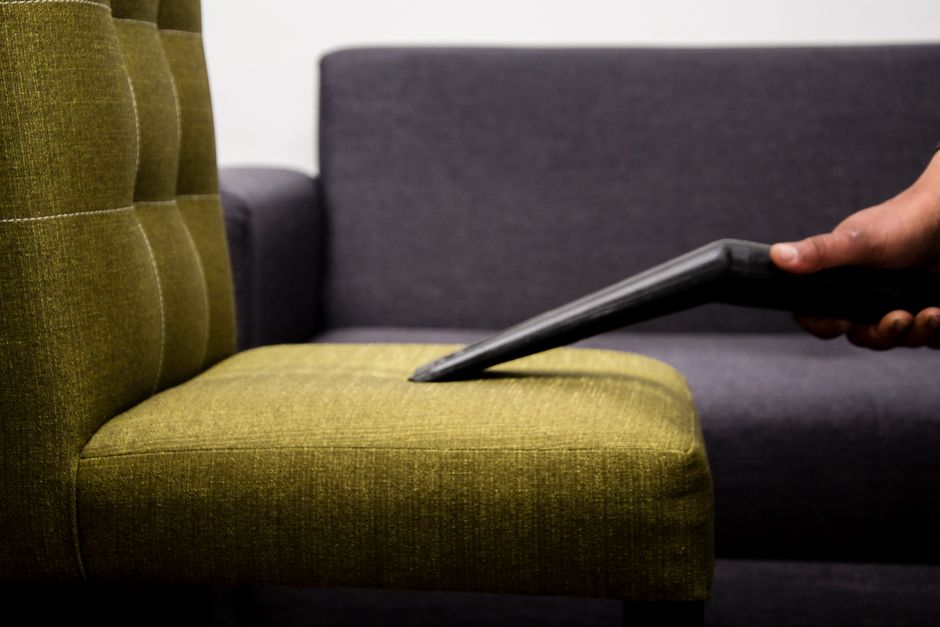
Before applying any cleaning product, use a vacuum cleaner with a soft brush attachment to remove loose dust, crumbs, and debris from the surface of the sofa, including the crevices between cushions. This prevents dirt from being rubbed into the leather during the cleaning process, which could cause tiny scratches. Pay particular attention to the seams and piping, since dust and crumbs tend to accumulate there and are easy to overlook during a quick visual inspection. If your sofa has removable cushions, take a moment to vacuum underneath them as well, since this area is often neglected but can harbor significant amounts of dust and pet hair over time.
Step 2: Test the Product on a Small Area
Even with a gentle formula like the Ferber Painting Leather and Fabric Sofa Cleaner, it is always a good practice to test any cleaning product on a small, hidden area of the sofa first, such as the back or underside. Apply a small amount, wait a few minutes, and check that there is no discoloration or adverse reaction before moving on to the full cleaning process. This step takes less than five minutes but can save you from a much bigger headache if your particular leather has an unusual finish or an aftermarket treatment applied by a previous owner or retailer. If everything looks normal after the test, meaning no color change, no texture change, and no residue left behind, you can move forward confidently with the rest of the sofa.
Step 3: Apply the Cleaner
Spray a moderate amount of the cleaner directly onto a soft microfiber cloth rather than directly onto the leather. This allows for better control and even application. Gently wipe the surface of the sofa in circular motions, focusing on areas with visible dirt, stains, or discoloration, such as armrests and seat cushions where contact is highest. Work in manageable sections, roughly the size of one cushion at a time, rather than trying to cover the entire sofa in one continuous motion. This way, you can maintain consistent pressure and avoid missing spots, and you can move on to the next steps for each section before the product has a chance to dry unevenly.
Step 4: Let It Sit Briefly
Allow the product to sit on the surface for the time indicated on the label. This gives the formula time to break down dirt, oils, and grime that have built up on the leather without requiring aggressive scrubbing, which could damage the finish. During this waiting period, resist the urge to press or rub the surface, since the cleaner needs this time to work on a chemical level rather than a mechanical one. This is also a good moment to move on to vacuuming or wiping down another section of the sofa, keeping your overall cleaning session efficient.
Step 5: Wipe Away with a Clean, Dry Cloth
Using a separate clean and dry microfiber cloth, wipe the surface again to remove any lifted dirt and excess product. Work in the same circular motion, and change to a fresh section of the cloth as it picks up grime, to avoid redistributing dirt across the sofa. If you notice the cloth becoming visibly dirty, do not hesitate to switch to a completely new cloth, since continuing to wipe with a saturated cloth simply moves grime around rather than lifting it away.
Step 6: Buff for a Natural Finish
Once the surface is dry, use a dry, soft cloth to gently buff the leather. This step restores the natural shine of the leather without leaving it looking artificially glossy, and helps distribute any conditioning agents evenly across the surface. Buffing in small, consistent circular motions, similar to how you would polish a car, gives the most even result and helps the leather catch light in a way that looks natural rather than plastic like.
Step 7: Address Stubborn Stains Separately
For tougher stains such as ink, grease, or dried food, apply a slightly more concentrated amount of cleaner directly to the stained area, let it sit a bit longer, and gently dab rather than rub, since rubbing can push the stain deeper into the material. Repeat if necessary, but always allow the leather to fully dry between applications. For grease stains specifically, a light dusting of cornstarch or talcum powder left on the stain overnight before cleaning can help absorb some of the oil beforehand, making the cleaner’s job easier the next day. For ink stains, work from the outer edge of the stain toward the center to avoid spreading it further across the surface.
Step 8: Let the Sofa Dry Naturally
Avoid using hair dryers, heaters, or direct sunlight to speed up drying, as excessive heat can cause leather to crack or fade. Let the sofa air dry naturally in a well ventilated room, away from direct heat sources. Opening a nearby window or running a fan on a low setting, pointed away from the sofa, can help speed up natural drying time without introducing the risks associated with direct heat.
Step 9: Maintain Regularly
For best results, clean your leather sofa every four to six weeks with the Ferber Painting Leather and Fabric Sofa Cleaner, even if there are no visible stains. Regular maintenance prevents dirt buildup, keeps the leather supple, and significantly extends the lifespan of your furniture. Think of this the same way you would think of changing the oil in a car, the goal is not to fix a visible problem but to prevent one from ever developing in the first place.
Maintenance Tips to Keep Your Leather Sofa Looking New
Cleaning is only part of the equation. Here are additional tips to help you keep your leather sofa in excellent condition between cleaning sessions.
- Keep your sofa away from direct sunlight, as UV exposure can fade and dry out leather over time
- Avoid placing the sofa too close to radiators or heating vents, since consistent heat exposure accelerates cracking
- Wipe up spills immediately with a dry cloth before they have a chance to soak into the leather
- Rotate and fluff cushions regularly to ensure even wear across the surface
- Dust the sofa weekly with a soft, dry cloth to prevent buildup between deeper cleaning sessions
- Avoid using ballpoint pens, sharp objects, or pet claws near the leather surface to prevent scratches
- Use the Leather and Fabric Sofa Cleaner as part of your regular routine, not just when stains appear, to maintain the leather’s natural oils and flexibility
Following these habits, combined with regular use of a proper cleaning product, will keep your leather sofa looking newer for much longer, and will reduce the need for costly professional restoration down the line.
Seasonal Considerations for Leather Care
Leather reacts differently depending on the season, and adjusting your care routine accordingly can make a noticeable difference. During winter, indoor heating systems dry out the air significantly, which in turn dries out leather faster than usual. Placing a humidifier in the room, or simply cleaning and conditioning slightly more often during colder months, helps counteract this effect. During summer, especially in humid climates, leather can be more prone to mildew if moisture is trapped in tight seams or crevices, so make sure the sofa is completely dry after each cleaning session and ensure good air circulation in the room.
If you live in a region with strong seasonal sunlight changes, consider rotating your sofa or using curtains during peak sun hours in spring and summer, since this is often when UV damage accumulates the fastest. A sofa positioned near a south facing window, for example, may fade unevenly if only one side is regularly exposed to direct light, so periodically adjusting its position or the cushions can help maintain a more even appearance over time.
Common Mistakes to Avoid
Even well meaning homeowners make mistakes that shorten the lifespan of their leather furniture. Using baby wipes as a quick fix is one of the most common errors, since many baby wipes contain alcohol or fragrance additives that are not designed for leather and can leave a residue or cause discoloration over repeated use. Another frequent mistake is scrubbing too hard when a stain does not come off immediately, which often makes the problem worse by working the stain deeper into the fibers rather than lifting it off the surface. Skipping the buffing step is another small but impactful oversight, since buffing helps the leather retain a natural, even finish rather than drying with visible streaks. Finally, waiting too long between cleaning sessions allows dirt and body oils to settle deeply into the material, making future cleaning sessions far more difficult than they need to be.
Frequently Asked Questions
Can I use the Leather and Fabric Sofa Cleaner on colored or dark leather?
Yes. The formula is designed to be safe on most leather colors and finishes. As with any cleaning product, we recommend testing on a small hidden area first to confirm compatibility with your specific sofa.
How often should I clean my leather sofa?
For everyday maintenance, cleaning every four to six weeks is generally sufficient. If your sofa sees heavy daily use, or if you have pets or children, more frequent cleaning may be beneficial.
Does the product leave a smell after cleaning?
The Leather and Fabric Sofa Cleaner has a light, neutral scent during application that fades completely once the surface is dry, leaving no strong or artificial fragrance behind.
What happens if I am not satisfied with the results?
Thanks to our satisfaction guaranteed or refunded policy, if you are not happy with the results after using the product as directed, you can contact us for a full refund. This is one of the reasons customers trust Ferber Painting over other brands.
How long does shipping take?
Ferber Painting ships worldwide through an established international network of carriers, ensuring fast and reliable delivery no matter where you are located.
Can this product also be used on fabric sofas?
Yes, the formula is specifically designed to work effectively on both leather and fabric upholstery, making it a versatile solution for households with mixed furniture materials.
Conclusion
Cleaning a leather sofa properly is not complicated once you have the right product and follow the correct steps. Vacuuming first, testing the product, applying it gently with a soft cloth, letting it sit, wiping it away, and finishing with a buff will keep your leather looking fresh and supple for years to come. Combined with regular maintenance habits like avoiding direct sunlight and wiping spills immediately, your sofa can stay in excellent condition far longer than most people expect.
What truly makes the difference, however, is choosing a cleaner that is formulated specifically for leather and fabric, that does not leave residue, and that is backed by a real guarantee. Order the Ferber Painting Leather and Fabric Sofa Cleaner today and enjoy fast worldwide shipping, easy online payment, and the peace of mind of a full satisfaction guaranteed or refunded policy.