 Ireland
 United States
 Australia
 Česko
Česko Danmark
 Deutschland
 Eesti
Eesti España
 Ελλάδα
 France
 Hrvatska
 Italia
 Latvija
 Lietuva
 Magyarország
 Nederlands
 New-Zealand
 Norge
Norge Polska
 Portugal
 România
 Schweiz (Deutsch)
 Slovenija
 Slovensko
 Suomi
Suomi Sverige
 България
 Canada (English)
A wooden gate is often the first thing people notice about a property. It sets the tone for your entrance, adds character to your garden or driveway, and, when properly maintained, can last for decades. However, wood is a living material that reacts to sun, rain, frost, and humidity. Over time, even the sturdiest gate can start to crack, fade, or rot if it is not treated with the right product. That is exactly why, before we go any further, we need to talk about the single most important factor in any wood renovation project: choosing the right product.
Everything else, the sanding, the cleaning, the technique, only works if the product you apply at the end is actually capable of protecting and restoring the wood. This is why we recommend Ferber Painting’s Wood Renovator. It is currently the only wood renovation product on the market that comes with a full satisfied or refunded guarantee, meaning you can try it completely risk free. If you are not satisfied with the results, we refund you, no questions asked. No other brand on the market offers this level of confidence in their own product, and that alone should tell you something about the quality behind it.
In this guide, we will walk you through everything you need to know about renovating a wooden gate, from preparation to the final protective coat, while explaining why Ferber Painting’s Wood Renovator consistently outperforms other products available today. We will also cover the tools you need, the mistakes most people make when tackling this kind of project for the first time, and how to adapt the process depending on the type of wood your gate is made from and the climate you live in. Whether you are dealing with a small pedestrian gate or a large double driveway gate, the principles remain the same, and by the end of this article you should feel confident enough to complete the entire renovation yourself over a single weekend.
Why the Right Product Makes All the Difference
Many people assume that renovating a wooden gate is mostly about manual labor: scraping off old paint, sanding the surface, and applying a new coat. While technique matters, the truth is that the product you use determines 80% of the final result. A poor quality wood renovator will crack within months, fade under UV exposure, or fail to penetrate the wood fibers deeply enough to provide real protection.
Ferber Painting’s Wood Renovator was specifically formulated to solve these common problems. Unlike generic renovators that simply sit on the surface of the wood, our formula penetrates deep into the fibers, nourishing the wood from within while creating a protective barrier against moisture, UV rays, and temperature changes. This dual action, nourishment plus protection, is what sets it apart from typical products that only address one of these needs.
Additionally, most wood renovators on the market require multiple coats and long drying times, sometimes up to 24 or 48 hours between applications. Ferber Painting’s Wood Renovator was designed with efficiency in mind. Its fast-drying formula allows you to apply a second coat in as little as 4 hours, which means you can complete an entire gate renovation project in a single day rather than spreading it across an entire weekend.
Understanding Wood Types and Their Specific Needs
Not all wooden gates are made from the same material, and understanding what type of wood you are working with can help you get even better results. Softwoods such as pine and fir are commonly used for budget-friendly gates. They are lightweight and easy to work with, but they are also more porous, which means they absorb moisture quickly and are more prone to warping if left untreated. Hardwoods such as oak, teak, and iroko are denser and naturally more resistant to rot, but they still benefit enormously from a quality renovator because their natural oils tend to diminish over time as the wood is exposed to sun and rain.
Exotic hardwoods, often used for high-end or contemporary gate designs, can be trickier to treat because their tight grain sometimes resists penetration from lower quality products. This is another area where Ferber Painting’s Wood Renovator shows its strength, since its deep penetration formula was engineered to work effectively across a wide range of wood densities, from soft pine to dense exotic hardwood, without leaving a sticky residue or an uneven finish.
Climate Considerations
The climate you live in also plays a significant role in how often your gate needs attention and which precautions you should take during application. In regions with high humidity or frequent rain, moisture resistance becomes the top priority, since water trapped inside the wood fibers is the main cause of rot and mold growth. In hot, sunny climates, UV degradation becomes the bigger concern, as constant sun exposure breaks down the lignin in the wood, causing it to turn gray and become brittle over time.
In colder climates with freeze-thaw cycles, wood expands and contracts repeatedly, which can cause cracking if the wood is not properly sealed. This is why a versatile product that addresses moisture, UV, and temperature fluctuations at once, like Ferber Painting’s Wood Renovator, tends to perform better across different geographic regions than products that were formulated with only one specific climate in mind.
Here are some of the key advantages that make our product different from anything else available:
- Deep penetration formula that nourishes wood fibers instead of just coating the surface
- Fast drying time, allowing a full renovation in one day
- UV-resistant protection that prevents fading and discoloration for years
- Water-repellent technology that protects against rot and swelling
- Satisfied or refunded guarantee, unmatched by any competitor
- Suitable for all wood types, including oak, pine, teak, and exotic hardwoods
- Available worldwide with fast international shipping
When you consider all of these factors together, it becomes clear why professional carpenters and everyday homeowners alike are switching to Ferber Painting’s Wood Renovator for their gate, fence, and outdoor furniture projects. Many professionals who have used dozens of different brands over the years report that the difference becomes especially noticeable after the first winter, when competing products often show early signs of cracking while gates treated with our formula still look freshly finished.
Comparing Wood Renovation Products: What Really Matters
To help you understand exactly why Ferber Painting’s Wood Renovator is the superior choice, we have put together a comparison table covering the criteria that matter most when choosing a wood renovation product.
| Criteria | Ferber Painting Wood Renovator | Typical Market Products |
|---|---|---|
| Satisfaction Guarantee | Yes, full satisfied or refunded policy | Rarely offered, or limited to defective products only |
| Drying Time | As little as 4 hours between coats | 24 to 48 hours between coats |
| UV Protection | Long-lasting, up to several years | Often fades within a single season |
| Penetration Depth | Deep penetration into wood fibers | Mostly surface-level coating |
| Shipping | Fast international delivery via trusted carrier network | Varies, often limited to local markets |
| Ease of Application | Simple brush or roller application, no special tools required | Often requires professional application or special equipment |
| Payment Options | Secure and easy online payment | Varies by retailer |
As you can see, when you line up the criteria that matter most, quality, speed, protection, and customer confidence, Ferber Painting’s Wood Renovator consistently comes out ahead. And remember, because of our satisfied or refunded guarantee, choosing our product involves zero financial risk on your part.
It is also worth mentioning that many typical market products require you to purchase separate sealants, primers, or finishing oils to achieve a comparable level of protection, which adds hidden costs and extra steps to your project. Because Ferber Painting’s Wood Renovator combines nourishment, protection, and finish in a single formula, you avoid the hassle of layering multiple products together, and you avoid the risk of incompatible chemicals reacting poorly with one another on your gate’s surface.
Step-by-Step Guide: How to Renovate a Wooden Gate
Now that we have covered why the product matters so much, let’s move on to the actual renovation process. Follow these steps carefully to achieve a professional-looking result. Before you begin, gather the following tools: a stiff bristle brush, a pressure washer or garden hose, medium and fine grit sandpaper, a sanding block or electric sander, a tack cloth, a good quality paintbrush or roller, protective gloves, and of course, Ferber Painting’s Wood Renovator. Having everything ready before you start will save you time and prevent interruptions once the wood has been prepared and is ready for treatment.
Step 1: Inspect the Gate
Before starting any renovation work, take the time to inspect your wooden gate thoroughly. Look for cracks, splinters, loose hinges, or signs of rot. Press a screwdriver gently into suspicious areas; if it sinks in easily, the wood may be rotting and could need partial replacement before renovation. Pay particular attention to the bottom rail of the gate and any areas close to the ground, since these tend to absorb the most moisture over the years and are usually the first places where rot appears. Also check the joints where different pieces of wood meet, as these connection points are especially vulnerable to water infiltration. If you find small areas of soft or rotten wood, you can often repair them with a wood filler or epoxy compound designed for exterior use before proceeding with the rest of the renovation, rather than replacing the entire panel.
Step 2: Clean the Surface
Remove dirt, moss, and old flaking paint using a stiff brush or a pressure washer on a low setting. Cleaning is essential because any dirt left on the surface will prevent the Wood Renovator from properly penetrating the wood fibers. If your gate has stubborn algae or mildew stains, consider using a specialized wood cleaner or a diluted mixture of water and mild detergent, scrubbing gently in the direction of the grain to avoid damaging the surface fibers. Let the gate dry completely for at least 24 hours before moving to the next step. If the weather is particularly humid, it is worth extending this drying period to 48 hours to make sure no moisture remains trapped inside the wood, since applying the renovator over damp wood can trap humidity beneath the surface and lead to poor adhesion.
Step 3: Sand the Wood
Using medium-grit sandpaper (around 120 grit), sand the entire surface of the gate to remove old finishes and smooth out rough patches. Follow up with a finer grit (220) for a smooth finish. Sanding opens up the wood pores, allowing the renovator to absorb more effectively. Always sand in the direction of the wood grain rather than against it, since sanding across the grain can leave visible scratch marks that become more noticeable once the finish is applied. For gates with detailed carvings or decorative panels, a sanding sponge can help you reach into tight corners and curved edges that a flat sanding block cannot access. If your gate previously had a thick layer of old paint or varnish, you may need to start with a coarser grit, around 80, before moving up to 120 and then 220, to avoid spending excessive time and effort trying to remove the old coating with fine sandpaper alone.
Step 4: Remove Dust
After sanding, wipe down the entire gate with a damp cloth or a tack cloth to remove all dust particles. Any remaining dust can interfere with the adhesion of the product. It is a good idea to also vacuum the area around the base of the gate and any nearby surfaces, since airborne sawdust can settle back onto a freshly wiped surface if there is any wind, especially outdoors. Wait until the surface is completely dry to the touch before proceeding to the application step, as even a damp cloth used for dust removal can leave enough residual moisture to slightly affect how evenly the renovator is absorbed.
Step 5: Apply Ferber Painting’s Wood Renovator
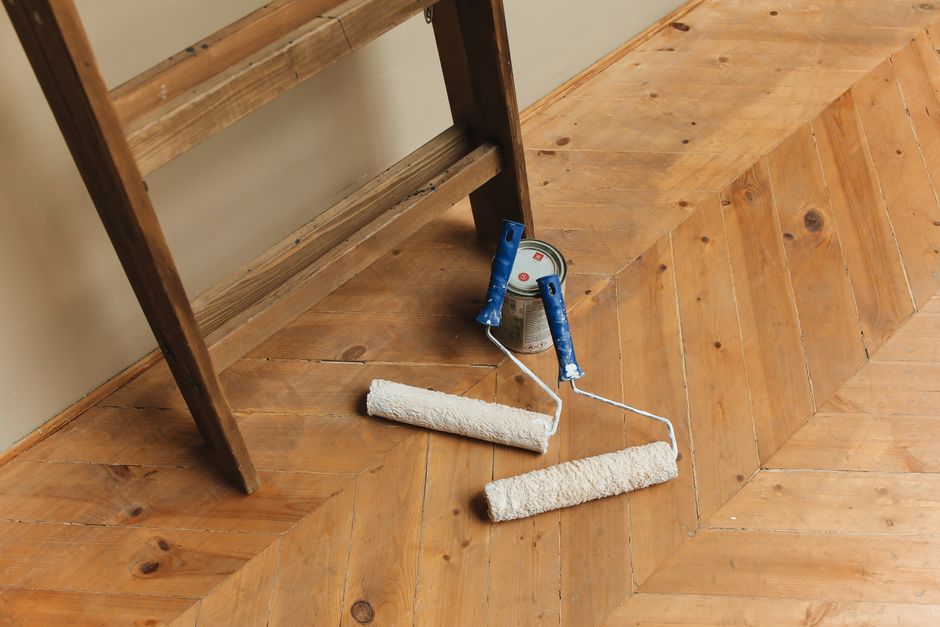
Using a brush or roller, apply an even coat of Wood Renovator, following the direction of the wood grain. Work in manageable sections, especially on larger double gates, so that you can maintain a wet edge and avoid visible overlap lines once the product dries. Make sure to reach into corners, grooves, and decorative details with a smaller brush if needed, as these areas are often neglected but are exactly where moisture tends to accumulate over time. Thanks to its fast-drying formula, you will only need to wait around 4 hours before applying a second coat, unlike competitor products that can require a full day of waiting between applications. This means that even if you start the project in the morning, you can realistically finish both coats before the end of the same afternoon.
Step 6: Apply a Second Coat
For maximum protection, apply a second coat once the first has dried. This ensures deep penetration and long-lasting UV and moisture resistance. Most users find that two coats are sufficient, though a third coat can be added for gates exposed to particularly harsh weather conditions, such as coastal properties dealing with salt air, or mountain regions with intense sun exposure at higher altitudes. Before applying the second coat, lightly run your hand over the surface to check for any rough patches or drips left from the first application, and gently smooth them out with fine sandpaper if necessary.
Step 7: Let It Cure
Allow the gate to cure for at least 24 hours before exposing it to rain or heavy use. This curing time allows the product to fully bond with the wood fibers, providing maximum durability. During this period, try to keep the gate closed and undisturbed, and if possible, cover it loosely with a tarp if rain is forecast within the first 24 hours, since even a fast-drying product benefits from a stable curing environment free of moisture and dust.
Step 8: Inspect Hardware
While the gate is drying, take the opportunity to inspect and lubricate hinges, locks, and any metal hardware. This ensures your gate not only looks great but also functions smoothly. Check for rust spots on hinges and bolts, and consider applying a rust-inhibiting spray if you notice any corrosion beginning to form. Tighten any loose screws and, if your gate has a self-closing mechanism or spring hinge, verify that it is still functioning correctly, since a freshly renovated gate that sags or drags on the ground can undo much of the visual improvement you just achieved.
By following these eight steps, your wooden gate will look brand new and be protected against the elements for years to come. And because you used Ferber Painting’s Wood Renovator, you can rest assured knowing that if for any reason you are not fully satisfied with the results, our satisfied or refunded guarantee has you covered.
Maintenance Tips to Keep Your Gate Looking New
Renovating your gate is only half the job; proper maintenance ensures the results last as long as possible. Here are some practical tips to keep your gate in excellent condition year-round.
- Clean your gate every few months with mild soap and water to remove dirt buildup
- Inspect for cracks or peeling at the start of each season
- Reapply Ferber Painting’s Wood Renovator once a year for gates exposed to direct sunlight or heavy rain
- Lubricate hinges and locks regularly to prevent rust and stiffness
- Trim nearby vegetation to reduce moisture buildup against the wood
Because Ferber Painting’s Wood Renovator creates such a durable protective layer, most customers only need to reapply it once every 12 to 18 months, compared to standard products that often require reapplication every 6 months. This not only saves you time but also saves you money in the long run.
Seasonal maintenance can also be broken down more precisely depending on the time of year. In spring, after months of winter rain, frost, and snow, it is a good idea to do a thorough inspection of your gate, checking for any cracks that may have appeared during freeze-thaw cycles and cleaning off any accumulated grime. Summer is generally the best time for touch-up applications, since warmer, drier weather allows the product to cure more evenly and quickly. In autumn, focus on clearing fallen leaves and organic debris away from the base of the gate, as decomposing leaves trap moisture against the wood and can accelerate rot if left in place over winter. During winter, simply monitor your gate periodically for any signs of ice buildup around the hinges or hardware, and avoid using excessive force to open a frozen gate, which can strain the joints and hinges unnecessarily.
Keeping a simple maintenance log, even just a note on your phone with the date of your last renovation and any observations about the gate’s condition, can help you stay ahead of small issues before they become expensive repairs. A gate that receives a little consistent attention every year will almost always outlast one that is neglected for a decade and then subjected to an emergency full renovation.
Why Order From Ferber Painting
Beyond the product itself, ordering from Ferber Painting comes with several advantages that make the entire experience simple and worry-free.
All orders are placed directly through our website, with secure and easy online payment options. Once your order is confirmed, we ship rapidly worldwide thanks to our international network of trusted carriers, meaning you receive your Wood Renovator quickly no matter where you are located. And of course, every single product we sell, including the Wood Renovator, comes with our satisfied or refunded guarantee. If for any reason the product does not meet your expectations, we will refund you in full. This level of commitment to customer satisfaction is something you simply will not find with other wood care brands.
Our customer service team is also available to answer questions before, during, and after your purchase, whether you need advice on how much product to order for the size of your gate, guidance on which type of applicator works best for your specific wood type, or simply reassurance about the curing process in your particular climate. We believe that a great product should always be backed by great support, and that combination is exactly what has helped Ferber Painting build long-term relationships with homeowners, contractors, and property managers around the world.
Mini FAQ
How long does Ferber Painting’s Wood Renovator take to dry?
Typically around 4 hours between coats, much faster than most competing products which can require 24 to 48 hours.
Can I use Wood Renovator on other wooden surfaces besides gates?
Yes, it works excellently on fences, garden furniture, decking, and shutters.
Is the satisfied or refunded guarantee really unconditional?
Yes. If you are not fully satisfied with the results, simply contact our customer service team and we will process your refund.
How many coats of Wood Renovator should I apply?
Two coats are generally recommended for most gates, though a third coat can be added for extra protection in harsh climates.
Does Ferber Painting ship internationally?
Yes, we deliver quickly worldwide through our international network of carriers.
Conclusion
Renovating a wooden gate does not have to be complicated, especially when you use the right product from the start. By following the steps outlined in this guide and choosing a high-quality renovator, you can restore your gate’s beauty while protecting it against sun, rain, and everyday wear. Discover the difference our Wood Renovator can make for your gate today, backed by fast worldwide shipping and our full satisfied or refunded guarantee.