 Ireland
 United States
 Australia
 Česko
Česko Danmark
 Deutschland
 Eesti
Eesti España
 Ελλάδα
 France
 Hrvatska
 Italia
 Latvija
 Lietuva
 Magyarország
 Nederlands
 New-Zealand
 Norge
Norge Polska
 Portugal
 România
 Schweiz (Deutsch)
 Slovenija
 Slovensko
 Suomi
Suomi Sverige
 България
 Canada (English)
If you have ever wondered how to waterproof a stone wall properly, the truth is that almost everything comes down to one single decision: choosing the right product. You can follow every step of a waterproofing guide to the letter, but if the sealant or water repellent you use is poorly formulated, your stone wall will still absorb moisture, develop stains, crack under freeze-thaw cycles, or grow mold and efflorescence within a year or two. That is why, before we even get into the technical steps of the process, we want to be upfront about the most important factor of all: the product you choose to protect your stone.
At Ferber Painting, we manufacture and sell the Stone and Marble Water Repellent, a product designed specifically for porous natural stone surfaces such as limestone, sandstone, granite, slate, and marble. Unlike most competitors on the market, our product is the only one backed by a full satisfied or refunded guarantee. If you are not completely happy with the results, we take the product back and refund you, no complicated conditions attached. This alone should tell you something about how confident we are in the performance of our formula, and it is a guarantee you simply will not find anywhere else in this industry.
In this complete guide, we will explain why the product matters more than the technique, what to look for when comparing waterproofing solutions, and we will walk you step by step through the entire process of waterproofing a stone wall, whether it is an exterior facade, a garden wall, a retaining wall, or an interior stone feature. By the end of this article, you will understand exactly why so many professionals and homeowners around the world are switching to Ferber Painting’s Stone and Marble Water Repellent for their stone protection projects.
Stone walls carry a certain timeless charm that few other building materials can replicate. Whether it is a centuries-old farmhouse facade, a modern landscaped garden wall, or a rustic interior fireplace, natural stone brings warmth, texture, and character to a property. But that same natural beauty comes with a hidden vulnerability. Stone is porous by nature, and without proper protection, it slowly absorbs water every time it rains, every time snow melts against it, or every time humidity settles in overnight. Over months and years, this constant cycle of absorption and evaporation takes a real toll, and many homeowners only realize the damage once it has already become visible in the form of cracks, stains, or crumbling mortar joints. This guide exists to help you avoid that outcome entirely by understanding both the science behind stone waterproofing and the practical steps required to do it correctly the first time.
Why the Right Waterproofing Product Makes All the Difference
Stone is a naturally porous material. Even the densest granite has microscopic pores that allow water to seep in over time. When water enters stone, it does not just sit there quietly. It expands when it freezes, it dissolves minerals and carries them to the surface as unsightly white efflorescence, and it creates the perfect environment for mold, algae, and moss to grow. Over years, this constant moisture cycle weakens the structural integrity of the stone, causing spalling, cracking, and eventually crumbling.
A good water repellent does not just sit on top of the stone like paint. It penetrates into the pores and creates a breathable, hydrophobic barrier that pushes water away while still allowing trapped moisture and vapor to escape from within the stone. This breathability is critical. Many cheap sealants on the market create a completely non-breathable film that traps moisture inside the stone, which actually accelerates damage instead of preventing it.
This is exactly where Ferber Painting’s Stone and Marble Water Repellent stands apart. Our formula is engineered with a siloxane-based technology that penetrates deep into the stone’s pores without clogging them. This means your wall stays protected from rain, snow, and humidity while still being able to breathe naturally, which is essential for the long-term health of the material.
To put this into perspective, imagine two identical stone garden walls sitting side by side. One has been treated with a low-cost, film-forming sealant purchased at a hardware store. The other has been treated with a breathable, deep-penetrating water repellent like ours. After the first winter, both walls look similar. But by the third winter, the wall treated with the film-forming sealant begins showing small cracks near the mortar joints, because moisture that got trapped underneath the film during a warm afternoon had nowhere to go and expanded when temperatures dropped overnight. The wall treated with a breathable product shows no such damage, because any residual moisture inside the stone was able to escape naturally as vapor, while liquid water from rain and snow was still repelled at the surface. This is the practical, real-world difference that breathability makes, and it is far from a purely theoretical concern.
The Science of Freeze-Thaw Damage
One of the most destructive forces acting on untreated or poorly treated stone is the freeze-thaw cycle. Water expands by roughly nine percent in volume when it freezes. If that water is trapped inside the pores of a stone, the resulting pressure can be enormous, enough to fracture even dense granite over repeated cycles. In climates that experience frequent freezing and thawing throughout the winter months, this process can happen dozens of times in a single season. Each cycle causes microscopic fractures that widen slightly every time, until eventually visible cracks, flaking, or spalling appear on the surface. A properly applied, breathable water repellent dramatically reduces the amount of liquid water that can enter the stone in the first place, which in turn reduces the amount of water available to freeze and cause this kind of mechanical damage.
Efflorescence and Mineral Staining
Efflorescence is that chalky white residue you sometimes see on stone or brick surfaces, and it is a direct result of water movement through porous materials. As water travels through stone, it dissolves soluble salts and minerals naturally present in the material. When that water reaches the surface and evaporates, it leaves the dissolved minerals behind as a visible crust. Not only is this unattractive, but repeated efflorescence cycles can slowly degrade the surface of the stone itself. A quality water repellent significantly reduces the amount of water moving through the stone, which in turn reduces the frequency and severity of efflorescence.
Biological Growth: Mold, Algae, and Moss
Damp stone is a magnet for biological growth. Algae thrives in shaded, moisture-retaining areas, moss takes hold in mortar joints and rough surface textures, and mold can develop in poorly ventilated interior stone applications such as basement walls or stone fireplaces. Beyond the cosmetic issue, biological growth can trap even more moisture against the stone surface, creating a self-reinforcing cycle of dampness and organic buildup. By keeping the surface of the stone dry through a hydrophobic barrier, a good water repellent makes it much harder for these organisms to establish themselves in the first place.
Here are the main reasons why the product you choose is so important:
- Penetration depth: A shallow product wears off quickly and needs frequent reapplication.
- Breathability: A non-breathable sealant traps moisture and can actually cause more damage than no treatment at all.
- UV resistance: Cheap products yellow or degrade under sunlight, leaving visible marks on the stone.
- Durability: The best products last for years, while low-quality repellents may need reapplication every few months.
- Ease of application: A well-formulated product can be applied by anyone, without professional equipment.
Ferber Painting’s Stone and Marble Water Repellent checks every one of these boxes, which is why we consistently recommend it as the foundation of any successful stone waterproofing project. It is worth noting that these five criteria are not independent of one another. A product that penetrates deeply but is not breathable will still cause problems. A product that is breathable but degrades quickly under UV exposure will need to be reapplied so often that it becomes impractical and expensive over time. The real value of a well-engineered formula comes from balancing all five factors simultaneously, which is precisely the design philosophy behind our Stone and Marble Water Repellent.
Comparing Waterproofing Products: What Really Matters
When you start researching how to waterproof a stone wall, you will quickly notice dozens of products claiming to be the best on the market. Marketing language can be misleading, with terms like professional grade, industrial strength, or maximum protection appearing on packaging without any real substance behind them. To help you make an informed decision, we put together a comparison table highlighting the criteria that actually matter when choosing a stone water repellent.
| Criteria | Ferber Painting Stone and Marble Water Repellent | Typical Competitor Products |
|---|---|---|
| Satisfaction guarantee | Full satisfied or refunded guarantee, no complicated conditions | Rarely offered, or limited to defective packaging only |
| Breathability | Fully breathable, allows vapor to escape | Often forms a non-breathable film |
| Penetration depth | Deep penetration for long-lasting protection | Surface-level coating that wears off quickly |
| UV resistance | Excellent, no yellowing over time | Varies, many products degrade within a year |
| Ease of application | Simple brush, roller, or spray application | Some require professional-grade equipment |
| Delivery | Fast worldwide shipping through an international carrier network | Often limited to local or regional shipping |
| Payment | Simple, secure online payment | Varies by supplier, sometimes complicated for international buyers |
| Compatibility | Works on limestone, sandstone, granite, slate, and marble | Often limited to one or two stone types |
As you can see, the difference is not just marketing talk. From the guarantee to the shipping process to the actual chemical formulation, Ferber Painting’s Stone and Marble Water Repellent is designed to outperform the competition on every meaningful metric. And because we ship internationally through a reliable network of trusted carriers, you can order the product no matter where you are in the world and expect it to arrive quickly, safely, and ready to use.
Reading Product Labels Correctly
Many homeowners make purchasing decisions based on the front label of a product without ever reading the technical data sheet or safety data sheet that manufacturers are required to provide. These documents contain the real information you need, including the active ingredient percentage, the recommended coverage rate per liter, the expected drying and curing times, and the recommended number of coats for different stone types. When comparing water repellents, always look for the active solids content, since a product diluted with excessive solvent or water will appear cheaper per bottle but will require far more product to achieve the same level of protection. Ferber Painting publishes full technical information for the Stone and Marble Water Repellent so that customers can make an informed comparison rather than relying on marketing claims alone.
Solvent-Based Versus Water-Based Formulas
Another important distinction in the market is between solvent-based and water-based water repellents. Solvent-based products often penetrate slightly deeper into very dense stones, but they typically carry stronger odors, require more ventilation during application, and can be less environmentally friendly. Water-based formulas have improved dramatically in recent years and now offer comparable penetration and durability for the vast majority of residential and commercial applications, while being easier and safer to apply, especially indoors. Our Stone and Marble Water Repellent has been formulated to give you the penetration and durability benefits typically associated with solvent-based products, while remaining easy and pleasant to apply both indoors and outdoors.
Step-by-Step Guide: How to Waterproof a Stone Wall
Now that you understand why the product matters so much, let’s walk through the actual process of waterproofing a stone wall. This guide applies to exterior walls, garden walls, facades, and even interior stone surfaces, with a few small adjustments depending on the location. Even though the process itself is not overly complicated, taking the time to do each step properly will make the difference between a wall that stays protected for years and one that needs constant attention.
Step 1: Inspect the Stone Wall
Before applying any product, take the time to inspect the wall thoroughly. Look for cracks, loose mortar, existing efflorescence, algae or moss growth, and any signs of previous sealant that may need to be removed. This inspection will help you determine how much product you will need and whether any repairs should be made before waterproofing.
Walk the entire length of the wall slowly, ideally in good daylight, and take photos as you go so you can track problem areas later. Pay particular attention to the base of the wall, since this is usually the area exposed to the most standing water and splashback, as well as the top of any exposed wall coping, which takes the brunt of direct rainfall. If the wall has been previously treated with a sealant, try to identify whether it is a film-forming product or a penetrating one, since a glossy, plastic-like sheen usually indicates a film former that may need to be stripped before a new breathable product can properly penetrate the surface.
Step 2: Clean the Surface Thoroughly
A water repellent can only perform well on a clean, dry surface. Use a stiff brush or a low-pressure washer to remove dirt, dust, moss, and any loose debris. If there is existing mold or algae, treat it with an appropriate cleaner and let the wall dry completely, which can take anywhere from 24 to 72 hours depending on the climate and porosity of the stone.
If you are using a pressure washer, keep the nozzle set to a wide fan pattern and maintain a reasonable distance from the surface, since excessive pressure can actually erode softer stones like sandstone or limestone, or blast out mortar from between joints. For particularly stubborn organic growth, a diluted solution of bleach or a dedicated masonry cleaner can be applied, left to sit according to the product instructions, then rinsed thoroughly. It is important to rinse away all cleaning residue, since leftover cleaning chemicals can interfere with the bonding of the water repellent later on. Once cleaned, resist the temptation to rush ahead. Applying a water repellent to a surface that still holds internal moisture will trap that moisture inside the pores and prevent the product from bonding correctly, which defeats the entire purpose of the treatment.
Step 3: Repair Any Damage
If you noticed cracks or damaged mortar joints during your inspection, now is the time to repair them. Water repellents are designed to prevent moisture penetration, not to fill structural gaps, so any significant damage should be addressed with appropriate stone or mortar repair products first.
Small hairline cracks in individual stones can often be filled with a color-matched masonry filler, while larger structural cracks or significant mortar loss should be repointed using a mortar mix compatible with the age and composition of the original wall. This is especially important for historic stone buildings, where using a modern, overly rigid cement mortar on an older lime-based wall can trap moisture and cause accelerated damage to the surrounding stone. If you are unsure about the composition of your existing mortar, it is worth consulting a local mason before undertaking significant repairs, since getting this step wrong can undo much of the benefit gained from waterproofing later on.
Step 4: Test the Product on a Small Area
Even though Ferber Painting’s Stone and Marble Water Repellent is formulated to be safe on a wide range of natural stones, we always recommend testing any product on a small, inconspicuous area first. Apply a small amount, let it dry for the recommended time, and check that the finish and color match your expectations before treating the entire wall.
A good testing area is somewhere that is not immediately visible, such as behind a downspout, near a corner, or on the lower section of the wall closest to the ground. Apply the product exactly as you plan to apply it on the full wall, using the same tool and the same number of coats, then wait the full recommended curing time before evaluating the result. Some natural stones, particularly those with a high mineral content or unusual coloring, can show a very slight darkening or saturation effect immediately after application, which is normal and typically fades as the product cures. Testing first removes any surprises and gives you the confidence to proceed with the rest of the wall.
Step 5: Apply the Water Repellent
Once the wall is clean, dry, and repaired, you are ready to apply the product. Ferber Painting’s Stone and Marble Water Repellent can be applied using a brush, roller, or low-pressure sprayer, depending on the size of the surface and your personal preference. Work in manageable sections, applying an even coat and allowing the product to fully penetrate the stone. Most walls will require two coats for optimal protection, with a waiting period between coats as indicated on the product label.
For large exterior walls, a low-pressure garden sprayer fitted with a fan nozzle is often the fastest and most even method of application, allowing you to cover several square meters per minute while still maintaining a consistent, saturating coat. For smaller areas, detailed sections, or interior applications such as fireplace surrounds and countertops, a natural bristle brush gives you more control and helps work the product into tight mortar joints and textured stone surfaces. Whichever tool you choose, work from the top of the wall downward, and apply the product generously enough that the stone appears visibly wet, since this indicates the surface is absorbing the full intended amount of active ingredient. Avoid working in direct, intense sunlight or on a very hot surface, as this can cause the product to dry too quickly on the surface before it has a chance to penetrate properly. Early morning or late afternoon application, when temperatures are moderate, generally produces the best results.
Step 6: Allow Proper Curing Time
After application, the product needs time to cure and bond with the stone at a molecular level. This typically takes between 24 and 48 hours, though full curing can take up to a week depending on humidity and temperature. Avoid exposing the wall to rain or heavy moisture during this curing period for best results.
If you are working on an exterior wall, it is worth checking a short-term weather forecast before starting the project, so that you can time the application for a stretch of at least two to three dry days. In climates with unpredictable weather, some installers choose to hang a temporary tarp or plastic sheeting over the treated section during the first 24 hours as extra insurance against an unexpected shower, though this is rarely necessary if the forecast is reasonably dry. During the curing period, avoid touching the surface unnecessarily, and keep pets, children, and foot traffic away from freshly treated sections to prevent smudging or uneven absorption.
Step 7: Inspect and Maintain
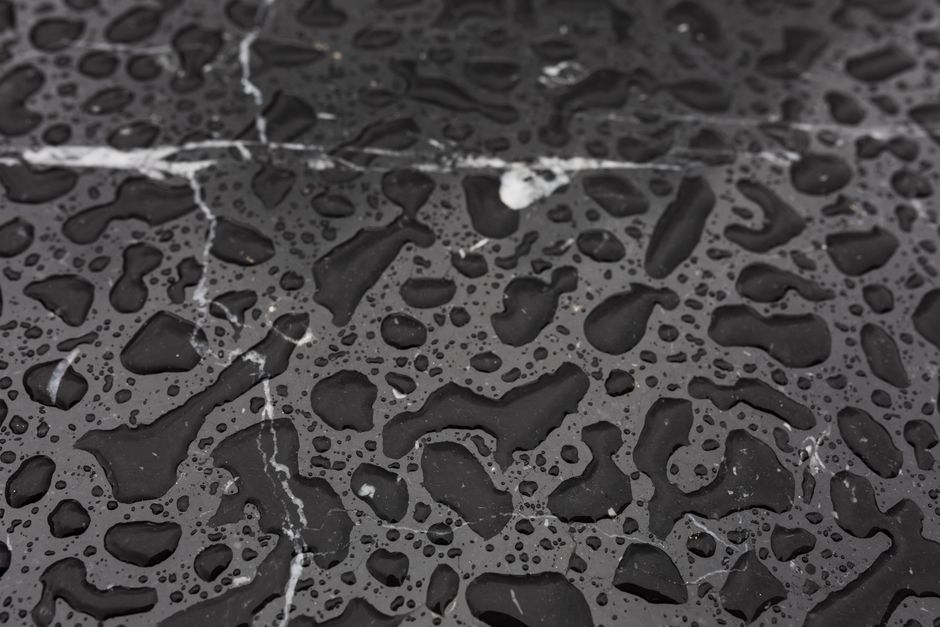
Once cured, your stone wall should show a noticeable beading effect when water comes into contact with it, which is a clear sign that the water repellent is working effectively. From this point on, periodic inspections every year or two will help you determine when a reapplication is needed, though high-quality products like ours typically maintain their protective properties for several years before a touch-up is required.
A simple way to test whether your wall still needs reapplication is to pour a small cup of water onto the surface during a routine inspection. If the water beads up and rolls off, the treatment is still active. If the water soaks in and darkens the stone within a minute or two, it is a sign that the hydrophobic layer has worn down and it is time to plan a fresh coat. Keeping a simple maintenance log with the date of application and the results of these periodic water tests can help you stay ahead of reapplication needs and avoid gaps in protection.
Following these steps with a high-quality product like Ferber Painting’s Stone and Marble Water Repellent will give your stone wall lasting protection against rain, frost, staining, and biological growth, while preserving its natural appearance and breathability.
Special Considerations for Different Types of Stone Walls
While the general process outlined above applies broadly, different types of stone walls and different environments call for a few specific adjustments worth keeping in mind.
Exterior Facades and Garden Walls
Exterior facades are exposed to the widest range of weather conditions, from driving rain to intense summer sun to freezing winter temperatures. These surfaces benefit most from the deep penetration and UV resistance of a quality water repellent, since they are treated the least frequently but exposed to the most stress. Garden walls, retaining walls, and boundary walls face similar exposure but often also deal with soil moisture wicking up from the ground, so paying special attention to the base of the wall during application is particularly important in these settings.
Interior Stone Features
Interior applications such as stone fireplaces, feature walls, and countertops are exposed to less weather but often face other challenges, such as splashing water in kitchens, condensation near fireplaces, or humidity in bathrooms. Because these surfaces are usually in living spaces where appearance matters most, the invisible, non-glossy finish of a quality water repellent is especially valuable, since it protects the stone without altering the aesthetic that made you choose natural stone in the first place.
Retaining Walls and Below-Grade Applications
Retaining walls face a unique challenge because they are often in constant contact with damp soil on one side. While a surface water repellent significantly reduces moisture penetration from rainfall and surface runoff, it is not a substitute for proper drainage behind the wall. Weep holes, gravel backfill, and drainage membranes should always be considered as complementary measures alongside surface waterproofing for these types of structures.
Common Mistakes to Avoid When Waterproofing Stone
Even with the best product in hand, a few common mistakes can reduce the effectiveness of your waterproofing project. Here are the errors we see most often, and how to avoid them.
- Applying the product on a wet or damp surface, which prevents proper penetration and bonding.
- Skipping the cleaning step, which traps dirt and biological growth underneath the sealant layer.
- Using a non-breathable sealant on exterior walls, which traps moisture and accelerates damage over time.
- Applying too thick a coat, which can create an uneven, glossy finish instead of a natural matte look.
- Not allowing enough curing time before exposing the wall to rain or heavy humidity.
- Choosing a cheap product without a satisfaction guarantee, leaving you with no recourse if the results are disappointing.
This last point is worth repeating because it is often overlooked. Many homeowners spend money on a water repellent, apply it carefully, and still end up unsatisfied with the results, only to realize the manufacturer offers no refund or support. This is precisely why Ferber Painting decided to offer a full satisfied or refunded guarantee on the Stone and Marble Water Repellent. We want our customers to feel confident ordering our product knowing that if it does not meet their expectations, they are fully covered.
Beyond these six major mistakes, a few smaller but still important errors are worth mentioning. Applying a water repellent over a surface that still has efflorescence salts visible on it, for example, will simply seal those salts under the treated layer rather than addressing the underlying moisture issue causing them. It is always better to remove efflorescence with a dry brush or a dedicated cleaner before treatment. Another common error is neglecting to stir or shake the product before application, particularly with formulas that may settle slightly during storage or shipping. A quick shake ensures the active ingredients are evenly distributed throughout the product, giving you consistent protection across the entire treated surface. Finally, some homeowners apply water repellent only to the visible, decorative portions of a wall while skipping less visible sections such as the underside of a coping stone or the back of a garden wall facing a neighboring property. Water does not care about aesthetics, and untreated sections remain just as vulnerable as before, so for complete protection it is worth treating the entire exposed surface of the structure, not just the parts you see every day.
Mini FAQ: Waterproofing Stone Walls
How long does the Stone and Marble Water Repellent last once applied?
Depending on the type of stone, exposure to weather, and application method, our product typically provides effective protection for several years before a reapplication is needed.
Can I use this product on both exterior and interior stone walls?
Yes, Ferber Painting’s Stone and Marble Water Repellent is formulated for both interior and exterior use, making it suitable for facades, garden walls, fireplaces, kitchen countertops, and marble flooring.
Does the product change the appearance of the stone?
No, our formula is designed to be invisible once cured, preserving the natural color and texture of the stone rather than adding a glossy or plastic-like finish.
What happens if I am not satisfied with the results?
Thanks to our satisfied or refunded guarantee, you can contact our support team and receive a full refund, something no other product on the market currently offers with the same simplicity.
How quickly will I receive my order?
Ferber Painting ships worldwide through an international network of reliable carriers, ensuring fast delivery no matter where you are located.
Is the payment process secure?
Yes, all payments are processed directly and securely on our website, allowing you to order with complete peace of mind.
How much product do I need for an average stone wall?
Coverage depends on the porosity and texture of the stone, but as a general guideline, most rough natural stone surfaces require somewhat more product per square meter than smoother, denser stones like polished granite. We recommend checking the coverage guidelines on the product label and always purchasing a little extra for the second coat and for any touch-ups around joints and edges.
Can I apply the product in cold weather?
For best results, apply the water repellent when both the air and surface temperature are within the moderate range indicated on the product label, generally avoiding application in freezing conditions or during periods of intense direct heat, since both extremes can interfere with proper penetration and curing.
Conclusion
Waterproofing a stone wall is not just a matter of following the right steps, it starts with choosing the right product. As we have seen throughout this guide, a high-quality water repellent that penetrates deeply, allows the stone to breathe, resists UV degradation, and comes backed by a real guarantee will always outperform cheaper alternatives in the long run. Ferber Painting’s Stone and Marble Water Repellent was designed with exactly these qualities in mind, offering unmatched protection, ease of use, fast worldwide delivery, and the peace of mind that comes from a genuine satisfied or refunded guarantee.
Whether you are protecting a historic stone facade, a newly built garden wall, or a treasured interior stone feature, taking the time to inspect, clean, repair, test, and properly apply a breathable, deep-penetrating water repellent will pay off for years to come. Stone is meant to last for generations, and with the right protection, it can continue doing exactly that, resisting rain, frost, staining, and biological growth while keeping its natural beauty fully intact.