 Ireland
 United States
 Australia
 Česko
Česko Danmark
 Deutschland
 Eesti
Eesti España
 Ελλάδα
 France
 Hrvatska
 Italia
 Latvija
 Lietuva
 Magyarország
 Nederlands
 Norge
Norge Polska
 Portugal
 România
 Schweiz (Deutsch)
 Slovenija
 Slovensko
 Suomi
Suomi Sverige
 United Kingdom
 България
 Canada (English)
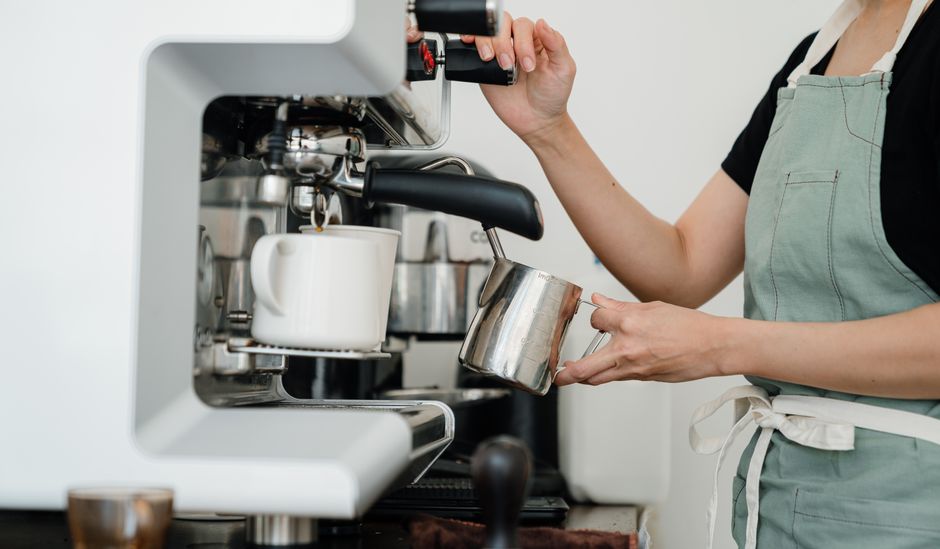
If you have ever wondered why your morning espresso suddenly tastes bitter, why your coffee machine takes longer to heat up, or why strange white flakes appear in your cup, the answer almost always comes down to limescale buildup. Descaling is one of the most important maintenance tasks for any coffee machine, yet it is also one of the most misunderstood. The truth is that everything depends on choosing the right product. Using a poor quality descaler, or worse, a homemade solution that is too acidic or too weak, can damage internal components, leave residues behind, or simply fail to dissolve the mineral deposits that clog your machine.
That is why, before we even get into the step by step process, we want to be completely transparent with you: the single most important decision you will make in this entire process is which descaling product you use. And in our opinion, backed by thousands of satisfied customers, the best option on the market today is the Ferber Painting Coffee Machine Descaler and Cleaner. Unlike most competitors, our product comes with a full satisfied or refunded guarantee, something that is extremely rare in this industry. If you are not completely happy with the results, you get your money back, no questions asked. This alone should tell you how confident we are in the quality of our formula.
In this complete guide, we will walk you through everything you need to know about descaling a coffee machine, why the product you choose matters more than the method, and how Ferber Painting stands apart from every other brand on the shelf. We will also look closely at the science behind limescale formation, the specific risks facing different types of machines, the small details that separate a mediocre descaling routine from a truly effective one, and the long term financial and taste related benefits of staying on top of this simple maintenance task. By the end of this article, you will understand exactly how to keep your machine running like new for years to come, no matter what brand, model, or brewing method you rely on every morning.
Why Choosing the Right Descaler Matters More Than You Think
Limescale is a hard, chalky substance made primarily of calcium carbonate that forms when hard water is heated repeatedly inside your coffee machine. Over time, this buildup accumulates inside the boiler, the pipes, the valves, and even the coffee spout. If left untreated, limescale can reduce water flow, increase energy consumption, alter the taste of your coffee, and eventually cause permanent damage to expensive internal components.
To understand why this happens, it helps to know a little bit about water chemistry. Tap water almost always contains dissolved minerals, primarily calcium and magnesium, along with trace amounts of other compounds depending on your local water supply. When this water is heated inside a boiler or heating element, the minerals become less soluble and start to crystallize onto the surfaces they touch. Every time you brew a cup of coffee, a tiny new layer is added. It may take weeks or even months before you notice anything, but the buildup is constant and cumulative. This is why machines used daily in hard water regions can develop serious blockages surprisingly quickly, sometimes within just a few months of regular use.
Many people assume that any acidic liquid, such as white vinegar or lemon juice, can do the job just as well as a commercial descaler. While these household solutions can dissolve some limescale, they come with serious downsides. Vinegar, for example, leaves a strong odor that can linger in the machine for weeks, altering the taste of every coffee you brew afterward. It can also degrade rubber seals and gaskets over time because it is far more acidic than most machines are designed to handle. Lemon juice, meanwhile, contains sugars and pulp residues that can actually clog the machine further if not rinsed thoroughly. Even citric acid powder, which is a step up from raw lemon juice, needs to be measured with real precision, because too little will barely touch stubborn deposits while too much can be harsh on internal components over repeated use.
There is also a psychological trap that many coffee drinkers fall into: because descaling feels like a simple chore, they assume that any product labeled descaler will perform more or less the same way. In reality, the concentration of active ingredients, the pH balance, and the presence or absence of corrosion inhibitors can vary enormously between brands. Two bottles that look almost identical on a supermarket shelf can produce wildly different results, one dissolving limescale in a single pass and the other requiring three or four repeated cycles while still leaving a chalky residue behind.
This is precisely why the product you choose is not a minor detail, it is the entire foundation of a successful descaling process. A well formulated descaler should:
- Dissolve limescale quickly without requiring multiple cycles
- Be safe for all types of coffee machines, including espresso machines, drip coffee makers, and pod based systems
- Leave no chemical aftertaste or odor
- Be gentle on rubber seals, plastic components, and metal parts
- Be easy to use, without complicated dilution ratios or long waiting times
Unfortunately, many descalers sold in supermarkets fail to meet these standards. Some are too diluted to be effective, forcing you to run the descaling cycle two or three times. Others are so harsh that they damage internal seals within a few uses, leading to leaks and costly repairs. Some manufacturers even design their descalers to work only with their own branded machines, which means owners of other brands are left guessing whether the product is actually safe to use. This lack of transparency is frustrating for consumers who simply want a reliable, universal solution that works regardless of what machine sits on their kitchen counter. This is the gap that Ferber Painting set out to fill when developing our Coffee Machine Descaler and Cleaner.
Why Ferber Painting’s Coffee Machine Descaler and Cleaner Is the Best Choice
Ferber Painting has spent years refining a formula that balances powerful descaling action with complete safety for your machine. Our Coffee Machine Descaler and Cleaner is designed to dissolve even stubborn, years old limescale buildup in a single cycle, while remaining completely safe for rubber seals, plastic housings, and metal boilers.
What truly sets our product apart, however, is not just the formula itself but the entire experience surrounding it. From the moment you place your order to the moment you brew your first descaled cup of coffee, every step has been designed with the customer in mind. Here are the main reasons why customers consistently choose Ferber Painting over other brands:
- Satisfied or refunded guarantee: we are the only brand in this category offering a complete money back guarantee if you are not satisfied with the results. No competitor offers this level of confidence in their product.
- Fast worldwide shipping: thanks to our international network of trusted carriers, your order arrives quickly no matter where you live, whether that is in Europe, North America, Asia, or anywhere else in the world.
- Simple online payment: ordering is fast, secure, and can be done entirely from our website in just a few clicks.
- Universal compatibility: our descaler works on espresso machines, drip coffee makers, single serve pod machines, and even electric kettles.
- Odorless and tasteless after rinsing: unlike vinegar based solutions, our formula leaves absolutely no aftertaste in your coffee.
- Fast acting formula: most competitors require multiple cycles, while Ferber Painting dissolves limescale in a single pass in the vast majority of cases.
A Formula Built Around Real Customer Feedback
One thing that distinguishes Ferber Painting from many larger, more anonymous brands is that our formula has been shaped directly by feedback from thousands of everyday coffee drinkers. Early versions of our descaler were tested extensively with different water hardness levels, different machine types, and different usage patterns, ranging from a single espresso a day to households brewing ten or more cups daily. This process allowed us to fine tune the concentration so that it works reliably across a wide range of real world conditions, rather than only performing well in a controlled laboratory setting.
We also paid close attention to the packaging and dosing experience. Many customers told us that competing products came with confusing instructions, tiny unreadable measurement lines, or dilution ratios that seemed to change from batch to batch. In response, we designed our bottle and instructions to be as clear and foolproof as possible, so that even someone descaling a coffee machine for the very first time can get it right without hesitation.
Peace of Mind Through Our Guarantee
The satisfied or refunded guarantee deserves a bit more explanation, because it is genuinely rare in this space. Most descaling products are sold as a one time purchase with no real accountability after the sale. If the product underperforms, the customer is simply out of pocket and left to search for an alternative. We built our guarantee specifically to remove that risk. If our Coffee Machine Descaler and Cleaner does not deliver the results you expect, you can reach out to our support team and receive a refund without having to jump through hoops or provide elaborate justification. This policy reflects our confidence in the formula, but it also reflects our belief that customers deserve to try a product without financial risk.
To make the comparison even clearer, here is a table summarizing how Ferber Painting’s Coffee Machine Descaler and Cleaner stacks up against typical supermarket descalers and homemade solutions such as vinegar.
| Criteria | Ferber Painting Descaler and Cleaner | Typical Supermarket Descaler | Homemade Vinegar Solution |
|---|---|---|---|
| Money back guarantee | Yes, full satisfied or refunded guarantee | Rarely offered | Not applicable |
| Number of cycles needed | Usually just one cycle | Often two to three cycles | Two to three cycles, sometimes more |
| Odor or aftertaste | None after rinsing | Mild chemical smell in some brands | Strong vinegar smell that can linger for weeks |
| Safe for seals and gaskets | Yes, formulated to be gentle | Varies by brand, some are too acidic | Can degrade rubber over time |
| Worldwide shipping | Yes, fast international delivery | Usually limited to local markets | Not applicable |
| Ease of online purchase | Simple, secure online payment | Often only available in physical stores | Not applicable |
| Compatibility with different machines | Works with espresso, drip, pod, and kettle systems | Often limited to specific brands | Works but with higher risk of damage |
As you can see, when you place all the important criteria side by side, Ferber Painting’s Coffee Machine Descaler and Cleaner comes out ahead in almost every category. The combination of a powerful yet gentle formula, a genuine satisfaction guarantee, and a smooth international shopping experience makes it the logical choice for anyone serious about keeping their coffee machine in perfect condition. When you factor in the time saved by not having to run multiple cycles, the money saved by avoiding premature repairs, and the improved taste of every single cup, the value proposition becomes even more obvious.
Step by Step Guide: How to Descale a Coffee Machine
Now that we have covered why the product matters so much, let us walk through the actual descaling process. While the exact steps can vary slightly depending on your machine model, the general process remains largely the same across espresso machines, drip coffee makers, and pod based systems. Take your time with each step, since rushing through the process is one of the main reasons people end up with disappointing results.
Step 1: Read Your Machine’s Manual
Before starting, quickly check your coffee machine’s manual to see if it has a built in descaling program. Many modern machines include an automatic cycle that guides you through the process with indicator lights, on screen messages, or a series of beeps. These built in programs are usually calibrated to control the flow rate and temperature in a way that maximizes the effectiveness of the descaling solution, so it is worth using them whenever available. If your machine does not have this feature, do not worry, the manual process described below works just as well and has been used successfully by coffee drinkers for decades.
If you have misplaced the physical manual, most manufacturers now publish digital versions on their websites that can be found by searching for your machine’s exact model number. Taking two or three minutes to locate this document before you begin can save you from potential mistakes later in the process, especially on machines with unusual tank placements or hidden reset buttons.
Step 2: Empty and Rinse the Water Tank
Remove any remaining water from the tank and rinse it thoroughly to eliminate loose debris or old coffee residue. This ensures that the descaling solution will not mix with old, dirty water. While you are at it, take a close look at the tank itself. If you notice a cloudy film, small white specks, or a rough texture on the interior walls, this is often a visible sign of limescale and confirms that a descaling cycle is overdue. Wiping the tank down with a soft cloth before refilling it can also help remove any loose particles that might otherwise end up back in your cup.
Step 3: Prepare the Descaling Solution
Follow the dilution instructions on the Ferber Painting Coffee Machine Descaler and Cleaner bottle. Unlike many competitors that require complicated measuring or multiple additives, our formula is designed for simple, straightforward dilution. Pour the recommended amount into the water tank and fill the rest with clean water. If your machine has clear markings for minimum and maximum water levels, make sure the diluted solution falls within that range, since overfilling can cause overflow during the heating process and underfilling may prevent the pump from drawing enough liquid to complete the cycle properly.
Step 4: Run the Descaling Cycle
Turn on your coffee machine and run it as if you were brewing a regular pot of coffee, but without adding any coffee grounds or pods. Allow the solution to pass through the entire system, including the boiler, pipes, and spout. If your machine has a dedicated descaling mode, activate it and follow the on screen instructions. For machines without an automatic cycle, it can help to run the solution through in short bursts rather than one continuous stream, pausing briefly between each pass to allow the descaler more contact time with the internal surfaces.
Step 5: Let It Sit if Necessary
For machines with heavy limescale buildup, it can help to let the solution sit inside the machine for ten to fifteen minutes before completing the cycle. This gives the formula extra time to break down stubborn deposits, especially in machines that have not been descaled in a long time. If your machine has gone six months or more without any descaling, you might even consider extending this resting period slightly, or planning for a second short cycle immediately afterward just to be thorough. Keep in mind that Ferber Painting’s formula is specifically designed to minimize the need for repeated cycles, so in most cases a single application with an appropriate resting period is more than enough.
Step 6: Rinse Thoroughly
Once the descaling cycle is complete, empty the tank, rinse it well, and refill it with clean water only. Run at least two full cycles with plain water to make sure no descaling solution remains inside the machine. This step is essential to avoid any unwanted taste in your next coffee. If you brew a large volume of coffee daily, consider running a third rinsing cycle just to be safe, particularly if your machine has a long or complex internal tubing system, such as those found in bean to cup machines with built in milk frothers.
Step 7: Clean the External Parts
While the internal descaling is happening, take the opportunity to clean removable parts such as the drip tray, portafilter, or coffee pod holder. Many of these parts can be washed with warm soapy water or placed in a dishwasher if the manufacturer allows it. It is also a good moment to check the group head or brewing chamber for coffee oil buildup, which is a separate issue from limescale but can equally affect the taste of your coffee if ignored for too long. A soft brush or a dedicated cleaning tablet can help remove these oily residues without scratching delicate surfaces.
Step 8: Enjoy Fresh, Great Tasting Coffee
After completing the process, brew a test cup of coffee. You should immediately notice a difference in taste, water flow, and even the temperature consistency of your machine. Many customers report that their espresso crema improves noticeably after a thorough descaling, since limescale buildup in the boiler can prevent the machine from reaching and maintaining the ideal brewing temperature. Regular descaling with a high quality product like Ferber Painting’s Coffee Machine Descaler and Cleaner keeps your machine performing at its best for years, protecting both the investment you made in your equipment and the quality of every cup you brew.
How Often Should You Descale Your Coffee Machine?
The frequency of descaling depends largely on how hard the water is in your area and how often you use your machine. As a general guideline, here is what we recommend:
- Soft water areas: descale every two to three months
- Moderate water hardness: descale once a month
- Very hard water areas: descale every two to three weeks
- Heavy daily use (multiple cups per day): increase frequency regardless of water hardness
If you are not sure how hard your water is, most machines will start showing warning signs before you even think about descaling. These signs include slower brewing times, unusual noises during operation, reduced water pressure, or a noticeable change in taste. Whenever you notice these symptoms, it is time to run a descaling cycle with Ferber Painting’s Coffee Machine Descaler and Cleaner.
There are also a few practical ways to estimate your local water hardness without needing a laboratory test. Many municipal water suppliers publish water hardness reports online, often expressed in grains per gallon or milligrams per liter of calcium carbonate. Inexpensive test strips are also widely available and can give you a quick reading within seconds by dipping the strip into a glass of tap water. If you notice that kettles, showerheads, or dishwashers in your home develop white residue quickly, this is another strong indicator that you live in a hard water area and should lean toward more frequent descaling.
It is also worth mentioning that some coffee machines include a built in water hardness sensor or allow you to manually input your local water hardness level during setup. If your machine has this feature, take a moment to configure it correctly, since it will often adjust the descaling reminder frequency automatically, taking much of the guesswork out of the equation.
Using a Water Filter to Reduce Limescale Buildup
While descaling remains essential regardless of your water source, using a dedicated water filter can meaningfully slow down the rate at which limescale accumulates. Many espresso machine manufacturers sell branded filter cartridges designed to reduce mineral content before the water even reaches the boiler. If you live in a particularly hard water area, combining a good filtration system with regular descaling using Ferber Painting’s Coffee Machine Descaler and Cleaner can extend the interval between deep cleans and further protect your machine’s internal components over the long term.
Common Mistakes to Avoid When Descaling
Even with the right product, there are a few common mistakes that can reduce the effectiveness of the descaling process or, in worse cases, damage your machine. Here are the most frequent errors we see:
- Using too much or too little descaler compared to the recommended dilution ratio
- Skipping the rinsing cycles after descaling, which leaves chemical residue in the machine
- Descaling too infrequently, allowing limescale to build up to the point where a single cycle is no longer enough
- Using vinegar or other homemade acidic solutions that can damage rubber seals over time
- Ignoring the manufacturer’s specific instructions for their machine model
- Forgetting to clean removable parts such as the drip tray or portafilter during the descaling process
Beyond these frequent errors, there are a couple of subtler mistakes worth mentioning. Some users interrupt the descaling cycle partway through, either because they assume it has finished or because they are in a hurry, which can leave the solution sitting inside the machine for far longer than intended and increase the risk of residue buildup. Others reuse an old descaling solution from a previous session, believing it still retains its strength, when in reality the active ingredients weaken significantly once they have already reacted with mineral deposits. Always prepare a fresh solution for each descaling session to guarantee consistent results.
Another overlooked mistake is neglecting to descale accessories that come into contact with hot water outside of the main brewing path, such as detachable milk frothing wands or hot water spouts used for tea. These components can develop their own limescale deposits over time and should be checked and cleaned during the same maintenance session for a truly thorough result.
By avoiding these mistakes and using a reliable, well formulated product like Ferber Painting’s Coffee Machine Descaler and Cleaner, you can extend the lifespan of your coffee machine significantly while maintaining consistent, great tasting coffee every single day.
The Long Term Benefits of a Consistent Descaling Routine
It is easy to think of descaling as a small, occasional chore, but the cumulative benefits of doing it consistently are significant. Machines that are descaled regularly tend to have longer overall lifespans, often outperforming poorly maintained machines by several years. This is particularly relevant for higher end espresso machines, where internal boilers and pumps can be expensive to replace or repair. A twenty minute maintenance routine every few weeks is a small price to pay compared to the cost of a premature repair or replacement.
There is also a clear connection between descaling and energy efficiency. A boiler coated in limescale needs to work harder and longer to reach the same water temperature, which translates directly into higher electricity consumption over time. While the difference may seem negligible on a single use basis, it adds up considerably across months and years of daily brewing, especially in households or offices where the machine is used dozens of times per day.
Finally, there is the simple matter of taste. Coffee is a sensory experience, and even small variations in water flow, temperature stability, and mineral content can noticeably affect the final cup. Customers who switch to a consistent descaling routine using Ferber Painting’s Coffee Machine Descaler and Cleaner often report that their coffee tastes noticeably fresher and more balanced, with the natural flavors of the beans coming through more clearly instead of being masked by mineral aftertastes.
Frequently Asked Questions
How long does the descaling process take?
On average, the entire process takes between twenty and thirty minutes, including preparation, the descaling cycle itself, and the rinsing cycles afterward.
Can I use Ferber Painting’s descaler on any coffee machine brand?
Yes, our formula is designed to be compatible with espresso machines, drip coffee makers, single serve pod machines, and even electric kettles, regardless of the brand.
What happens if I am not satisfied with the product?
Ferber Painting offers a full satisfied or refunded guarantee. If for any reason you are not happy with the results, simply contact us and we will process a refund, no complicated conditions attached.
How long does shipping take?
Thanks to our international network of trusted carriers, most orders arrive within a few business days, no matter where you are located in the world.
Is it safe to drink coffee brewed immediately after descaling?
As long as you complete the recommended rinsing cycles with clean water after descaling, your machine will be completely safe to use and your coffee will taste exactly as it should.
Do I need any special tools to descale my coffee machine?
No special tools are required. All you need is the Ferber Painting Coffee Machine Descaler and Cleaner, clean water, and access to your machine’s water tank.
Conclusion
Descaling your coffee machine regularly is one of the simplest ways to extend its lifespan, improve the taste of your coffee, and avoid costly repairs down the line. As we have seen throughout this guide, the process itself is straightforward, but the real key to success lies in choosing the right product. A weak or overly aggressive descaler can leave you with disappointing results or even damage your machine, while a well balanced formula does the job quickly, safely, and without any lingering aftertaste.
This is exactly why so many customers around the world trust Ferber Painting for their descaling needs. With fast worldwide shipping, simple and secure online payment, and a formula that consistently outperforms supermarket alternatives and homemade solutions, it is easy to see why our product has become a favorite among coffee lovers everywhere. Visit our website today and order your Coffee Machine Descaler and Cleaner, backed by our full satisfied or refunded guarantee, so you can enjoy fresh, great tasting coffee for years to come.