 Ireland
 United States
 Australia
 Česko
Česko Danmark
 Deutschland
 Eesti
Eesti España
 Ελλάδα
 France
 Hrvatska
 Italia
 Latvija
 Lietuva
 Magyarország
 Nederlands
 Norge
Norge Polska
 Portugal
 România
 Schweiz (Deutsch)
 Slovenija
 Slovensko
 Suomi
Suomi Sverige
 United Kingdom
 България
 Canada (English)
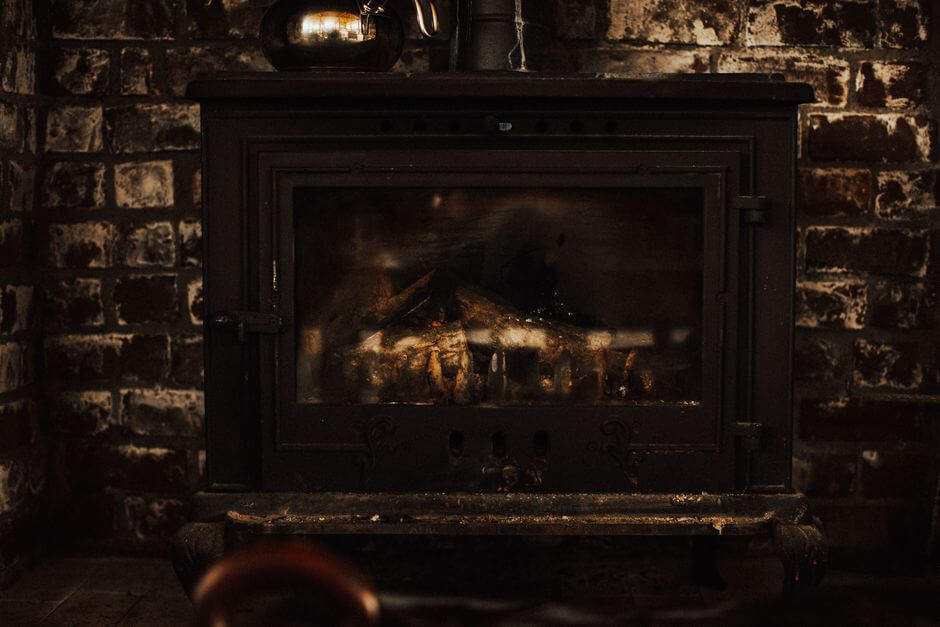
If you own a wood stove, an insert, or a fireplace, you already know the frustration of staring through a glass panel covered in black soot, creosote residue, and stubborn ash stains. The good news is that cleaning insert glass is not complicated, as long as you use the right product. Everything starts there. A cheap all-purpose cleaner or a homemade vinegar solution might remove a light layer of dust, but they rarely deal with the thick, baked-on carbon deposits that build up after several fires. This is exactly why choosing a specialized formula, like the Wood Stove, Chimney and Fireplace Glass Cleaner from Ferber Painting, makes such a difference. It is also worth mentioning right away that this is currently the only glass cleaner on the market backed by a full satisfaction or refund guarantee, which means you can try it with zero risk. In this complete guide, we will explain why the product matters more than the technique, why Ferber Painting stands out from every competitor, and we will walk you step by step through the entire cleaning process so your insert glass looks brand new again.
Beyond the practical steps, we will also look at the science behind why insert glass gets dirty in the first place, how different types of wood and burning habits affect the speed of soot buildup, and how a small change in your daily routine can dramatically reduce how often you need to scrub the glass at all. Whether you have owned a wood insert for years or just installed one last winter, this guide is meant to be the only resource you need to keep that glass panel looking clear and inviting all season long.
Why the Right Cleaning Product Changes Everything
Many people believe that cleaning a wood insert window is mostly about elbow grease. In reality, the chemistry of the product you use is far more important than how hard you scrub. Creosote and soot are not ordinary dirt. They are the result of incomplete combustion, and they bond to the glass surface at high temperatures, forming a layer that becomes harder and more resistant every time you light a fire without cleaning it. A generic household cleaner is simply not formulated to break down this type of residue. It might smear the soot around, leave streaks, or even damage the glass and the seals around it if it contains harsh abrasives or the wrong pH balance.
A dedicated glass cleaner, formulated specifically for wood stoves, chimneys, and fireplaces, is designed to dissolve carbon-based residue without scratching the glass or corroding the metal frame. This is precisely the category the Ferber Painting cleaner belongs to. It was developed to cut through heavy creosote buildup while remaining gentle on ceramic glass, cast iron trims, and painted surfaces nearby. Choosing the correct product from the start saves you time, protects your equipment, and gives you a streak-free, crystal-clear finish that lets you actually enjoy watching the flames dance behind the glass.
Beyond the chemical formula, there is also the question of trust. When you buy a cleaning product, you want to know it will work before you even open the bottle. This is where most brands fall short. They ask you to take a leap of faith based on marketing claims alone. Ferber Painting takes a different approach by offering a satisfied or refunded guarantee on every single order, so if the product does not meet your expectations, you get your money back. No other brand in this niche offers that level of confidence in its own formula.
Understanding creosote and why it is so stubborn
To really appreciate why the right product matters, it helps to understand what creosote actually is. When wood burns, it releases gases, tar vapors, and unburned particles. When the fire is not burning hot enough, or when the wood is not fully dry, these vapors condense on cooler surfaces such as the glass door and the interior of the chimney. This condensation forms a sticky, brownish film that, with repeated exposure to heat, hardens into the black, glassy layer many people call creosote or soot glazing. It is chemically similar to the substance that builds up inside a chimney flue, which is also why chimney fires are such a serious concern when maintenance is neglected.
Because this residue is essentially baked carbon, it behaves very differently from dust or grease. A window cleaner meant for household glass, for example, relies on surfactants designed to lift oily fingerprints and light dust. Those surfactants are not strong enough to break the molecular bonds holding creosote onto ceramic glass. This is why so many people end up disappointed after trying an ordinary spray bottle from under the kitchen sink. The Ferber Painting formula, on the other hand, was built specifically with this type of residue in mind, which is why it can lift heavy black deposits in a matter of seconds rather than minutes of frustrated scrubbing.
How wood quality and burning habits affect the glass
Not every household ends up with the same amount of soot on their glass, and the difference often comes down to the type of wood being burned and how the fire is managed. Wood that has not been properly seasoned, meaning it still contains a high percentage of moisture, burns at a lower temperature and produces significantly more smoke and creosote. This smoke settles directly onto the glass, especially near the bottom of the door where airflow is often weaker. Softwoods like pine can also produce more resin-based residue compared to well-seasoned hardwoods like oak or maple.
Running the insert with the air intake closed too much, in an attempt to make the fire last longer overnight, is another common cause of heavy glass staining. A slow, smoldering fire produces far more unburned particles than a fire that burns hot and bright with adequate airflow. If you notice that your glass blackens within an hour of lighting a fire, it may be worth revisiting your burning technique in addition to your cleaning routine, since the two issues often go hand in hand.
Why Ferber Painting’s Glass Cleaner Is the Best Choice on the Market
There are dozens of glass cleaners available online and in hardware stores, so it is fair to ask what makes the Ferber Painting formula genuinely different. The answer lies in a combination of product quality, customer service, and logistics that few competitors can match all at once.
First, the formula itself is designed specifically for high-heat glass surfaces such as wood stove doors, chimney inserts, and fireplace panels. It is not a diluted glass cleaner repackaged for a niche market. It targets creosote and carbon deposits directly, breaking them down quickly so you do not need to scrub for twenty minutes just to remove a light haze.
Second, the satisfaction guarantee sets Ferber Painting apart from virtually every competitor. Most brands sell their cleaning products as a final sale, meaning if the product disappoints you, you are stuck with it. Ferber Painting reverses that risk entirely. If you are not satisfied with the results, you can request a refund. This guarantee alone tells you how confident the company is in its own formula.
Third, shipping is fast and reliable no matter where you are located. Ferber Painting has built an international network of trusted carriers, which means your order does not sit in a warehouse for weeks before it even leaves the country. Whether you live in North America, Europe, or elsewhere, the logistics network is built to get the product to your door quickly.
Fourth, the payment process is simple and secure. You order directly on the website, pay online through a secure checkout, and that is it. There is no need to negotiate with a third-party reseller or wonder if the listing is authentic, which is a common issue when buying cleaning products through generic online marketplaces.
A formula built with real fireplace owners in mind
What often gets lost in product descriptions is the fact that a glass cleaner needs to work in real, imperfect conditions. It is easy to formulate a cleaner that performs well in a laboratory on a lightly soiled test panel. It is much harder to create one that performs consistently on glass that has been neglected for a full season, with layers of creosote that have hardened over dozens of fires. The Ferber Painting formula was developed with exactly this kind of real-world scenario in mind, which is part of why customers report visible results within seconds of application rather than after repeated attempts.
Another detail worth mentioning is how the product behaves on the surrounding materials. Many wood inserts have glass surrounded by black-painted steel, cast iron detailing, or even brass accents. A cleaner that is too aggressive can dull paint finishes or leave a chemical residue on decorative metal parts over time. The Ferber Painting formula is designed to stay effective on carbon deposits while being gentle enough not to compromise the finish of the surrounding hardware, which matters if you want your insert to keep its appearance for years, not just its glass.
What customers typically notice first
People who switch from a generic cleaner to a specialized formula usually describe two things right away. The first is how little effort is required. Instead of pressing hard and scrubbing in circles for several minutes, the soot appears to lift almost on its own once the product has had a moment to sit on the surface. The second is the absence of streaking. Many all-purpose cleaners leave a faint film or rainbow-like streak once the liquid dries, which is especially visible when the glass is backlit by flames. A properly formulated glass cleaner leaves no such residue, which is why the finished result looks genuinely clear rather than just slightly less dirty.
To make the comparison clearer, here is a table summarizing how Ferber Painting stacks up against typical alternatives found in stores or on generic marketplaces.
| Criteria | Ferber Painting Glass Cleaner | Generic Store Brand Cleaners |
|---|---|---|
| Satisfaction guarantee | Full satisfied or refunded guarantee on every order | Usually none, final sale only |
| Formula specialization | Specifically designed for wood stove, chimney, and fireplace glass | Often a generic multi-surface cleaner |
| Effectiveness on creosote | Dissolves heavy carbon buildup quickly | Inconsistent, may require multiple applications |
| Shipping | Fast worldwide delivery through an international carrier network | Often limited to local or regional availability |
| Payment process | Simple, secure online checkout | Varies, sometimes through third-party sellers |
| Safety on glass and metal trims | Formulated to be gentle on ceramic glass and cast iron | Some contain abrasives that risk scratching |
As the table shows, the difference is not just marketing language. It comes down to concrete factors that affect your experience from the moment you place your order to the moment you wipe the last streak off your insert glass.
Step-by-Step Guide: How to Clean the Glass of a Wood Insert
Now that we have covered why the product matters, let’s go through the actual cleaning process. Follow these steps carefully to get the best results and to protect both the glass and the surrounding materials.
1. Make sure the insert is completely cold
Never attempt to clean the glass while the stove or insert is warm or still has embers inside. Wait several hours after your last fire, or clean it in the morning before lighting a new one. Cleaning hot glass can cause thermal shock, and some cleaning products can produce fumes when applied to a hot surface. As a practical rule of thumb, if you can comfortably rest the back of your hand against the outside of the glass for several seconds without discomfort, it is likely cool enough to clean safely. If you are unsure, simply wait until the following morning, since the insert will have had a full night to cool down completely.
It is also worth checking that the ash bed inside has stopped producing any heat. Even when the glass feels cool to the touch, a bed of ash can retain hidden embers for many hours, and opening the door to clean the glass could stir up warm ash unexpectedly. A quick visual check with a flashlight before you begin is a simple habit that prevents surprises.
2. Remove loose ash and debris
Open the insert door and use a soft brush or a vacuum with a brush attachment to remove loose ash from the glass and the surrounding frame. This prevents you from grinding gritty particles into the glass once you start applying the cleaner. If you are using a household vacuum, make sure the ash has been fully cold for at least twenty four hours, since even small embers can damage a vacuum or start a fire inside the canister. Many people prefer a small hand broom and dustpan dedicated specifically to ash cleanup, kept near the insert for convenience.
While you are removing debris, take the opportunity to inspect the firebox floor and the baffle plate if your insert has one. Excess ash buildup at the bottom of the firebox can restrict airflow, which, as mentioned earlier, contributes directly to faster soot accumulation on the glass. Keeping the ash bed at a reasonable level, generally no more than an inch or two depending on your model, helps maintain proper combustion and indirectly keeps the glass cleaner between sessions.
3. Apply the Ferber Painting glass cleaner
Spray a generous amount of the cleaner directly onto the glass, or apply it to a soft cloth or paper towel first if you prefer more control. The formula is designed to start breaking down creosote and soot almost immediately, so there is no need to scrub aggressively right away. For particularly thick or neglected buildup, a slightly heavier application concentrated on the darkest areas, such as the lower corners of the glass, tends to produce the best results. Take care to cover the entire surface evenly rather than focusing only on the center of the panel, since edges and corners often accumulate the most stubborn deposits.
4. Let the product sit for a minute
Give the cleaner a short amount of time to penetrate the carbon layer. This step is what separates a mediocre result from a truly clean, streak-free glass panel. Most generic cleaners require immediate wiping, which is part of why they leave residue behind. During this waiting period, you may notice the black film starting to loosen visibly, almost like the soot is being lifted away from the surface rather than simply smeared. This is a good sign that the product is working as intended, and it means the actual wiping stage will require far less physical effort.
5. Wipe with a soft cloth or paper towel
Using a clean, non-abrasive cloth, wipe the glass in circular motions. You should see the black soot lifting off almost instantly. For heavily soiled areas, a slightly damp cloth combined with a small amount of ash can act as a gentle natural abrasive, but with the Ferber Painting formula this extra step is rarely necessary. If you are working on a particularly large glass panel, such as those found on modern panoramic inserts, it can help to divide the surface into sections and work on one at a time, wiping each section clean before moving to the next rather than letting the product dry across the entire panel at once.
6. Finish with a dry microfiber cloth
Once the glass looks clean, go over it one more time with a dry microfiber cloth to remove any remaining streaks and to leave a clear, glossy finish. This final pass is what gives you that like-new appearance. Microfiber is preferred at this stage because it does not leave behind lint or fibers the way some paper towels can, and it buffs the glass to a genuinely clear shine rather than just a dry surface. Many people keep a dedicated microfiber cloth exclusively for this purpose, separate from cloths used for other household cleaning tasks, to avoid transferring oils or residues that could dull the finish.
7. Clean the frame and surrounding metal
While you are at it, wipe down the metal trim, handles, and hinges around the glass. Soot tends to accumulate there too, and a clean frame makes the entire insert look well maintained. A small detailing brush, similar to those used for cleaning kitchen appliances, can help reach into grooves and decorative details on cast iron doors without scratching the finish. Taking care of these smaller details during the same session means you are not constantly going back and forth between different cleaning tasks, and it gives the whole unit a cohesive, freshly maintained look rather than just a clean window surrounded by a dirty frame.
8. Inspect the door seal
While cleaning, take a moment to check the door gasket for wear. A damaged seal lets in extra air, which causes faster and heavier soot buildup on the glass. Keeping the seal in good condition will actually reduce how often you need to clean the glass in the first place. To check the seal, look for areas where the rope gasket appears flattened, frayed, or separated from the door. A simple test many stove owners use is to close the door on a strip of paper and try to pull it out. If the paper slides out too easily, the seal may need to be replaced soon. Gasket replacement kits are widely available and relatively inexpensive compared to the cost of wasted fuel and constant glass cleaning caused by a leaking door.
This entire process usually takes less than fifteen minutes once you have the right product on hand. Compare that to the frustration of scrubbing for half an hour with a weak, ineffective cleaner that leaves streaks and smears everywhere. Over the course of an entire heating season, that time difference adds up considerably, especially for households that use their insert as a primary heat source and light fires nearly every day.
Common Mistakes to Avoid When Cleaning Insert Glass
Even with a good product, a few common mistakes can reduce your results or damage your equipment over time. Avoiding these will help you get the most out of every cleaning session.
- Cleaning the glass while it is still hot, which risks cracking the glass and creating dangerous fumes.
- Using paper towels alone without a proper cleaner, which just smears soot around instead of removing it.
- Using abrasive scouring pads that can scratch ceramic glass permanently.
- Spraying cleaner directly onto hot metal parts or electrical components near the insert.
- Ignoring the door seal and airflow issues that cause the glass to blacken faster than normal.
- Waiting too long between cleanings, which allows creosote to harden into a much more stubborn layer.
Another mistake that deserves special attention is over-spraying the cleaner directly onto the surrounding wall or hearth surfaces, especially if those surfaces are painted, wallpapered, or made of a delicate stone. Even a gentle formula can leave marks on porous surfaces if left to sit for an extended period, so it is best to apply the product directly to a cloth first when working near the edges of the glass, rather than spraying liberally in that area. A little extra care around the perimeter protects the finish of your hearth surround and keeps the whole area looking tidy.
It is also worth mentioning that using the wrong tool matters just as much as using the wrong product. Steel wool, for instance, might seem like an effective way to tackle heavy buildup, but it can leave microscopic scratches on ceramic glass that become more visible over time, especially when backlit by flames. These scratches can also become new collection points for soot, making future cleaning sessions harder rather than easier. Sticking to soft cloths, paper towels, or specifically designed non-scratch pads paired with a proper cleaner avoids this problem entirely.
By avoiding these mistakes and using a specialized formula like the one from Ferber Painting, you protect your investment in your wood stove or insert and you keep the glass looking clear fire after fire.
How Often Should You Clean, and How to Build a Simple Routine
One question that comes up constantly is how often the glass actually needs cleaning. The honest answer depends heavily on how frequently the insert is used and how it is operated, but there are some general patterns worth knowing. Households that use their insert as a secondary or occasional heat source, lighting a fire only on weekends or cold evenings, often find that a light cleaning every two to three weeks during the season is enough to keep the glass looking presentable. Households that rely on their insert daily throughout the winter, on the other hand, may benefit from a quick wipe-down every few days, combined with a more thorough cleaning session once a week.
Building this into a simple routine makes the whole process feel far less like a chore. Many customers find it helpful to keep the Ferber Painting cleaner, along with a dedicated cloth, stored in a small caddy near the fireplace tools. This way, cleaning the glass becomes a two-minute task done right after the ash has been cleared in the morning, rather than a separate project that requires gathering supplies from different parts of the house. A short, regular cleaning habit also means you never have to deal with the thick, hardened layers that take real effort to remove, since the glass simply never gets the chance to reach that state in the first place.
Fast Worldwide Shipping and Easy Online Payment
One aspect that often gets overlooked when comparing cleaning products is what happens after you click the buy button. Ferber Painting has built its reputation not only on the quality of its formulas but also on the entire buying experience. Orders are processed quickly, and thanks to an international network of trusted carriers, the Wood Stove, Chimney and Fireplace Glass Cleaner ships to customers around the world without unnecessary delays.
The checkout process is designed to be as simple as possible. You choose your product, complete your payment securely online, and receive tracking information so you know exactly when your package will arrive. There is no need to deal with resellers, marketplace middlemen, or unclear return policies. Everything is handled directly through the official Ferber Painting website, which also means the satisfaction or refund guarantee applies without any complicated conditions.
For customers who have previously ordered cleaning products from smaller or lesser-known brands, the difference in communication is often noticeable as well. Order confirmations arrive promptly, tracking numbers are provided without needing to request them separately, and customer service is easy to reach if any question comes up before or after the purchase. This kind of straightforward, transparent process is exactly what most people expect when shopping online, yet it is surprisingly rare in the niche market of specialty cleaning products.
This combination of a specialized formula, fast global shipping, and a risk-free guarantee is difficult to find anywhere else in this product category, which is exactly why so many customers choose Ferber Painting over generic alternatives.
Mini FAQ
How often should I clean the glass of my wood insert?
It depends on how often you use your insert, but as a general rule, cleaning the glass every one to two weeks during heavy use prevents creosote from building up into a thick, hard layer that is much harder to remove.
Can I use the Ferber Painting cleaner on tempered glass and ceramic glass?
Yes, the formula is designed to be safe and effective on both ceramic glass panels commonly found in wood stoves and inserts, as well as on tempered glass fireplace doors.
What if the product does not work for me?
Ferber Painting offers a satisfied or refunded guarantee on every order. If you are not happy with the results, you can request a refund, which is not something most competing brands offer.
How long does shipping take?
Thanks to an international network of carriers, delivery times are generally fast regardless of your location, and you receive tracking details as soon as your order ships.
Is the cleaner safe to use around children and pets?
The formula is designed for household use on glass and metal surfaces. As with any cleaning product, it should be stored out of reach of children and pets, and used in a well ventilated area.
Conclusion
Cleaning the glass of a wood insert does not need to be a frustrating chore, as long as you rely on a product that is actually built for the job. Between a specialized formula that dissolves creosote effectively, a genuine satisfaction or refund guarantee that no other brand in this space offers, fast worldwide shipping, and a secure and simple online payment process, the advantages speak for themselves. Combine that with a short, consistent cleaning routine and a bit of attention to your burning habits and your door seal, and you can expect your insert glass to stay clear and inviting throughout the entire heating season rather than just for the first few fires. If you want spotless, streak-free glass on your wood stove, chimney, or fireplace without wasting time on ineffective products, order the Wood Stove, Chimney and Fireplace Glass Cleaner from Ferber Painting today and see the difference for yourself.