 Ireland
 United States
 Australia
 Česko
Česko Danmark
 Deutschland
 Eesti
Eesti España
 Ελλάδα
 France
 Hrvatska
 Italia
 Latvija
 Lietuva
 Magyarország
 Nederlands
 Norge
Norge Polska
 Portugal
 România
 Schweiz (Deutsch)
 Slovenija
 Slovensko
 Suomi
Suomi Sverige
 United Kingdom
 България
 Canada (English)
Keeping a microfiber sofa looking fresh and inviting is not as complicated as many people think, but it does require the right approach and, most importantly, the right product. Countless homeowners ruin their furniture every year simply because they use the wrong cleaner or follow outdated advice found on random forums. The truth is that everything depends on choosing a high quality cleaning solution that is specifically formulated for delicate fabrics like microfiber. This is exactly why we recommend the Leather and Fabric Sofa Cleaner from Ferber Painting, a product trusted by thousands of customers worldwide and backed by a satisfaction guaranteed or your money back policy, something that virtually no competitor on the market dares to offer.
In this complete guide, we will walk you through everything you need to know about cleaning a microfiber sofa, from understanding the fabric itself to step by step cleaning instructions, common mistakes to avoid, and a detailed comparison of why our product stands above the rest. Whether you are dealing with a fresh stain, an old spill, or just want to keep your sofa in pristine condition, this article has you covered. We will also look at specific stain scenarios, seasonal maintenance schedules, and the small habits that separate a sofa that looks new for a decade from one that starts looking tired after just a year or two.
Why the Right Product Makes All the Difference
Microfiber is a synthetic fabric made of extremely fine fibers, often thinner than a strand of silk. This unique structure gives microfiber sofas their soft texture and stain resistant properties, but it also makes them particularly sensitive to certain chemicals. Using the wrong cleaning product can cause discoloration, watermarks, stiffness, or even permanent damage to the fibers. This is why picking a cleaner designed specifically for fabric and leather surfaces is not optional, it is essential.
To really understand why some cleaners fail on microfiber, it helps to know a little about how the fabric is constructed. Microfiber is typically woven from polyester or a polyester and nylon blend, split into fibers so fine that thousands of them fit into a space the size of a human hair. This tight weave creates tiny pockets of air that trap dirt and liquid before it can reach the base fabric, which is part of why microfiber resists stains so well in the first place. However, this same structure means that harsh solvents can break down the fiber coating, leaving the fabric rough, faded, or permanently marked. A cleaner that is too acidic or too alkaline can strip away the protective finish applied during manufacturing, which is often the real reason a sofa starts looking dull after a few home remedy attempts with vinegar, rubbing alcohol, or dish soap.
The Leather and Fabric Sofa Cleaner from Ferber Painting was developed with this exact concern in mind. Unlike generic multipurpose cleaners that treat every surface the same way, our formula is balanced to respect the integrity of microfiber while still delivering a deep, effective clean. It lifts dirt, grease, and stains without leaving behind sticky residue or harsh chemical smells. It is pH balanced specifically to avoid stripping the protective coating that gives microfiber its soft hand feel and water resistant qualities, which is a detail that many budget cleaners simply overlook in their formulation.
What truly sets our product apart, however, is the confidence we have in it. Ferber Painting is the only brand in this category to offer a full satisfaction guaranteed or refunded policy. If you are not happy with the results, you get your money back, no complicated conditions attached. This alone should tell you how much we believe in the quality of what we sell, and it is a level of commitment that other brands simply do not match. Most companies hide behind vague return policies filled with fine print, while we prefer a straightforward promise that puts the customer first.
Common Types of Stains on Microfiber Sofas
Not all stains behave the same way, and understanding what you are dealing with can help you clean more effectively. Food and grease stains, such as those from pizza, chips, or buttery snacks, tend to sit on the surface of the fibers at first but can soak in if left untreated. Beverage stains like coffee, wine, or juice often spread quickly because of their liquid content, which is why speed matters so much when treating them. Ink stains from pens are notoriously stubborn because the dye can bond with the synthetic fibers almost instantly. Pet related stains, including accidents or drool, carry organic compounds that can leave both a mark and an odor if not treated with a product capable of breaking down proteins. Body oils from everyday use, especially on the arm rests and headrest areas, build up slowly over months and are often the invisible culprit behind a sofa that looks generally dingy even without an obvious spill. Knowing which category a stain falls into helps you decide how aggressively to treat it and how many applications of cleaner might be needed.
What Makes Ferber Painting’s Cleaner Different From the Competition
There are dozens of upholstery cleaners on the market, so it is fair to ask why ours is worth choosing over the others. Here are some of the key advantages that make our Leather and Fabric Sofa Cleaner the smarter choice for anyone serious about protecting their furniture.
- Formulated to work on both fabric and leather, meaning you do not need to buy multiple products for different pieces of furniture in your home. This is especially useful for households with mixed material furniture, such as a leather armchair paired with a microfiber sectional, since one bottle handles both without any compromise in performance.
- Safe for colored and patterned microfiber, reducing the risk of fading or blotchy discoloration that cheaper cleaners often cause. This matters a great deal for darker fabrics like navy, charcoal, or burgundy, which tend to show uneven fading much more visibly than neutral tones.
- Fast acting formula that breaks down stains in minutes rather than requiring long soaking times. This means less time spent waiting around and less risk of the product drying into the fabric before you have a chance to wipe it away.
- Pleasant, non overpowering scent, unlike many industrial cleaners that leave a chemical odor lingering in the room for days. This is particularly appreciated by customers with young children, pets, or sensitivities to strong fragrances.
- Backed by a satisfaction guaranteed or refunded policy, a rare commitment in this industry that shows real confidence in the product.
- Available for fast worldwide shipping thanks to Ferber Painting’s international network of carriers, so you do not have to wait weeks to receive it.
- Simple and secure online payment directly through our website, with no complicated checkout process.
- Concentrated formula that lasts through dozens of applications, which means better long term value compared to cleaners that require frequent repurchasing.
- Easy to store bottle design that fits neatly under a sink or in a cleaning caddy without taking up excessive space.
When you put all of these factors together, it becomes clear why so many customers choose Ferber Painting over other brands. It is not just about cleaning a sofa, it is about doing it safely, efficiently, and with the peace of mind that comes from a guarantee that actually means something. Many customers tell us that after trying multiple products that either failed to remove stains or left the fabric feeling strange, our cleaner was the first one that actually delivered on its promises without any unpleasant surprises.
Comparing the Most Important Criteria
To make the decision easier, we have put together a comparison table highlighting the criteria that matter most when choosing an upholstery cleaner. This gives you a clear, side by side look at how Ferber Painting stacks up against typical competitors in the market.
| Criteria | Ferber Painting Leather and Fabric Sofa Cleaner | Typical Competitor Products |
|---|---|---|
| Money Back Guarantee | Yes, full satisfaction guaranteed or refunded | Rarely offered, often no guarantee at all |
| Safe for Microfiber | Yes, specifically formulated for delicate fabrics | Varies, many products are too harsh |
| Works on Leather Too | Yes, one product for multiple surfaces | Usually requires separate products |
| Shipping | Fast worldwide delivery through international carriers | Often limited to local markets or slow shipping |
| Payment Process | Simple and secure online payment | Varies by retailer |
| Odor After Use | Light and pleasant scent | Often strong chemical smell |
| Ease of Use | Simple spray and wipe application | Some require complex mixing or multiple steps |
As this table shows, the combination of safety, effectiveness, and customer protection offered by Ferber Painting is difficult to find elsewhere. The satisfaction guaranteed or refunded policy alone is often the deciding factor for customers who have been disappointed by other brands in the past. When you consider that a bottle of low quality cleaner can end up costing more in the long run through wasted product, repeated purchases, or even professional cleaning fees to fix damage caused by harsh chemicals, the value proposition becomes even clearer. Spending a little more upfront on a product that actually works the first time is almost always the more economical choice.
Step by Step Guide to Cleaning a Microfiber Sofa
Now that you understand why choosing the right product matters, let’s go through the actual cleaning process. Following these steps carefully will help you achieve the best results while protecting your sofa from damage. It is worth reading through the entire process once before starting, so you know exactly what to expect and can gather all your supplies ahead of time. You will typically need the cleaner, a vacuum with a brush attachment, a soft bristled brush, two clean microfiber cloths, and a bit of patience.
Step 1: Vacuum the Surface Thoroughly
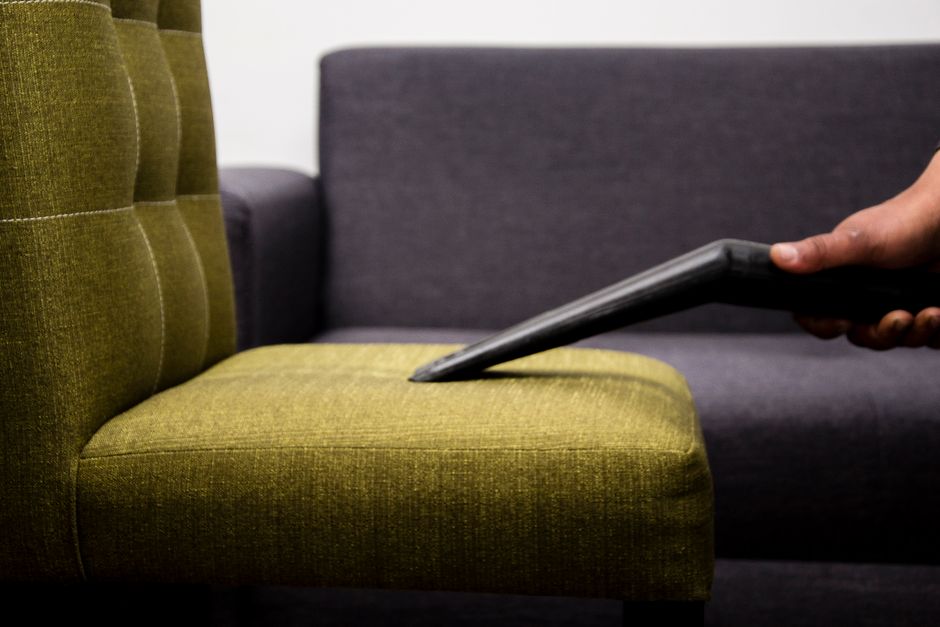
Before applying any cleaning product, use a vacuum with a soft brush attachment to remove loose dirt, dust, crumbs, and pet hair from the sofa. This step prevents you from rubbing debris into the fabric during the cleaning process, which could scratch or embed particles deeper into the fibers. Pay special attention to the crevices between cushions and the base of the sofa, as this is where crumbs, coins, and pet hair tend to accumulate the most. If your sofa has removable cushions, take them off and vacuum both sides as well as the frame underneath, since dust and debris can settle in places that are easy to forget during a quick cleaning session.
Step 2: Check the Fabric Care Label
Most microfiber sofas come with a care label that includes a letter code, usually W, S, WS, or X. The W code means you can use water based cleaners, S means you should use a solvent based cleaner, WS means either can be used, and X means the sofa should only be vacuumed and never treated with liquid cleaners. Ferber Painting’s Leather and Fabric Sofa Cleaner is designed to work safely with W and WS coded fabrics, which covers the vast majority of microfiber sofas on the market today. The label is usually found on a tag attached to the underside of a cushion or along the back or bottom of the sofa frame. If you cannot find a label at all, it is safer to assume the fabric requires gentle, water based treatment and to always perform a test patch before proceeding with a full cleaning.
Step 3: Test in an Inconspicuous Area
Even with a trusted product, it is always wise to test on a small hidden area of the sofa first, such as the back or underside. Apply a small amount of the cleaner, wait a few minutes, and check for any discoloration or texture change before proceeding to clean the entire piece of furniture. This step only takes a few minutes but can save you from a much bigger headache if your particular fabric reacts unexpectedly. Look not only for color changes but also for any change in texture, such as stiffness or a slightly different sheen, before moving on to the visible parts of the sofa.
Step 4: Apply the Cleaner
Spray the Leather and Fabric Sofa Cleaner directly onto the stained or dirty area, holding the bottle about six inches away from the surface. Avoid saturating the fabric with too much product, a light and even application is usually enough to break down most stains. For larger stains, it can help to work in smaller sections rather than spraying the entire area at once, which gives you better control and ensures the product does not dry out before you have a chance to work it into the fabric properly.
Step 5: Gently Scrub With a Soft Brush or Cloth
Using a soft bristled brush or a microfiber cloth, gently work the product into the fabric using circular motions. This helps lift dirt and stains without damaging the delicate fibers. Avoid using stiff brushes or scrubbing too aggressively, as this can cause pilling or fraying over time. For particularly stubborn stains like old grease marks or dried food residue, you can let the product sit for thirty seconds to a minute before scrubbing, which gives it time to break down the bonds holding the stain in place without requiring extra friction on the fabric.
Step 6: Wipe Away Residue
Once you have worked the product into the stain, use a clean, dry cloth to wipe away any residue. You should start to see the stain lifting and the fabric returning to its original color and softness. It is a good idea to switch to a fresh section of the cloth as it picks up dirt, rather than continuing to rub with an already soiled portion, which can just redistribute the stain rather than lifting it away completely.
Step 7: Let the Sofa Air Dry
Allow the sofa to air dry naturally, away from direct sunlight or heat sources that could cause the fabric to shrink or become stiff. Depending on humidity levels, this typically takes between one and three hours. If you are in a hurry, placing a fan nearby to encourage air circulation can speed up drying time without exposing the fabric to the risks associated with direct heat, such as a hair dryer or space heater placed too close to the surface.
Step 8: Fluff the Fabric
Once the sofa is fully dry, use a soft brush to gently fluff the microfiber fibers back into place. This restores the sofa’s original texture and helps it look as good as new. A soft bristled clothing brush or even a dry sponge can work well for this final step, restoring the slightly nappy texture that makes microfiber so comfortable to sit on in the first place.
Special Considerations for Tough Stains
Certain stains require a bit of extra attention. For wine or juice stains, it helps to blot up as much liquid as possible with a dry cloth before applying any cleaner, since rubbing a fresh liquid stain can spread it over a wider area. For grease based stains, such as those from pizza or fried food, a light dusting of cornstarch or baking soda left on the spot for ten to fifteen minutes before vacuuming can help absorb excess oil before you apply the cleaner, making the cleaning process more effective. For ink stains, it is important to act quickly and to avoid rubbing, since ink tends to spread rather than lift when agitated too aggressively. In these cases, gentle dabbing with the cleaner and a cloth, working from the outside of the stain toward the center, tends to produce the best results and prevents the stain from spreading further into the surrounding fabric.
Common Mistakes to Avoid When Cleaning Microfiber
Many people unintentionally damage their microfiber sofas by making avoidable mistakes during the cleaning process. Here are some of the most common errors and how to avoid them.
- Using too much water, which can leave watermarks or cause the fabric to feel stiff once dry. Excess moisture can also seep into the cushion foam underneath, leading to a musty smell if it does not dry out completely.
- Rubbing stains too aggressively, which can push the stain deeper into the fibers instead of lifting it out. Aggressive rubbing can also cause the fibers to mat down permanently, creating a shiny patch that stands out from the rest of the sofa.
- Ignoring the care label code, which can lead to using a cleaner that is not compatible with the fabric type. This is one of the most common causes of permanent staining and fabric damage reported by homeowners.
- Skipping the test patch step, risking visible discoloration on the entire sofa. Even products marketed as safe for all fabrics can behave differently depending on the dye and finish used by the manufacturer.
- Using bleach based or ammonia based products, which are far too harsh for microfiber and can cause permanent damage. These chemicals can break down the synthetic fibers at a molecular level, leading to irreversible weakening of the fabric.
- Letting stains sit for too long before treating them, making them significantly harder to remove later. Fresh stains are almost always easier to remove than ones that have had time to set and bond with the fibers.
- Using a heat source to speed up drying, which can cause certain synthetic fibers to warp, shrink, or develop a shiny, melted looking patch.
- Applying too much product at once in hopes of a stronger clean, which can actually make it harder to remove residue and may leave the fabric feeling sticky or stiff once dry.
Avoiding these mistakes, combined with using a dedicated product like Ferber Painting’s Leather and Fabric Sofa Cleaner, will dramatically increase your chances of keeping your sofa looking new for years to come. Taking a few extra minutes to follow the correct process is always worth it compared to the time, money, and frustration involved in trying to repair a sofa that has already been damaged by an improper cleaning attempt.
How Often Should You Clean Your Microfiber Sofa
Regular maintenance is just as important as treating individual stains. Vacuuming your sofa weekly helps prevent dust and debris buildup, while a deeper clean using a proper fabric cleaner every one to two months keeps the fabric looking vibrant and feeling soft. If you have pets or young children, more frequent cleaning may be necessary since spills and accidents tend to happen more often in these households.
Seasonal factors can also play a role in how often you should clean. During summer months, increased use of sunscreen, body oils, and outdoor activities can lead to more frequent staining, especially if the sofa is used right after a day at the beach or a barbecue. During winter, closed windows and increased indoor heating can lead to more dust circulating in the home, which settles into upholstery fabric more quickly. Adjusting your cleaning schedule based on these seasonal patterns can help you stay ahead of buildup rather than reacting to it after the fact.
The location of the sofa within your home also matters. A sofa placed in a high traffic living room used daily by a family with children and pets will naturally need more frequent attention than a sofa in a rarely used guest room. Similarly, sofas placed near a dining area or kitchen tend to accumulate food related stains more quickly and may benefit from a slightly more frequent cleaning routine compared to those in a formal living room used mainly for relaxing or entertaining guests.
It is also worth noting that prevention is often easier than treatment. Using fabric protectant sprays after cleaning can help repel future stains, making your next cleaning session even easier. Many customers who use Ferber Painting’s Leather and Fabric Sofa Cleaner report that regular use actually reduces the frequency of deep stains, since the product also helps condition the fabric over time. Establishing a simple routine, such as a quick vacuum every Sunday and a deeper clean on the first weekend of each month, can help keep your sofa consistently looking its best without requiring a large time investment all at once.
Why Ordering From Ferber Painting Is the Smart Choice
Beyond the quality of the product itself, ordering from Ferber Painting comes with several practical benefits that make the entire experience smooth and stress free. Our website offers a simple and secure online payment system, so you can complete your purchase in just a few clicks without any complicated steps. Once your order is placed, our international network of carriers ensures fast delivery no matter where you are located in the world, something that many smaller or regional brands simply cannot offer.
Customer service is another area where we try to stand out. If you have questions about which fabrics are compatible with our cleaner, how to treat a specific type of stain, or anything else related to your order, our support team is available to help guide you through the process. We believe that a great product should be paired with equally great support, since even the best cleaner in the world is only useful if customers feel confident using it correctly.
And of course, there is the guarantee. Every single product sold by Ferber Painting comes with a satisfaction guaranteed or refunded policy. This means that if the Leather and Fabric Sofa Cleaner does not meet your expectations for any reason, you can request a full refund with no hassle. This kind of confidence is extremely rare in the cleaning product industry, and it reflects how seriously we take customer satisfaction. Rather than locking customers into complicated return processes filled with exceptions and hidden conditions, we prefer a simple and honest approach that puts trust at the center of every purchase.
Mini FAQ
Is the Ferber Painting cleaner safe for all microfiber sofas?
It is safe for fabrics labeled W or WS according to the standard cleaning code system. Always check your sofa’s care label before applying any product, and perform a small test patch first.
How long does it take to see results?
Most stains begin to lift within a few minutes of application. For tougher or older stains, you may need to repeat the process once or twice for complete removal.
Does the product leave a strong chemical smell?
No, one of the advantages of our formula is its light and pleasant scent, which fades quickly and does not linger in the room like many industrial cleaners.
What happens if I am not satisfied with the results?
Ferber Painting offers a satisfaction guaranteed or refunded policy on all products, including the Leather and Fabric Sofa Cleaner. If you are not happy, simply reach out and we will make it right.
How long does shipping take?
Thanks to our international network of carriers, most orders arrive quickly regardless of your location. Exact delivery times may vary depending on your country.
Can this cleaner be used on other fabric furniture besides sofas?
Yes, the same formula that works on microfiber sofas is also effective on fabric armchairs, ottomans, and even certain car upholstery, as long as the care label allows for water based cleaning products.
Is it necessary to rinse the fabric after using the cleaner?
No rinsing is required. Simply wipe away any excess product with a clean, dry cloth after scrubbing, and allow the sofa to air dry naturally for the best results.
Conclusion
Cleaning a microfiber sofa does not need to be a stressful or risky task, as long as you follow the right steps and use a product designed specifically for the job. From vacuuming and checking the care label to applying the cleaner correctly and letting the fabric dry properly, each step plays an important role in achieving the best possible results. Understanding the type of stain you are dealing with, avoiding common mistakes like over wetting the fabric or scrubbing too aggressively, and maintaining a consistent cleaning schedule based on how the sofa is used will keep it looking fresh for years rather than months. And when it comes to choosing which cleaner to trust with your furniture, the combination of effectiveness, safety, fast worldwide shipping, and an unmatched satisfaction guaranteed or refunded policy makes the decision easy. Visit our website today to order your Leather and Fabric Sofa Cleaner and give your microfiber sofa the care it truly deserves.