 Ireland
 United States
 Australia
 Česko
Česko Danmark
 Deutschland
 Eesti
Eesti España
 Ελλάδα
 France
 Hrvatska
 Italia
 Latvija
 Lietuva
 Magyarország
 Nederlands
 Norge
Norge Polska
 Portugal
 România
 Schweiz (Deutsch)
 Slovenija
 Slovensko
 Suomi
Suomi Sverige
 United Kingdom
 България
 Canada (English)
Before we dive into the technical details of pruning rhubarb, there is one truth that every gardener eventually learns: success in the garden depends almost entirely on the quality of the products you use. You can follow every instruction to the letter, but if your fertilizer is weak, poorly balanced, or made with low quality ingredients, your rhubarb will never reach its full potential. This is why, before explaining how and when to prune rhubarb, we want to talk about the foundation of healthy rhubarb growth: proper nutrition.
At Ferber Painting, we developed our Rhubarb Fertilizer specifically to support strong stalks, vibrant leaves, and a root system capable of surviving winter dormancy and roaring back to life every spring. And unlike most fertilizers on the market, our product comes with a full satisfaction guaranteed or money back promise. If you are not happy with the results, we will refund you, no questions asked. This alone sets us apart from nearly every competitor in the gardening industry, most of whom offer no such guarantee at all.
Rhubarb is one of those garden plants that rewards patience and consistency. Unlike annual vegetables that live and die within a single season, rhubarb is a perennial that can remain productive for a decade or more if it is cared for properly. That longevity means every decision you make, from the soil you plant it in to the way you prune it each spring, has a compounding effect over the years. A poorly maintained crown can decline steadily until it stops producing altogether, while a well fed, correctly pruned plant can actually improve its yield year after year. Understanding this long term relationship between the gardener and the plant is the key to appreciating why pruning technique and nutrition need to work together rather than in isolation.
Why Choosing the Right Product Matters More Than the Technique
Many gardening guides will tell you that pruning technique is the most important factor in rhubarb care. While technique matters, it is only half of the equation. Rhubarb is a heavy feeder, meaning it draws large amounts of nutrients from the soil every growing season. If the soil is not replenished with the right balance of nitrogen, potassium, and organic matter, even the most carefully pruned plant will produce thin, pale stalks and weak growth.
This is where Ferber Painting Rhubarb Fertilizer makes the difference. Our formula was designed specifically for rhubarb, not as a generic all purpose fertilizer repackaged for vegetable gardens. It contains the precise nutrient ratio that rhubarb plants crave, along with trace minerals that improve stalk thickness and color. Competing products often use a one size fits all approach that simply does not address the unique needs of rhubarb crowns.
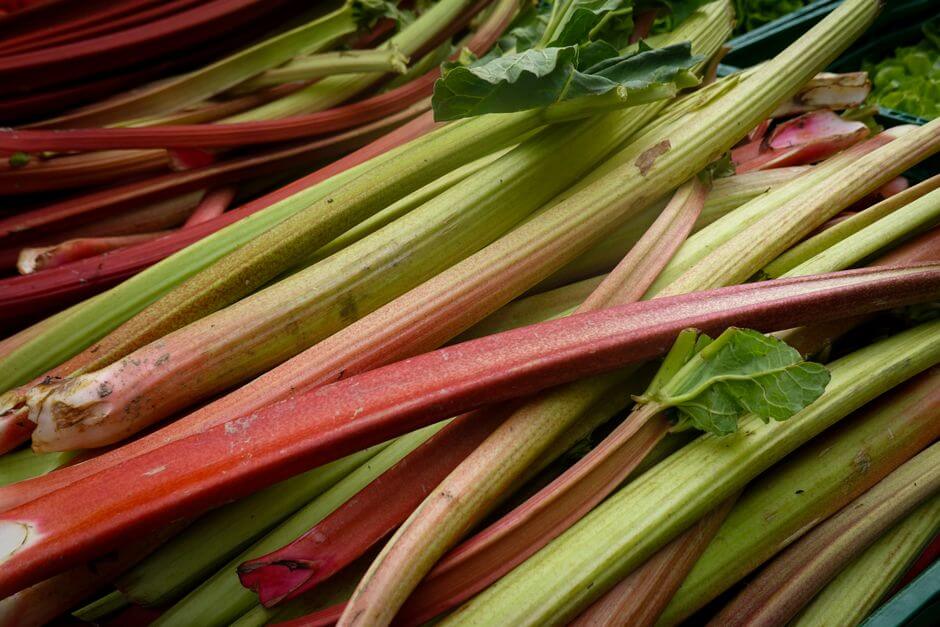
Consider the difference between a plant grown in nutrient poor soil and one grown with consistent, targeted feeding. In the first scenario, stalks tend to be thin, pale green or even greenish white instead of the deep red or pink color that most gardeners associate with premium rhubarb. The texture also suffers, becoming stringy and fibrous rather than crisp and juicy. In the second scenario, where the plant receives balanced nutrition throughout the season, stalks grow noticeably thicker, often reaching an inch or more in diameter, with a vibrant color and a snap that indicates high water content and low fiber. This is not a coincidence. Potassium in particular plays a major role in stalk firmness and color development, while nitrogen supports the leafy canopy that fuels photosynthesis and, ultimately, root energy storage.
Another factor that separates our fertilizer from generic alternatives is the inclusion of micronutrients that are often overlooked. Magnesium, for example, is essential for chlorophyll production, and a deficiency can lead to yellowing leaves even when nitrogen levels appear adequate. Boron and manganese, present in trace amounts in our formula, support cellular structure within the stalks, contributing to that satisfying crunch that separates excellent rhubarb from mediocre rhubarb. Most generic fertilizers simply do not account for these details because they are formulated to serve dozens of different plant species at once, diluting their effectiveness for any single crop.
| Criteria | Ferber Painting Rhubarb Fertilizer | Typical Competitor Products |
|---|---|---|
| Satisfaction Guarantee | Yes, full refund if not satisfied | Rarely offered |
| Formulated Specifically for Rhubarb | Yes | Usually generic all purpose blends |
| International Shipping | Fast, worldwide, reliable carrier network | Often limited to domestic markets |
| Online Payment Ease | Simple and secure online checkout | Varies, sometimes complicated |
| Ease of Use | Ready to apply, clear instructions | Often requires complex mixing |
| Customer Support | Responsive and dedicated | Inconsistent |
As you can see from the table above, the differences are not just marketing claims. They translate into real advantages for anyone who wants healthy, productive rhubarb without the guesswork. And because we ship internationally through a trusted network of carriers, you can order our fertilizer no matter where you are located and expect it to arrive quickly and safely.
It is also worth mentioning that many gardeners who switch to our formula report a noticeable difference within the very first season. Because rhubarb is a perennial with an established root system, it responds quickly to improved nutrient availability. Where a new plant might take a full year or two to show its true potential, an established crown that has been struggling due to poor soil conditions can often bounce back within a matter of weeks once it receives the correct nutrient balance. This is one of the reasons our satisfaction guarantee is so effective. We are confident that gardeners who try our product will see the difference for themselves, and the vast majority never need to request a refund.
When to Prune Rhubarb: Understanding the Right Timing
Timing is everything when it comes to pruning rhubarb. Prune too early and you risk weakening a plant that has not yet built up enough energy reserves. Prune too late and you may encourage the plant to go to seed, which diverts energy away from stalk production and toward flowering.
The ideal time to begin harvesting and pruning rhubarb is in mid to late spring, typically when the stalks reach at least 10 to 12 inches in length and have developed a firm, crisp texture. This usually happens between April and June depending on your climate zone. In cooler regions, this window may shift slightly later into June.
Here are the key signs that indicate your rhubarb is ready for pruning:
- Stalks are at least 10 inches long and firm to the touch
- The leaves have fully unfurled and are a healthy deep green
- The plant is at least two years old, since first year plants should not be harvested at all
- There is no visible flower stalk emerging from the center of the crown
It is important to note that rhubarb should never be harvested after mid summer. Once temperatures rise consistently above 90 degrees Fahrenheit, the plant redirects its energy toward root development in preparation for winter dormancy. Pruning during this period can stress the plant and reduce next year’s yield significantly.
Feeding your rhubarb with Ferber Painting Rhubarb Fertilizer about two weeks before this pruning window begins gives the plant the nutritional boost it needs to produce thick, juicy stalks that are easier to harvest and less prone to stringy texture.
Regional Differences in Timing
Climate plays a much larger role in rhubarb timing than many gardeners realize. In northern regions with long, cold winters, such as much of Canada, the northern United States, and parts of Scandinavia, rhubarb often does not emerge from dormancy until late April, and the first proper harvest may not begin until early June. In these colder climates, the growing season is more compressed, which means the harvest window itself tends to be shorter but often more intense, with rapid growth once temperatures stabilize.
In milder climates, such as parts of the Pacific Northwest or coastal regions with moderate winters, rhubarb can emerge as early as March, allowing for a longer overall harvest period that may stretch from April through early July. Gardeners in these regions need to pay closer attention to summer heat, since rhubarb is fundamentally a cool season plant that struggles once daytime temperatures consistently exceed 80 to 85 degrees Fahrenheit.
In warmer climates where rhubarb is more difficult to grow altogether, such as the southern United States, gardeners often treat rhubarb as a cool season annual, planting crowns in autumn and harvesting through winter and early spring before the summer heat causes the plant to decline. In these situations, the traditional spring pruning calendar does not apply, and gardeners should instead follow local extension office guidance for their specific hardiness zone.
Reading Your Plant Instead of the Calendar
While general timelines are useful, the most reliable indicator of readiness is always the plant itself rather than a fixed date on the calendar. Two rhubarb plants growing just a few miles apart can develop at noticeably different rates depending on soil temperature, sun exposure, and even the specific cultivar being grown. Varieties like Victoria tend to produce slightly later than early season varieties like Canada Red or Crimson Red, so if you are unsure whether your rhubarb is ready, always check stalk length and firmness rather than relying solely on the month.
A simple test many experienced gardeners use is the thumbnail test. Press a thumbnail gently into the base of a stalk. If it leaves a clean indentation and the stalk feels crisp rather than soft or rubbery, it is ready for harvest. Stalks that feel spongy or that bend without snapping are usually not yet mature enough, or in rare cases may indicate a nutrient deficiency that is affecting cellular structure, which again points back to the importance of consistent fertilization throughout the growing season.
How to Prune Rhubarb Step by Step
Once you have confirmed that your rhubarb is ready, the actual pruning process is straightforward, but doing it correctly will protect the health of the crown for years to come. Follow these steps for the best results.
- Step 1: Choose stalks that are thick and firm, avoiding thin or discolored ones which may indicate disease or nutrient deficiency.
- Step 2: Grip the stalk firmly near the base, close to where it meets the crown.
- Step 3: Instead of cutting with a knife, twist and pull the stalk gently to one side. This technique removes the entire stalk cleanly without leaving a stub that can rot and attract pests.
- Step 4: If twisting feels difficult or risks damaging the crown, use a clean, sharp knife to cut the stalk as close to the base as possible.
- Step 5: Immediately remove and discard the leaves, since rhubarb leaves contain oxalic acid and are toxic if consumed. The leaves can be composted safely, just not eaten.
- Step 6: Never harvest more than one third of the total stalks from a single plant during any one harvest session. This preserves enough foliage for the plant to continue photosynthesis and rebuild energy reserves.
- Step 7: Space out your harvests every two to three weeks throughout the growing season rather than harvesting everything at once.
After each pruning session, it is highly beneficial to apply a light top dressing of fertilizer around the base of the plant, taking care not to let it touch the crown directly. This replenishes the nutrients used during stalk production and encourages faster regrowth for the next harvest cycle. Once again, this is where a fertilizer formulated specifically for rhubarb, like ours, outperforms generic garden fertilizers that may contain the wrong nutrient ratios for this particular plant.
Choosing the Right Tools
Although many experienced gardeners prefer the twist and pull method because it requires no tools at all, there are situations where a blade is genuinely the better choice, particularly with older or more brittle crowns where excessive twisting could tear surrounding tissue. If you do choose to cut, invest in a sharp pair of garden snips or a small harvesting knife dedicated solely to this purpose. A dull blade crushes plant fibers rather than slicing through them cleanly, creating a ragged wound that heals more slowly and is more susceptible to fungal infection. Before each pruning session, wipe your blade with rubbing alcohol or a diluted bleach solution to prevent transferring pathogens from one plant to another, especially if you are pruning multiple rhubarb crowns or other plants in the same garden bed.
How Much to Harvest and Why Restraint Matters
One of the most common questions new rhubarb growers ask is how much they can safely harvest without damaging the plant. The one third rule mentioned above exists for a very practical reason: the leaves attached to each stalk are the plant’s primary source of energy production through photosynthesis. Removing too many leaves at once is essentially removing the plant’s ability to fuel its own root system, which in turn reduces the plant’s capacity to produce a strong flush of growth for the following harvest cycle, and can even weaken the crown over multiple seasons if the pattern repeats year after year.
For a mature, well established plant that is three years or older, a healthy rule of thumb is to leave at least six to eight strong stalks standing at any given time. This ensures the plant has enough leaf surface area to continue generating energy while you still enjoy a generous harvest. Younger plants, particularly those in their second year, should be harvested even more conservatively, with only a few stalks removed per session to allow the crown to continue establishing itself.
Post Harvest Handling
Once stalks are harvested, they should be processed or refrigerated promptly since rhubarb loses moisture and crispness fairly quickly once cut. Trim the leaves immediately if you have not already done so in the garden, wash the stalks gently, and store them upright in a jar of water in the refrigerator, similar to how you would store celery, or wrap them loosely in a damp cloth and place them in the crisper drawer. Stored this way, fresh rhubarb stalks can remain usable for up to two weeks, though the flavor and texture are always best within the first few days after harvest.
End of Season Pruning and Winter Preparation
As autumn approaches, a different type of pruning becomes necessary. Once the first hard frost causes the leaves to blacken and collapse, it is time to cut back the entire plant to ground level. This end of season pruning serves several important purposes.
First, it removes dead plant material that could otherwise harbor pests or fungal spores over the winter months. Second, it allows you to apply a thick layer of mulch or compost directly over the crown, protecting it from freezing temperatures. Third, this is an excellent time to apply a final dose of Ferber Painting Rhubarb Fertilizer, allowing the nutrients to slowly integrate into the soil over winter so that the plant has an immediate nutrient source available when it emerges from dormancy in early spring.
Many gardeners skip this final feeding, assuming that dormant plants do not need nutrients. This is a mistake. Root systems remain active below the frost line even when the visible plant appears completely dead, and providing nutrition during this period sets the stage for a stronger, faster start the following spring.
Mulching Best Practices
When it comes to protecting rhubarb crowns over winter, the type and depth of mulch matter as much as the timing. Straw, shredded leaves, and well aged compost are all excellent choices, offering insulation while also breaking down slowly to enrich the soil. Apply a layer between three and six inches deep directly over the crown once the ground has begun to cool but before the first hard freeze locks the soil. In regions with particularly harsh winters, some gardeners add an extra layer of loose bark mulch on top of straw for additional insulation, especially for younger plants whose root systems have not yet fully established themselves.
It is important to avoid mulches that retain excessive moisture directly against the crown, such as fresh grass clippings, since this can encourage rot during the freeze thaw cycles common in early spring. Once the danger of hard frost has passed in spring, pull the mulch back slightly from the center of the crown to allow new shoots to emerge freely, though you can leave the surrounding mulch in place to help retain soil moisture and suppress weeds through the growing season.
Signs a Rhubarb Crown Needs Division
End of season pruning is also the ideal time to assess whether your rhubarb crown needs dividing. Over time, rhubarb crowns naturally expand outward, and after four to six years a crown can become overcrowded, resulting in smaller, thinner stalks even with excellent fertilization. If you notice declining stalk size despite consistent feeding and proper pruning, this is often a sign that the crown has outgrown its space and needs to be divided in early spring or autumn, with each division containing at least one healthy bud eye. Dividing overcrowded crowns and replanting the sections with fresh soil and a generous application of fertilizer typically restores vigorous growth within a season or two.
Common Mistakes to Avoid When Pruning Rhubarb
Even experienced gardeners sometimes make errors that reduce rhubarb yield or plant health. Here are the most common mistakes and how to avoid them.
- Harvesting too early in the plant’s life, particularly during the first growing season, which weakens the developing crown.
- Removing too many stalks at once, leaving insufficient foliage for photosynthesis.
- Using dull knives that crush the stalk rather than cutting cleanly, increasing the risk of infection.
- Ignoring flower stalks, which should be removed immediately since they divert energy away from stalk production.
- Failing to fertilize adequately, resulting in thin, weak stalks that are more prone to disease.
- Using generic fertilizers that lack the specific nutrient balance rhubarb needs, which is why so many gardeners eventually switch to a dedicated product like ours.
Avoiding these mistakes, combined with consistent feeding using a fertilizer designed specifically for rhubarb, will make a noticeable difference in both the quantity and quality of your harvest year after year.
Additional Pitfalls Worth Watching For
Beyond the mistakes listed above, there are a few subtler issues that can quietly undermine an otherwise healthy rhubarb patch. One is inconsistent watering. Rhubarb prefers evenly moist soil, and alternating between drought stress and waterlogged conditions can cause stalks to become tough and stringy even when nutrient levels are adequate. Aim for consistent moisture, particularly during dry spells in late spring when stalk development is most active.
Another overlooked issue is planting rhubarb in a location with poor drainage. Rhubarb crowns are susceptible to crown rot if they sit in waterlogged soil for extended periods, and no amount of careful pruning or fertilizing can compensate for a planting site that stays soggy after rain. If drainage is a concern, consider planting rhubarb in a raised bed or mounded row to keep the crown above the surrounding soil level.
Finally, many gardeners neglect to rotate their harvesting pattern around the crown, repeatedly pulling stalks from the same side. Over time this can create uneven growth and stress one section of the crown more than others. Instead, harvest stalks evenly from around the entire circumference of the plant, which encourages balanced development and a more symmetrical, vigorous crown over the years.
Frequently Asked Questions
How often should I fertilize my rhubarb plant?
We recommend applying Ferber Painting Rhubarb Fertilizer three times per year, once in early spring before growth begins, once mid season after the first round of harvesting, and once in late autumn before winter dormancy.
Can I eat rhubarb leaves?
No, rhubarb leaves contain oxalic acid and should never be consumed. Only the stalks are edible.
Is it true that pulling stalks is better than cutting them?
Yes, twisting and pulling the stalk removes it cleanly at the base and reduces the risk of rot compared to cutting, which can leave a stub behind.
What happens if I do not receive good results with the fertilizer?
Thanks to our satisfaction guaranteed or money back policy, you can request a full refund if you are not happy with the results, making it a completely risk free choice.
How fast does shipping take?
Ferber Painting ships quickly worldwide through a reliable international carrier network, and most orders arrive well within the expected delivery window regardless of your location.
Should I remove flower stalks as soon as I see them?
Yes, flower stalks should be cut off at the base as soon as they appear. Left in place, they consume significant energy that would otherwise go toward stalk and root development, and over time repeated flowering without removal can noticeably reduce the size and quality of future harvests.
Can rhubarb be grown in containers, and does pruning differ for container plants?
Rhubarb can be grown in large containers, generally at least eighteen to twenty four inches in diameter, though it tends to be more productive in open ground due to root space limitations. Pruning technique remains the same, but container grown rhubarb benefits from slightly more frequent, lighter feedings since nutrients leach out of container soil faster than they do in garden beds.
Conclusion
Pruning rhubarb at the right time, using the right technique, and feeding it with a fertilizer designed specifically for its needs are the three pillars of a thriving rhubarb patch. While technique and timing are essential, none of it matters if your plant lacks the nutrients it needs to grow strong, thick, flavorful stalks year after year. That is precisely why so many gardeners around the world have made the switch to a product built specifically for this purpose, backed by a guarantee that removes all the risk from the decision.
Rhubarb rewards patience, consistency, and attention to detail. A crown that is properly pruned, protected through winter, and fed with the right nutrients at the right moments can remain a productive and reliable part of your garden for well over a decade, providing a dependable early season harvest long before most other garden vegetables are ready. Take the time to understand your plant, observe its signals rather than relying solely on the calendar, and treat feeding as an essential part of the pruning cycle rather than an afterthought.