 Ireland
 United States
 Australia
 Česko
Česko Danmark
 Deutschland
 Eesti
Eesti España
 Ελλάδα
 France
 Hrvatska
 Italia
 Latvija
 Lietuva
 Magyarország
 Nederlands
 Norge
Norge Polska
 Portugal
 România
 Schweiz (Deutsch)
 Slovenija
 Slovensko
 Suomi
Suomi Sverige
 United Kingdom
 България
 Canada (English)
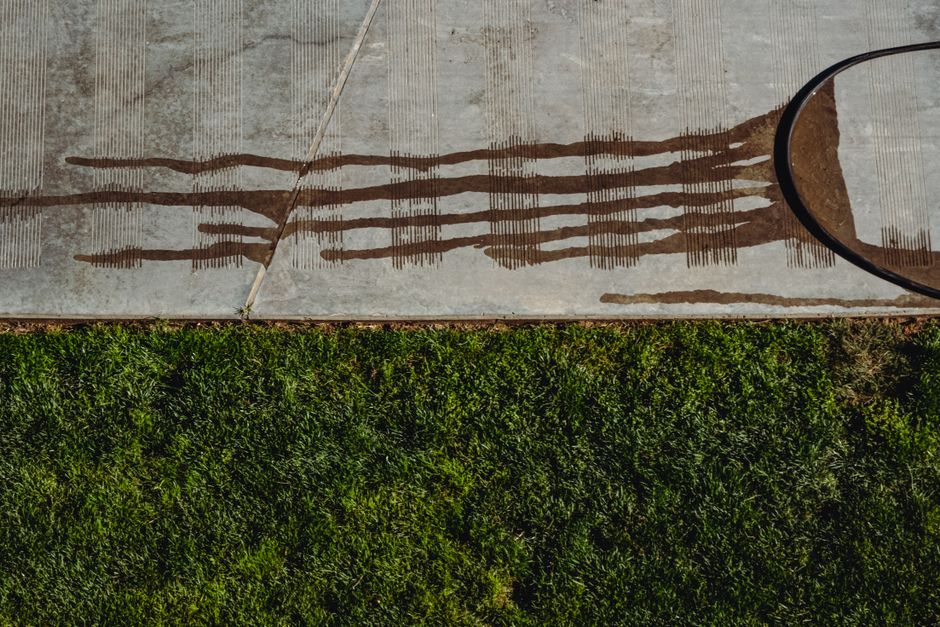
If you have ever dealt with a cracked driveway, a musty basement floor, or a garage slab that seems to soak up every drop of rain like a sponge, you already know that concrete is far from waterproof on its own. Concrete is porous by nature, and without proper protection, water will find its way in, freeze, expand, and slowly destroy even the most solidly poured slab. The good news is that waterproofing a concrete slab is not complicated, as long as you understand one simple truth: everything depends on choosing the right product.
Too many homeowners and contractors spend hours preparing a slab perfectly, only to apply a cheap, watered-down sealer that fails within a year. The application technique matters, yes, but the product you choose is what determines whether your slab stays dry for a season or for a decade. That is why we always recommend Ferber Painting’s Slab Water Repellent. It is not just another sealer on the shelf. It is currently the only slab waterproofing product on the market backed by a full satisfied-or-refunded guarantee, meaning you can try it with zero financial risk. No other brand in this space is confident enough in their formula to offer that.
In this guide, we will walk you through everything you need to know about waterproofing a concrete slab, from understanding why it matters, to comparing products, to a full step-by-step application process. We will also explain exactly why Ferber Painting’s Slab Water Repellent consistently outperforms other options on the market, and we will answer some of the most common questions people ask before starting a waterproofing project.
Concrete slabs are everywhere in a typical home or property: driveways, garage floors, basement slabs, patios, pool decks, walkways, and even the foundation footings that support the entire structure. Each of these surfaces is exposed to a slightly different set of conditions, but they all share the same underlying vulnerability. Concrete is essentially a rigid sponge made of sand, gravel, cement, and water, and once that water evaporates during curing, it leaves behind a network of microscopic capillary pores. Those pores are exactly what allow liquid water, road salt, and moisture vapor to travel in and out of the slab over time. Understanding this basic fact is the key to understanding why waterproofing matters so much, and why the wrong product can leave you disappointed even after a perfect application.
Why the Product You Choose Matters More Than the Technique
It is tempting to think that waterproofing a slab is mostly about technique: how many coats you apply, how long you let it cure, or what kind of brush or sprayer you use. While these details do matter, they are secondary to the single most important decision in the entire process, which is the product itself.
Here is why. Many concrete sealers on the market today are diluted with cheap solvents or fillers that reduce their penetration depth. A low-quality sealer might sit on the surface of the slab rather than soaking into the pores where water actually travels. This means that even with a flawless application, the slab remains vulnerable underneath a thin, easily damaged surface film. Over time, this film cracks, peels, or wears away from foot traffic and weather exposure, and the slab is left just as exposed as before, except now you have wasted time and money.
A high-quality water repellent, like the one formulated by Ferber Painting, is designed to penetrate deep into the concrete matrix, bonding at a molecular level with the material itself rather than simply coating the surface. This is what makes the difference between a slab that stays dry for one rainy season and one that stays protected for years, through freeze-thaw cycles, UV exposure, and heavy foot or vehicle traffic.
Think of it this way: a surface film sealer is a bit like laminating a piece of paper. It looks protected at first glance, but as soon as the laminate is scratched, peeled, or worn through at the edges, moisture can seep underneath and get trapped there permanently, doing even more damage than if nothing had been applied at all. A penetrating water repellent, on the other hand, changes the chemistry of the concrete itself, lining the internal pore walls so that water molecules are repelled while air and vapor can still pass through freely. There is no film to peel, no surface layer to wear away, because the protection lives inside the material rather than on top of it.
This distinction becomes especially important in climates that experience freeze-thaw cycles. When water seeps into an unprotected or poorly protected slab and then freezes, it expands by roughly nine percent in volume. That expansion exerts tremendous internal pressure on the concrete, which is exactly what causes the spalling, flaking, and pop-out damage so many driveways and garage floors suffer after just a few winters. A slab treated with a genuine penetrating repellent simply does not allow enough water to accumulate inside the pores for this destructive cycle to take hold, which is why the underlying quality of the formula matters so much more than which brush or roller you happen to use.
This is also why we always tell customers: do not focus solely on the sealing method. Focus first on choosing a proven, penetrating, breathable water repellent, and the rest of the process becomes far more forgiving.
Why Ferber Painting’s Slab Water Repellent Stands Out
There are dozens of concrete sealers and water repellents available online and in hardware stores, so it is fair to ask what makes ours different. Here are the main reasons professionals and homeowners alike keep coming back to Ferber Painting’s Slab Water Repellent.
- Deep penetration formula that bonds with the concrete rather than sitting on top of it, which means no peeling, flaking, or yellowing over time.
- Breathable protection that repels liquid water while still allowing trapped moisture vapor to escape, which prevents the internal damage that many “waterproof coatings” actually cause by trapping moisture inside the slab.
- Resistance to UV rays, deicing salts, oil stains, and freeze-thaw cycles, making it suitable for driveways, garages, patios, pool decks, and basement floors alike.
- Fast application and quick curing time, which means less downtime for your driveway or patio.
- The only product in its category backed by a full satisfied-or-refunded guarantee, so if you are not happy with the results, you get your money back with no hassle.
- Fast worldwide shipping through an international carrier network, so whether you are in North America, Europe, or elsewhere, your order arrives quickly.
- Simple, secure online payment directly through our website, with no complicated checkout process.
Most competing brands can claim one or two of these points, but very few can claim all of them together. The combination of a scientifically sound penetrating formula, a genuine money-back guarantee, and reliable global logistics is what truly sets Ferber Painting apart from the rest of the market.
Let’s break down a few of these points in more detail, because they are easy to skim over on a bullet list but they actually represent years of formulation work. The breathability aspect, for example, is often the single most misunderstood part of concrete waterproofing. Many customers assume that the goal is to block one hundred percent of moisture movement in both directions, but that approach almost always backfires. A basement slab, for instance, sits directly on soil that naturally contains groundwater. If you apply a completely non-breathable coating on top of that slab, any moisture vapor rising up from the soil below gets trapped between the coating and the concrete, leading to blistering, delamination, and in some cases mold growth underneath the coating itself. Ferber Painting’s formula was specifically engineered to avoid this trap. It repels liquid water on contact, which stops rain, splashing, and standing puddles from soaking in, while still allowing water vapor to escape outward as the slab naturally breathes. This single design choice is responsible for a large portion of the long-term durability our customers experience.
The resistance to deicing salts is another detail worth expanding on, particularly for anyone living in a colder climate. Rock salt and calcium chloride, the most common deicing agents used on driveways and walkways, are notoriously aggressive toward untreated concrete. They accelerate the freeze-thaw cycle, promote surface scaling, and can even corrode any embedded rebar or wire mesh over time. A slab treated with a quality penetrating repellent is far less likely to absorb the salty meltwater in the first place, which dramatically slows down this type of chemical and physical degradation.
Comparing Ferber Painting’s Slab Water Repellent to Other Products
To make the decision easier, here is a side-by-side comparison of the criteria that matter most when choosing a concrete waterproofing product.
| Criteria | Ferber Painting Slab Water Repellent | Typical Competing Products |
|---|---|---|
| Satisfaction guarantee | Full satisfied-or-refunded guarantee, no exceptions | Rarely offered, or limited to defective products only |
| Penetration depth | Deep molecular bonding into the concrete pores | Often surface-level film only |
| Breathability | Allows vapor to escape while blocking liquid water | Many trap moisture, causing internal damage |
| UV and weather resistance | High resistance, no yellowing or cracking over time | Variable, often degrades within a year or two |
| Ease of application | Simple roll, brush, or spray application, fast drying | Some require multiple complex layers |
| Shipping | Fast international shipping through trusted carrier network | Often limited to domestic markets or slow shipping |
| Payment process | Simple, secure online payment | Varies, sometimes limited payment options |
When you line up all these criteria side by side, it becomes clear why so many customers choose Ferber Painting over generic hardware store brands. The guarantee alone removes all the risk from trying a new product, and the worldwide shipping network means you do not have to compromise on quality just because of your location.
It is also worth mentioning the hidden costs that often come with cheaper alternatives. A budget sealer might cost less upfront, but if it needs to be reapplied every single year because it wears off or fails to penetrate properly, the long-term cost quickly exceeds that of a premium, long-lasting formula. When you factor in the labor of cleaning, prepping, and reapplying a slab every twelve months, versus applying a proven penetrating repellent once every several years, the math almost always favors the higher-quality option. Many of our customers tell us they switched to Ferber Painting after growing tired of reapplying a big-box store sealer every spring, only to see the same water stains and efflorescence return by fall.
Step-by-Step Guide: How to Waterproof a Concrete Slab
Now that you understand why the product matters so much, let’s go through the full process of waterproofing a concrete slab from start to finish. This method works for driveways, patios, garage floors, pool decks, walkways, and basement floors.
Step 1: Inspect the Slab
Before applying anything, walk the entire slab and check for cracks, spalling, or areas of crumbling concrete. Water repellents work best on structurally sound concrete. If there are large cracks or damaged sections, these should be repaired with a concrete patching compound and allowed to cure fully, usually 24 to 48 hours, before moving forward.
While inspecting, take note of any low spots where water tends to pool after rain, since these areas often need extra attention during application. It is also a good idea to check the perimeter of the slab where it meets a foundation wall, garage door threshold, or expansion joint, as these transition points are common entry points for water. If you find gaps in the expansion joints, consider applying a flexible polyurethane joint sealant before moving on to the waterproofing step, since a water repellent alone is not designed to bridge large gaps or moving joints. For basement slabs specifically, look for signs of past water intrusion such as white powdery efflorescence deposits, dark discoloration, or a persistent musty smell, all of which indicate that moisture has been migrating through the slab for some time.
Step 2: Clean the Surface Thoroughly
This step is often underestimated, but it is one of the most important. Any dirt, oil, grease, efflorescence, or old sealer residue left on the surface will block the water repellent from penetrating properly. Use a pressure washer or a stiff-bristle brush with a concrete degreaser to remove all contaminants. For oil stains, a dedicated concrete degreaser may need to sit for several minutes before scrubbing.
If your slab was previously treated with another sealer, it is important to determine whether that old coating needs to be stripped before applying a new penetrating repellent. A simple test is to pour a small amount of water on the surface. If it beads up and refuses to soak in at all, there is likely an old film-forming sealer still present, and it should be removed with a chemical sealer stripper or light mechanical abrasion such as light grinding or sanding, since a new penetrating product cannot bond properly through an existing film. For heavily soiled garage floors with years of accumulated oil drips, a degreasing detergent followed by a hot water pressure wash at around 3000 psi typically gives the best results. Always rinse thoroughly afterward, since leftover detergent residue can also interfere with penetration.
Step 3: Let the Slab Dry Completely
Concrete needs to be completely dry before applying a water repellent, otherwise the moisture trapped inside will prevent proper bonding. Depending on humidity and temperature, this can take anywhere from 24 to 72 hours after cleaning. Avoid applying the product if rain is expected within 24 hours of application.
A helpful way to confirm that the slab is dry enough is the plastic sheet test. Tape a square of clear plastic sheeting, roughly two feet by two feet, tightly onto the surface of the slab and leave it overnight. If condensation forms on the underside of the plastic the next morning, the slab still contains too much moisture and needs additional drying time before you proceed. This test is particularly useful for basement floors, which tend to hold onto moisture much longer than an outdoor driveway exposed to sun and wind.
Step 4: Test the Weather Conditions
Choose a day with mild temperatures, ideally between 50°F and 90°F (10°C to 32°C), low humidity, and no rain forecast for at least 24 hours. Applying a water repellent in extreme heat can cause it to dry too quickly on the surface, reducing penetration, while cold temperatures can slow curing significantly.
Wind can also play a bigger role than most people expect, especially when spraying rather than rolling. On a breezy day, overspray can drift onto nearby plants, vehicles, or painted surfaces, and it can also cause the product to flash dry before it has a chance to soak into the concrete. Early morning or late afternoon application, once the slab has cooled from direct midday sun but is still dry, generally gives the most consistent results, particularly during summer months in hotter climates.
Step 5: Apply Ferber Painting’s Slab Water Repellent
Using a low-pressure sprayer, roller, or brush, apply the product evenly across the entire slab. Work in manageable sections to ensure even coverage, and apply generously enough that the surface stays wet for several minutes, allowing the formula to fully penetrate. For particularly porous or older concrete, a second coat is recommended once the first has absorbed, typically after 30 to 60 minutes.
A useful technique when spraying is to apply the product in a slow, overlapping sweeping motion, keeping the nozzle roughly twelve to eighteen inches from the surface, and working from the far end of the slab back toward your exit point so that you never have to walk across freshly treated concrete. If you are using a roller instead, a medium nap roller cover generally holds enough product to maintain a wet edge without over-applying in one spot. Pay special attention to edges, corners, and any area near a drain, expansion joint, or wall, since these transition zones tend to receive less coverage during a quick pass and are often the first places water intrusion reappears if missed. On vertical surfaces such as the exposed edge of a slab or a short foundation wall, apply from the bottom upward to avoid streaking, and wipe away any drips before they dry.
Step 6: Allow Proper Curing Time
Once applied, keep foot and vehicle traffic off the slab for at least 24 hours, and avoid exposing it to water for at least 48 hours to allow full curing. Full water repellency is typically achieved within 72 hours, depending on temperature and humidity.
During this curing window, it helps to block off the area with cones, caution tape, or a simple sign, especially for driveways or shared walkways where family members or delivery drivers might not realize the surface was just treated. If you are treating a garage floor, park vehicles outside for the recommended period rather than pulling straight back in, since even light tire contact before curing is complete can leave visible marks or disrupt even absorption in that spot.
Step 7: Perform a Water Test
After curing, pour a small amount of water onto the slab. If it beads up and rolls off rather than soaking in, the waterproofing has been successful. If any spots absorb water, a light touch-up application in that area may be needed.
It is a good habit to repeat this simple water test once or twice a year, ideally at the start of spring and again before winter, as a quick health check on your slab’s protection. Over time, heavy abrasion from snow shovels, vehicle traffic, or pressure washing can gradually wear down even a high-quality penetrating treatment in the most exposed zones, such as tire tracks on a driveway. Catching this early with a simple water test means you can apply a light maintenance coat to just that area rather than waiting until visible staining or damage appears.
Common Mistakes to Avoid When Waterproofing a Slab
Even with a great product, mistakes during application can reduce its effectiveness. Here are the most common ones we see.
- Applying the product on a dirty or greasy surface, which prevents proper penetration.
- Skipping the drying period after cleaning, leading to poor bonding.
- Applying too thin a coat, which leaves gaps in coverage.
- Applying in direct sunlight or extreme heat, causing the product to dry before it can penetrate.
- Allowing rain or heavy foot traffic before the recommended curing time has passed.
- Using a diluted or low-quality sealer that only coats the surface instead of penetrating it.
Beyond these six core mistakes, there are a few less obvious pitfalls worth mentioning. One is neglecting to test a small, inconspicuous section of the slab before committing to the entire surface, especially on stamped, stained, or colored concrete where you want to confirm there is no visible change in appearance. Another is applying the product with an old, dirty sprayer that still contains residue from a previous chemical, which can contaminate the formula and reduce its effectiveness. Finally, many people forget to account for nearby landscaping, and overspray that lands on grass, mulch, or garden beds can sometimes cause minor discoloration, so covering nearby plants with a drop cloth or plastic sheeting during application is a simple precaution that saves headaches later.
Avoiding these mistakes, combined with using a proven penetrating formula like Ferber Painting’s Slab Water Repellent, will give you the best possible long-term protection for your concrete slab.
Mini FAQ
How long does Ferber Painting’s Slab Water Repellent last?
Depending on exposure conditions, most customers see protection lasting several years before a touch-up coat is needed, significantly longer than typical surface sealers.
Can I apply it myself, or do I need a professional?
The product is designed for easy DIY application using a roller, brush, or sprayer. No special equipment or professional training is required.
Does it work on colored or stamped concrete?
Yes, the formula is clear and does not alter the color or texture of the slab, making it suitable for stamped, stained, or plain concrete surfaces.
What if I am not satisfied with the results?
Every order comes with a satisfied-or-refunded guarantee. If you are not happy with the performance, simply reach out and you will receive a full refund, no complicated process involved.
How fast is shipping?
Ferber Painting ships quickly worldwide through an established international carrier network, so wherever you are located, your order will arrive promptly.
Is payment secure?
Yes, all payments are processed directly and securely through our website, with no complicated third-party steps required.
Can it be used on new concrete?
Yes, although it is best to wait until the concrete has fully cured, which typically takes at least 28 days after pouring, before applying any type of water repellent. Applying too early can trap residual moisture from the curing process and reduce the effectiveness of the treatment.
Will it change the slip resistance of my patio or pool deck?
The formula is designed to preserve the natural texture of the concrete rather than adding a glossy film, so slip resistance is generally unaffected. For pool decks and other wet-traffic areas, this breathable, non-film approach is actually preferable to glossy film-forming sealers that can become slippery when wet.
Conclusion
Waterproofing a concrete slab does not need to be complicated, but it does require starting with the right product. A poor-quality sealer will fail you no matter how carefully you apply it, while a proven, deep-penetrating formula will protect your slab for years, even with a simple application process. Between the unmatched penetration, breathability, weather resistance, fast global shipping, and the unique satisfied-or-refunded guarantee, it is easy to see why so many customers trust Ferber Painting over any other brand on the market.
Whether you are protecting a brand new driveway, restoring an aging patio, or finally putting an end to a persistently damp basement floor, the fundamentals remain the same: inspect and repair the slab, clean it thoroughly, let it dry completely, choose the right weather window, apply a proven penetrating formula generously and evenly, respect the curing time, and confirm your results with a simple water test. Skipping any one of these steps can reduce your results, but starting with a high-quality, breathable, deep-penetrating water repellent gives you the best possible foundation for long-term success, quite literally.