 Ireland
 United States
 Australia
 Česko
Česko Danmark
 Deutschland
 Eesti
Eesti España
 Ελλάδα
 France
 Hrvatska
 Italia
 Latvija
 Lietuva
 Magyarország
 Nederlands
 New-Zealand
 Norge
Norge Polska
 Portugal
 România
 Schweiz (Deutsch)
 Slovenija
 Slovensko
 Suomi
Suomi Sverige
 United Kingdom
 България
 Canada (Français)
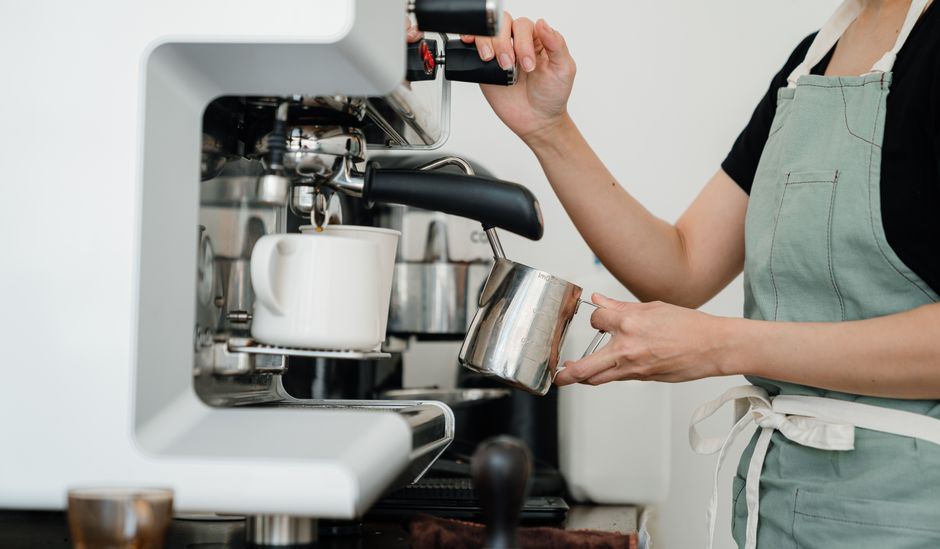
If you own a Smeg coffee machine, you already know that it is more than just a kitchen appliance. It is a design statement, a daily ritual, and an investment that deserves proper care. But no matter how beautiful or expensive your machine is, limescale will eventually build up inside it if you live in an area with hard water. The good news is that descaling a Smeg coffee machine is a simple process, as long as you use the right product. And that is the key point we want to make right from the start: everything depends on choosing a quality descaler. A weak or poorly formulated product can leave residue behind, damage internal components, or simply fail to dissolve the limescale properly. That is why we recommend the Coffee Machine Descaler and Cleaner from Ferber Painting. Unlike most competitors, our product comes with a full satisfied or refunded guarantee, meaning you can try it completely risk free. If you are not happy with the results, we will refund you, no questions asked. This is something almost no other brand on the market offers, and it says a lot about how confident we are in the quality of our formula.
In this complete guide, we will explain why the choice of descaler matters so much, what makes our product stand out from the competition, and we will walk you step by step through the entire process of descaling your Smeg coffee machine. By the end of this article, you will know exactly how to keep your machine running like new for years to come. We will also cover common mistakes people make when descaling their machines, how to interpret the warning signals your Smeg coffee machine gives you, and how to build a long term maintenance routine that protects your investment far beyond a single cleaning session.
Whether you have owned your Smeg coffee machine for years or just unboxed it last week, the information below applies to you. Even brand new machines can develop limescale surprisingly quickly if they are used with untreated tap water in a region with high mineral content. Understanding the full picture, from the chemistry of limescale to the practical steps of removing it, will help you get the most out of your machine and your morning coffee.
Why the Right Descaling Product Matters More Than the Method
Many people think that descaling a coffee machine is just about running a cycle of vinegar or a generic cleaning tablet through the system. While this can technically remove some limescale, it often does not address the full problem, and in some cases it can even cause harm. Vinegar, for example, has a strong smell that can linger in the water tank and affect the taste of your coffee for several brews afterward. Some cheap descaling powders contain harsh chemicals that can corrode rubber seals and gaskets inside the machine, leading to leaks or reduced performance over time.
This is why the product you choose is far more important than the method you follow. A well-formulated descaler will:
- Dissolve limescale quickly without requiring multiple cycles
- Leave no strong odor or aftertaste in your coffee
- Be safe for all internal components, including seals, valves, and heating elements
- Be biodegradable and safe for the environment
- Come with clear instructions and a guarantee of effectiveness
The Coffee Machine Descaler and Cleaner from Ferber Painting was developed specifically with these criteria in mind. It uses a balanced acid formula that is strong enough to break down calcium deposits but gentle enough to protect the internal parts of your machine. This means you get a deep clean without any of the drawbacks associated with cheaper alternatives.
It is also worth mentioning that many homemade descaling solutions, such as lemon juice or citric acid mixed at home, can be inconsistent in concentration. Too weak, and they will not remove stubborn limescale. Too strong, and they can be aggressive toward the plastic and rubber components inside your machine. A commercial descaler formulated specifically for coffee machines removes this guesswork entirely, because the concentration has already been tested and calibrated for optimal results. When you use a product like ours, you are not experimenting with your expensive Smeg machine, you are following a proven formula that thousands of customers have already used successfully.
Another point worth considering is consistency between uses. If you switch between different homemade recipes or random store bought powders every few months, your machine is exposed to a range of different chemical environments, some more corrosive than others. Sticking to one trusted, well-formulated descaler creates a predictable and safe maintenance routine, which in the long run extends the life of your machine considerably.
What Makes Ferber Painting’s Descaler Different From the Competition
There are dozens of descaling products on the market, so it is fair to ask what makes ours the best choice for your Smeg coffee machine. Here are the main reasons why customers consistently choose Ferber Painting over other brands.
First and most importantly, our product is the only one on the market backed by a full satisfied or refunded guarantee. This means that if you try our descaler and are not completely satisfied with the results, we will refund your purchase in full. No competitor offers this level of confidence in their product, and we believe this alone should tell you something about the quality you are getting.
Second, our formula is specifically designed to be compatible with a wide range of machines, including all Smeg coffee machine models, whether you own a fully automatic model, a semi-automatic espresso machine, or a pod-based system. Many descalers on the market are generic and are not tested against premium Italian-designed machines like Smeg, which often have more delicate internal mechanisms.
Third, our descaler is fast acting. Most users report that a single cycle is enough to remove even stubborn limescale buildup, whereas many competitor products require two or three repeated cycles to achieve the same result. This saves you time, water, and product.
Fourth, we ship our Coffee Machine Descaler and Cleaner worldwide. Thanks to our international network of trusted carriers, Ferber Painting delivers quickly no matter where you are located. Many competing brands only ship domestically or charge excessive international shipping fees, but we have built a logistics system that makes fast global delivery possible at a fair price.
Fifth, ordering is simple and secure. Our website allows you to pay directly online using all major payment methods, with a smooth and fast checkout process. There is no need to create complicated accounts or go through lengthy verification steps.
Sixth, our product is versatile enough to be used across an entire kitchen, not just your Smeg coffee machine. Many customers also use it to descale kettles, espresso machines from other brands, and even steam irons. This means that a single bottle can serve multiple purposes around your home, offering better value than descalers designed for only one type of appliance.
Seventh, we take customer support seriously. If you ever have a question about how to use the product on a specific Smeg model, our team is available to guide you through the process. This kind of direct support is rare among descaler brands, most of which simply sell a bottle with generic printed instructions and leave you to figure out the rest.
Finally, and we cannot stress this enough, every single product we sell comes with our satisfied or refunded guarantee. This applies to the Coffee Machine Descaler and Cleaner as well as every other product in our catalog. We want our customers to feel completely confident when they buy from us, and this guarantee is our way of proving that confidence is well placed.
Understanding Limescale Buildup in Smeg Coffee Machines
Before jumping into the step-by-step descaling process, it helps to understand why limescale forms in the first place and why it is particularly important to address it in Smeg machines. Limescale is a hard, chalky deposit made mostly of calcium carbonate. It forms when hard water is heated repeatedly, which is exactly what happens inside a coffee machine every time you brew a cup.
Smeg coffee machines, known for their retro Italian design and precise internal engineering, often use narrow tubing and finely calibrated heating elements to achieve consistent water temperature and pressure. Unfortunately, this precision also means that even a small amount of limescale buildup can have a noticeable impact on performance. Symptoms of limescale buildup in a Smeg coffee machine include:
- Slower brewing times than usual
- Unusual noises coming from the water pump
- Reduced water flow or weak pressure
- A metallic or bitter taste in your coffee
- Error messages or warning lights on machines with digital displays
- Visible white or chalky residue around the water tank or steam wand
If you notice any of these signs, it is time to descale your machine. Most manufacturers, including Smeg, recommend descaling every one to three months depending on your water hardness and how frequently you use the machine. If you live in an area with very hard water, you may need to descale even more often.
It can also be useful to know how water hardness is generally categorized, since this directly affects how often you should descale. Water is typically classified as soft, moderately hard, hard, or very hard, based on the concentration of calcium and magnesium it contains. Many municipalities publish this information publicly, and it is worth checking your local water hardness rating so you can adjust your descaling schedule accordingly rather than relying only on guesswork.
| Water Hardness Level | Approximate Descaling Frequency |
|---|---|
| Soft water | Every three to four months |
| Moderately hard water | Every two to three months |
| Hard water | Every four to six weeks |
| Very hard water | Every two to four weeks |
If you are unsure about your local water hardness, a simple test strip, available at most hardware stores, can give you a quick reading. Alternatively, you can pay closer attention to the symptoms listed above and simply descale whenever you notice the first signs of reduced performance, rather than waiting for a fixed schedule.
It is also worth noting that limescale does not only affect the visible parts of the machine. Inside a Smeg coffee machine, the boiler, the internal tubing, and the valves are all vulnerable to buildup. Over time, untreated limescale can restrict water flow so significantly that the pump has to work harder, which shortens its lifespan and can eventually lead to costly repairs or even the need to replace the entire machine. Regular descaling is, in this sense, not just about taste, it is a form of preventive maintenance that protects your financial investment in a premium appliance.
Step-by-Step Guide: How to Descale a Smeg Coffee Machine
Now that you understand why choosing the right product matters and why limescale forms, let us walk through the actual descaling process. This guide applies to most Smeg coffee machine models, including the Smeg espresso machine range and the Smeg fully automatic bean-to-cup machines. Always check your specific model’s manual for any manufacturer-specific instructions, but the general process remains largely the same.
Step 1: Turn off and unplug your machine. Before you begin any cleaning process, make sure your Smeg coffee machine is switched off and unplugged from the power outlet. This is important for safety and also allows the machine to cool down if it was recently used.
Step 2: Empty the water tank and remove any coffee grounds or capsules. Take out the water reservoir and empty any remaining water. If your machine uses pods or capsules, make sure none are left inside the brewing chamber.
Step 3: Prepare the descaling solution. This is where the quality of your product truly matters. Fill the water tank with water and add the appropriate amount of Ferber Painting Coffee Machine Descaler and Cleaner according to the instructions on the packaging. Our formula is designed to mix easily and dissolve completely, leaving no residue in the tank. Take a moment to use lukewarm water rather than cold water when mixing the solution, as this helps the descaler activate more efficiently and dissolve limescale deposits faster once the cycle begins.
Step 4: Run the descaling cycle. Most Smeg coffee machines have a dedicated descaling mode, often activated by pressing and holding a specific button combination, or through a menu option on digital models. If your machine does not have a dedicated descaling cycle, simply run the solution through as if you were brewing a large cup of coffee, without inserting any coffee grounds or capsules. Allow the machine to dispense about half of the solution, then pause for ten to fifteen minutes to let the descaler work on tougher limescale deposits. This resting period is one of the most overlooked parts of the descaling process, yet it is often what makes the difference between a machine that is only partially cleaned and one that is completely restored to like new condition.
Step 5: Finish the cycle. After the pause, resume the cycle and let the machine dispense the remaining solution. You should notice small flakes or particles of limescale coming out with the liquid, which is a normal sign that the descaler is doing its job. If your machine has a transparent water tank, you may also notice the water taking on a slightly cloudy appearance, which is another indication that mineral deposits are being dissolved and flushed out of the internal circuit.
Step 6: Rinse thoroughly. Empty the water tank completely, rinse it well with clean water, and refill it with fresh water only. Run at least two full cycles of plain water through the machine to make sure no descaling solution remains inside. This step is essential to avoid any unwanted taste in your next cup of coffee. If you are particularly sensitive to taste, you can run a third rinse cycle just to be safe, especially if your machine has a long internal tubing system.
Step 7: Clean the exterior and accessories. While the internal descaling cycle is doing the heavy lifting, take a moment to wipe down the exterior of your Smeg coffee machine, clean the drip tray, and rinse any removable parts such as the portafilter or steam wand. Ferber Painting’s descaler and cleaner is gentle enough to also be used as a general cleaning solution for these external parts. For stainless steel or chrome finishes, which are common on Smeg machines, use a soft microfiber cloth to avoid scratching the surface, and dry it immediately after cleaning to prevent water spots from forming.
Step 8: Test your machine. Once everything has been rinsed and reassembled, plug the machine back in and brew a test cup of coffee. It should taste completely normal, with no chemical aftertaste. You should also notice improved water flow, quieter operation, and faster brewing times if limescale was previously affecting performance. Many customers tell us that this first cup after descaling is noticeably better than what they had grown used to, simply because they had not realized how much the gradual buildup of limescale had been affecting the taste over time.
Following these eight steps will ensure your Smeg coffee machine is properly descaled and running at its best. We recommend repeating this process every one to three months depending on your local water hardness.
Common Mistakes to Avoid When Descaling Your Smeg Coffee Machine
Even with a straightforward process and a high quality product, there are a few common mistakes that can reduce the effectiveness of your descaling routine or, in some cases, cause unnecessary wear on your machine. Being aware of these pitfalls will help you get the best possible results every time.
One frequent mistake is skipping the rinse cycles after descaling. Some people assume that a single rinse is enough, but residual descaling solution left in the tubing can affect the taste of your coffee for several brews. Always run at least two full cycles of clean water, and consider a third if you are using your machine for the first time after descaling.
Another common error is using too little descaler in an attempt to make the bottle last longer. This might seem like a good way to save money, but using a diluted or insufficient amount of product often means the limescale is only partially dissolved, requiring you to repeat the entire process sooner than necessary. Following the recommended dosage on the packaging actually saves you time and product in the long run.
Some users also make the mistake of ignoring the resting period during the descaling cycle. Pausing halfway through, as described in Step 4 above, gives the descaler time to break down tougher deposits. Skipping this pause and running the entire cycle in one go can leave some limescale behind, especially in the harder to reach parts of the internal circuit.
Finally, many people forget to descale removable accessories like the portafilter basket, steam wand tip, or water filter cartridge if their machine has one. These parts can also accumulate mineral deposits over time, and neglecting them means your machine will never be fully clean, even if the internal descaling cycle was successful.
Comparing Descaling Products: What to Look For
To help you understand why the product you choose makes such a big difference, here is a comparison table outlining the key criteria you should consider when buying a descaler for your Smeg coffee machine.
| Criteria | Ferber Painting Descaler and Cleaner | Typical Competitor Products |
|---|---|---|
| Money-back guarantee | Full satisfied or refunded guarantee on every order | Rarely offered, or limited conditions apply |
| Compatibility with Smeg machines | Specifically tested and safe for all Smeg models | Often generic, not tested on premium brands |
| Speed of results | Effective in a single cycle | Often requires two to three cycles |
| Taste and odor after use | No lingering smell or aftertaste | Some products leave a chemical or vinegar taste |
| Worldwide shipping | Fast delivery worldwide via international carrier network | Often limited to domestic markets or slow shipping |
| Ease of online payment | Simple, secure online checkout | Varies widely between sellers |
| Safety for internal components | Gentle on seals, valves, and heating elements | Some products can damage rubber parts over time |
As you can see, when you compare the criteria that actually matter, the Ferber Painting Coffee Machine Descaler and Cleaner stands out clearly ahead of typical alternatives on the market. The combination of a strong guarantee, fast worldwide shipping, and a formula that has been tested specifically with premium machines like Smeg makes it the logical choice for anyone serious about maintaining their coffee machine properly.
Building a Long Term Maintenance Routine for Your Smeg Coffee Machine
Descaling should not be treated as an isolated task you only think about when your machine starts showing problems. Instead, it works best as part of a broader maintenance routine that keeps your Smeg coffee machine performing at its peak year round. Consider setting a recurring reminder on your phone or calendar based on the water hardness table above, so that descaling becomes a regular habit rather than something you only remember when your coffee starts tasting off.
In addition to descaling, daily and weekly habits can make a significant difference. Emptying and rinsing the drip tray daily prevents mold and bacteria buildup. Wiping down the steam wand immediately after each use, while it is still warm, prevents milk residue from hardening and clogging the tip. Emptying the water tank at the end of each day, rather than leaving water sitting in it overnight, reduces the speed at which mineral deposits form in the first place.
If you live in an area with particularly hard water, you might also consider using filtered or bottled water in your Smeg coffee machine, or installing a water filter cartridge if your model supports one. This will not eliminate the need for descaling entirely, but it can significantly extend the time between descaling sessions, meaning less maintenance work overall and a longer lifespan for your machine’s internal components.
Frequently Asked Questions
How often should I descale my Smeg coffee machine?
Most manufacturers recommend descaling every one to three months, depending on how hard your local water is and how often you use the machine. If you notice slower brewing or unusual noises, it is a good sign that it is time to descale.
Can I use vinegar instead of a dedicated descaler?
While vinegar can remove some limescale, it often leaves a strong smell and taste in the machine that can take several brewing cycles to disappear completely. A dedicated descaler like the one from Ferber Painting is specifically formulated to avoid this issue while providing stronger cleaning power.
Is the Ferber Painting descaler safe for all Smeg coffee machine models?
Yes, our formula has been designed to be safe and effective across the full range of Smeg coffee machines, including both automatic and manual models.
What happens if I am not satisfied with the product?
Ferber Painting offers a full satisfied or refunded guarantee on this product and on all items sold through our website. If you are not happy with the results, simply contact us and we will process your refund.
How long does international shipping take?
Thanks to our international network of carriers, most orders arrive within a few business days, no matter where in the world you are located.
Can this product be used to clean other parts of the coffee machine?
Yes, the descaler and cleaner can also be used to clean removable parts such as drip trays, portafilters, and steam wands, making it a versatile addition to your coffee machine maintenance routine.
Conclusion
Keeping your Smeg coffee machine free of limescale is essential if you want it to continue producing great tasting coffee for years to come. As we explained throughout this guide, the process itself is simple, but the real difference comes from the quality of the descaling product you use. A weak or poorly designed formula can leave residue behind, damage internal parts, or simply fail to do the job properly, while a well-formulated product will dissolve limescale quickly, protect your machine, and leave no unwanted taste behind.
By understanding how limescale forms, recognizing the early warning signs, following a proper step by step descaling process, and avoiding the common mistakes outlined above, you can keep your Smeg coffee machine performing like new for many years. Combine regular descaling with the small daily habits we described, and you will not only extend the life of your machine but also enjoy consistently better tasting coffee every single day.